
The best snorkeling in Fiji is located in the Yasawa Islands for encounters with manta rays, the Great Astrolabe Reef for pristine hard corals, and Taveuni’s Rainbow Reef for world-famous soft corals. For accessibility, the Mamanuca Islands offer exceptional house reefs just a short boat transfer from Nadi, making them ideal for New Zealand travelers seeking immediate underwater immersion.
For New Zealanders looking to escape the winter chill or simply enjoy a tropical getaway, Fiji remains the premier destination. Just a short three to four-hour flight from Auckland, you land in a world where the water is consistently warm, and the visibility often exceeds 30 metres. While many associate Fiji purely with white sand beaches, the true magic lies beneath the surface. From shallow house reefs teeming with Nemo-like clownfish to adrenaline-pumping shark encounters, Fiji’s underwater topography is unmatched in the South Pacific.
Whether you are a complete novice adjusting your mask for the first time or an experienced waterman looking to transition from snorkeling to scuba diving, this guide covers the essential locations and experiences you need to know.
Where can you snorkel with Manta Rays in Fiji?
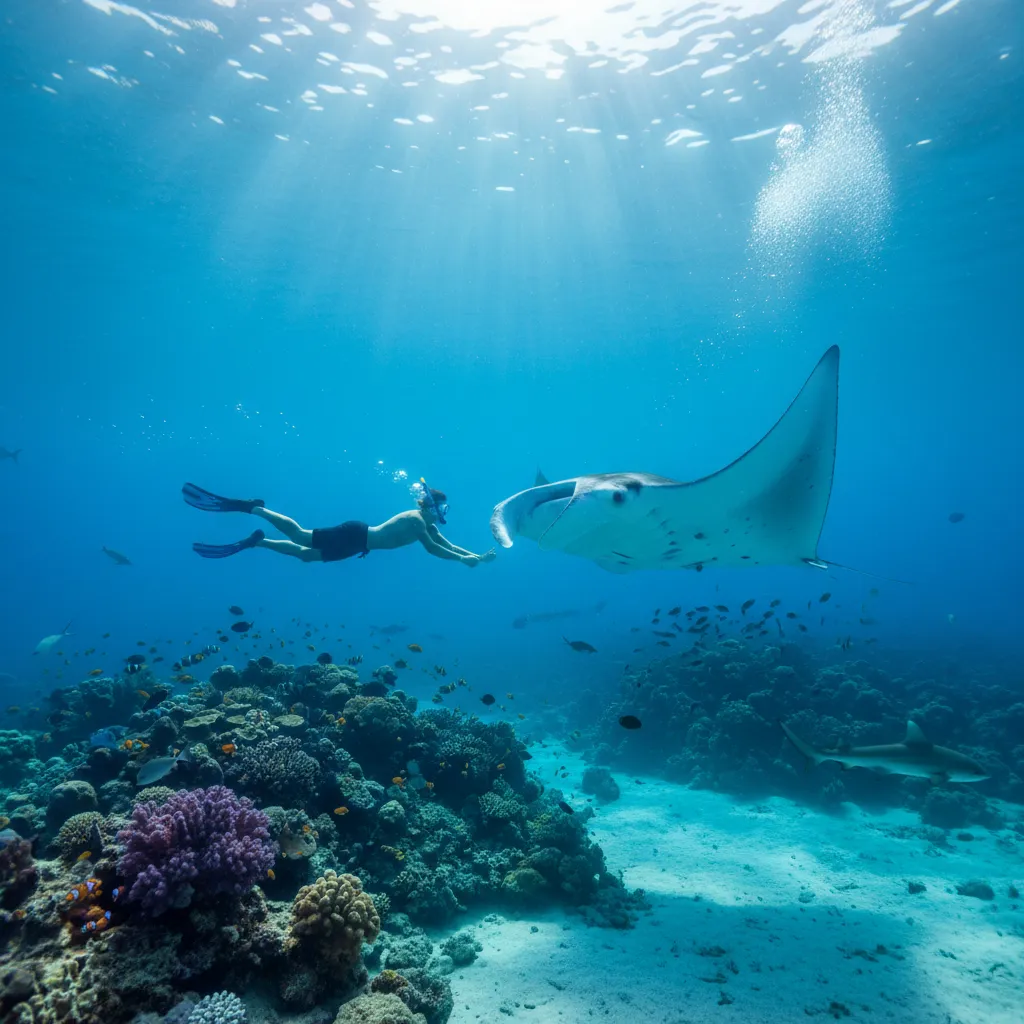
One of the most profound experiences available to snorkelers in Fiji is swimming alongside the majestic Reef Manta Ray. Unlike stingrays, mantas do not possess a barb and are gentle giants of the ocean, feeding on plankton in nutrient-rich channels.
The Yasawa Islands: Manta Ray Passage
The primary location for this activity is the channel between Nanuya Balavu and Drawaqa Island in the Yasawa Group, affectionately known as “Manta Ray Passage.” Between May and October, nutrient-rich currents flow through this narrow channel, attracting mantas that come to feed and visit cleaning stations.
Resorts such as Mantaray Island Resort and Barefoot Manta Resort act as the guardians of this passage. When the “Manta drum” beats, guests grab their fins and masks to rush to the boats. The experience is strictly regulated to ensure the animals are not harassed; snorkelers must hold a line or drift passively while the mantas perform underwater acrobatics beneath them.
Kadavu: The Great Astrolabe Reef
For those venturing further off the beaten track to Kadavu, the Great Astrolabe Reef also hosts manta populations. While sightings here can be less predictable than the Yasawa channel, the backdrop is one of the world’s largest barrier reefs, offering a wilder, more rugged snorkeling experience preferred by adventurous Kiwis.
What are the best house reefs at Fiji resorts?
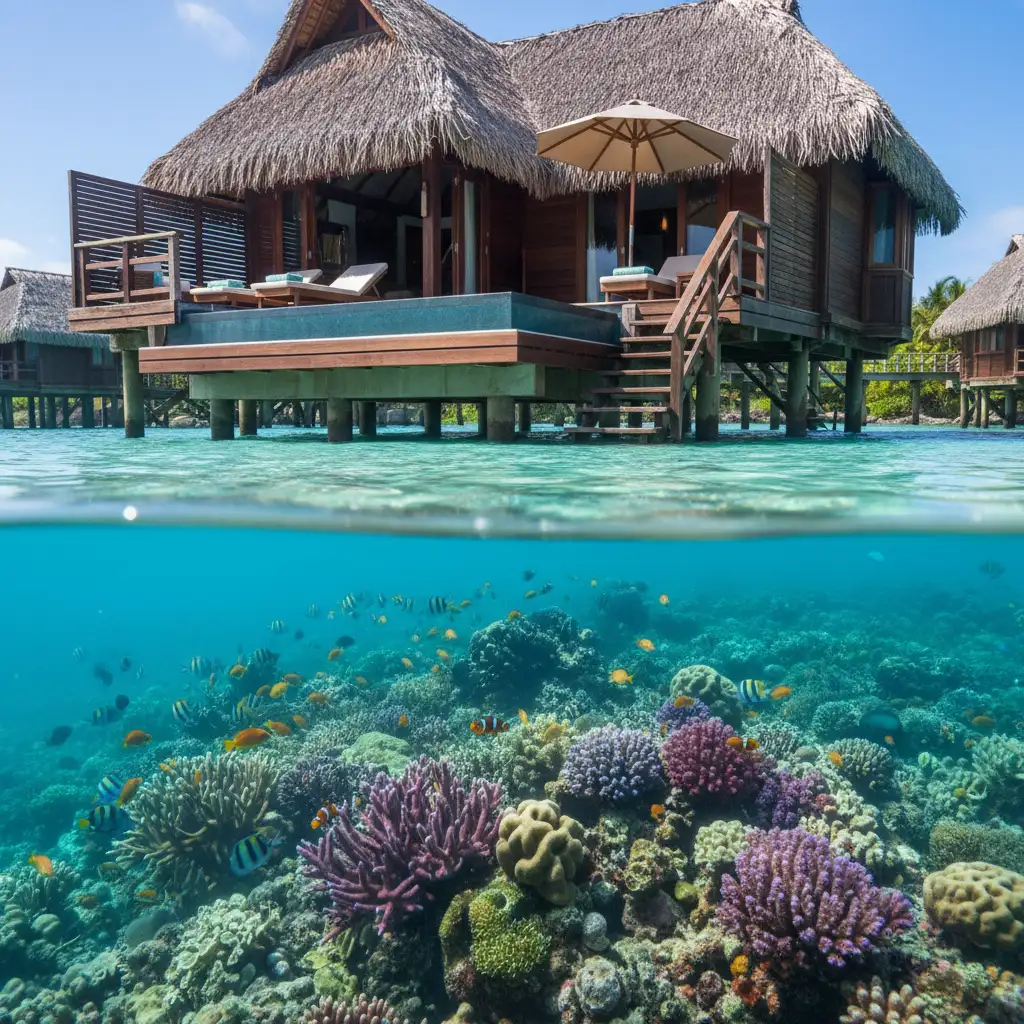
For many travelers, the “best” snorkeling is the kind you can access without a boat. A “house reef” is a coral reef located immediately off the beach of a resort. This is particularly important for families or those who want the freedom to snorkel for 20 minutes before breakfast or a quick dip at sunset.
The Mamanuca Islands
The Mamanucas are the closest island group to Nadi International Airport, making them a favourite for New Zealanders on shorter 5-7 day trips.
- Tokoriki Island Resort: Known for its expansive house reef, guests can snorkel directly off the beach to see giant clams and turtles.
- Castaway Island: A family favourite where the snorkeling is safe, shallow, and accessible directly from the sand, perfect for teaching children the basics.
- Likuliku Lagoon Resort: Situated in a marine protected area, the biodiversity here is recovering rapidly, offering luxury travelers private access to vibrant coral gardens.
Jean-Michel Cousteau Resort (Savusavu)
Located on Vanua Levu, this resort is legendary in the marine biology world. The house reef is arguably the best educational snorkeling site in Fiji. The resort employs full-time marine biologists who guide snorkelers, explaining the symbiotic relationships between the coral and the fish. It turns a simple swim into an immersive nature documentary.
Shark Diving in Beqa Lagoon: The Next Level
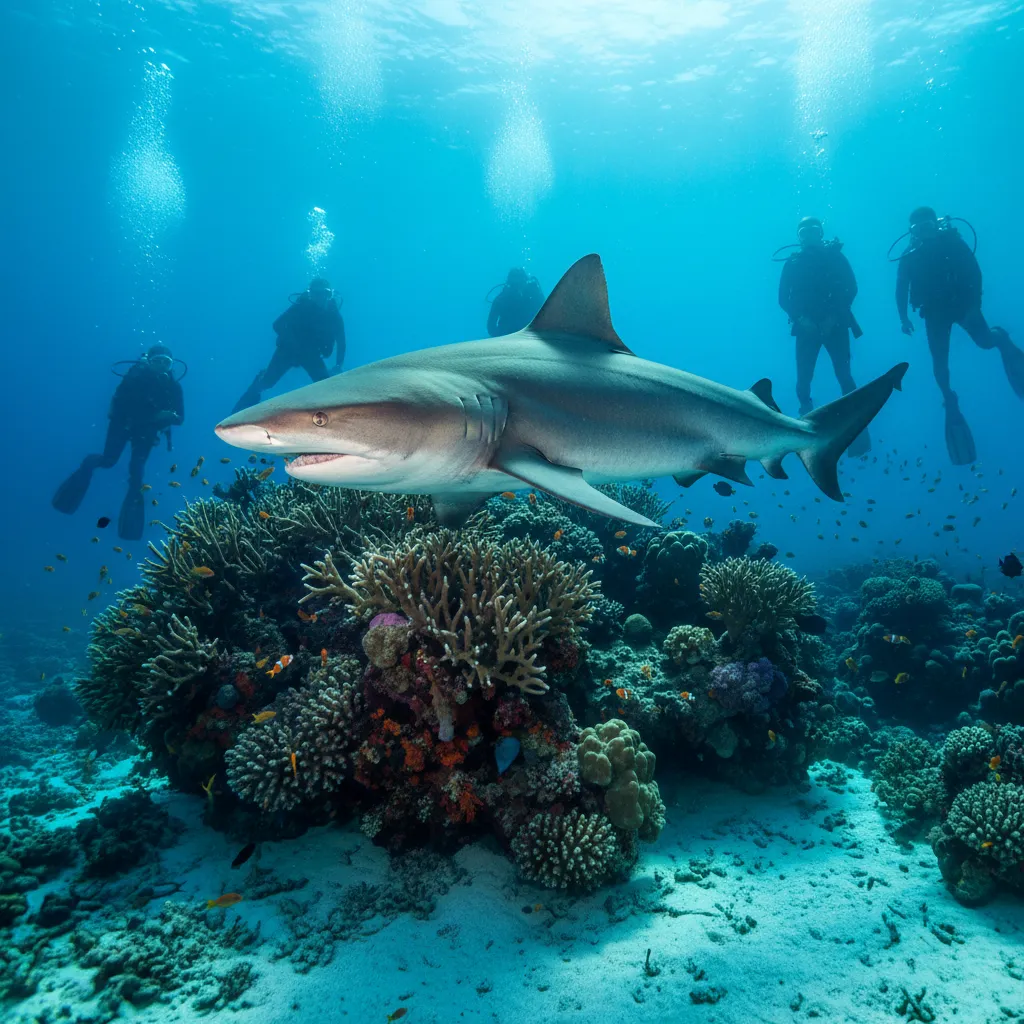
While snorkeling offers a window into the underwater world, diving opens the door. For thrill-seekers, Beqa Lagoon (located south of Pacific Harbour on Viti Levu) offers one of the most famous shark dives on the planet.
Is this for snorkelers? Generally, the shark dive is a scuba activity requiring certification. However, some operators in Beqa Lagoon offer a “shark snorkeling” option in shallower waters or specific observation zones, though the full “Cathedral” experience is reserved for divers.
The Bistro and The Cathedral
The shark dive in Beqa is unique because it features up to eight different species of sharks, including massive Bull Sharks and the occasional Tiger Shark. It is a cage-free dive, relying on the expertise of Fijian feeders who have developed a relationship with these animals over decades. For a Kiwi traveler looking to upgrade their holiday story from “I saw a fish” to “I saw a 3-metre Bull Shark,” this is the place to do it.
How to get PADI Certified in Fiji?
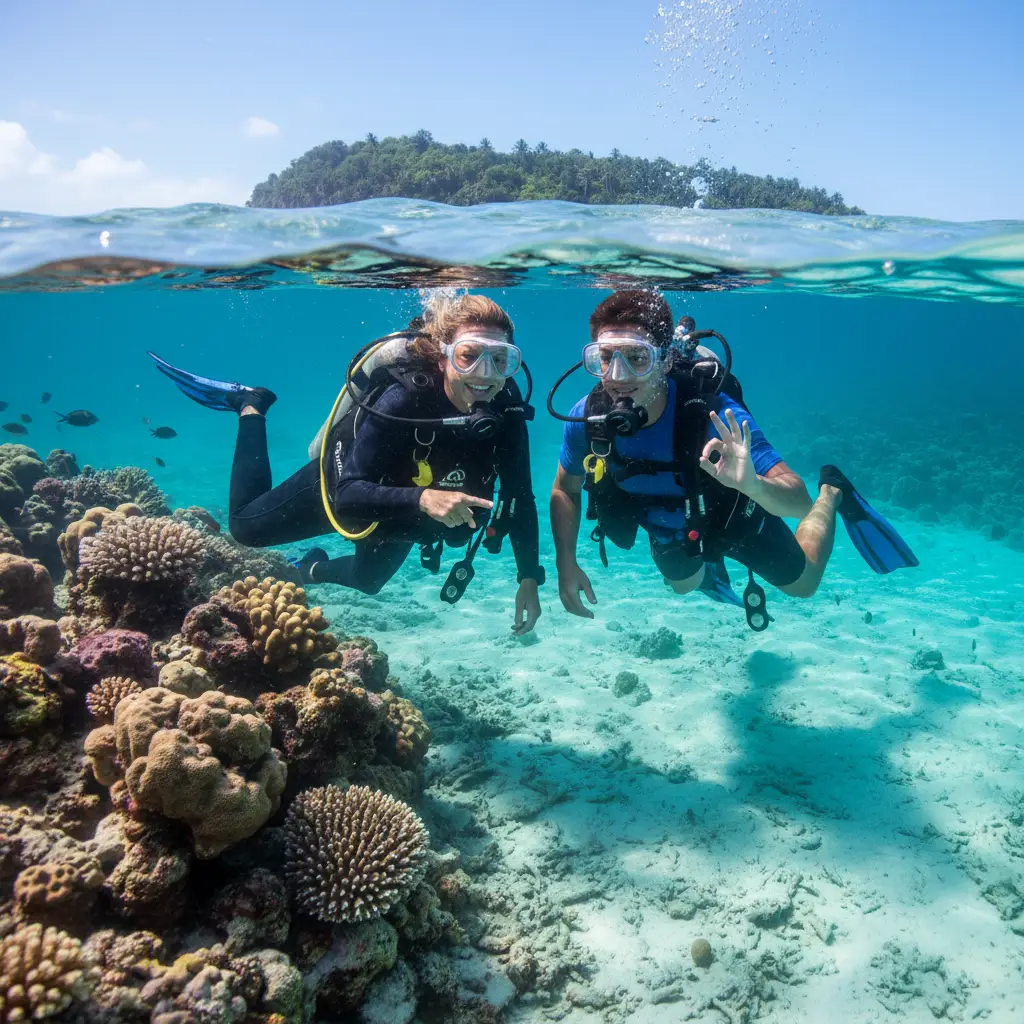
If the limitations of snorkeling—staying on the surface and holding your breath—start to feel restrictive, Fiji is one of the best places in the world to complete a PADI certification course. The water is warm (26°C – 29°C), meaning no thick wetsuits are required, and the currents in training bays are generally mild.
Discover Scuba Diving (DSD)
If you aren’t ready to commit to a full course, ask your resort dive shop for a “Discover Scuba Dive.” This is a half-day experience where an instructor teaches you the basics in a pool or shallow water, followed by a guided reef dive to a maximum depth of 12 metres. It is the perfect bridge between snorkeling and diving.
Open Water Diver Course
For the full certification, the PADI Open Water course takes 3 to 4 days.
- Day 1: Theory (often done via e-Learning before you leave NZ to save holiday time) and confined water skills.
- Day 2-3: Four open water dives on the reef.
Upon completion, you are certified to dive to 18 metres anywhere in the world. Many resorts in the Mamanucas and Coral Coast offer competitive packages for New Zealanders that include gear hire.
Taveuni: The Soft Coral Capital of the World
No article on Fiji’s underwater world is complete without mentioning Taveuni. Known as the “Garden Island,” its underwater reputation is built on the Rainbow Reef and the Great White Wall.
While the Great White Wall is a deep dive site, the top of the Rainbow Reef offers spectacular snorkeling. The soft corals here bloom in vibrant purples, pinks, and oranges when the current is running. It requires a bit more swimming effort than a house reef, but the density of fish life and the vibrancy of the coral is superior to almost anywhere else in the archipelago.
Practical Tips for New Zealand Travelers
Traveling from New Zealand to Fiji for a snorkeling trip is seamless, but a few pro tips can enhance the experience.
Bring Your Own Mask
While all resorts provide rental gear, fit is everything. A leaking mask can ruin a snorkeling session. We recommend Kiwis visit a local dive shop in Auckland, Wellington, or Christchurch to buy a high-quality silicone mask that fits their face shape before departing. Fins are bulky and can be rented, but a mask is personal.
Sun Safety
The Fijian sun is far more intense than in New Zealand. The “burn time” can be as little as 10 minutes.
- Rash Vests: Always wear a UV-protective rash vest (rashie) while snorkeling. It protects against sunburn and minor jellyfish stings.
- Reef-Safe Sunscreen: Ensure your sunscreen is oxybenzone-free to protect the delicate coral ecosystems you are there to enjoy.
Seasonality
Fiji is a year-round destination, but for snorkeling, the dry season (May to October) offers the best underwater visibility, often exceeding 30 metres. This coincides perfectly with the NZ winter, making it the ideal escape. The wet season (November to April) is warmer, but rain run-off can slightly reduce visibility near the main islands.
People Also Ask
Which island in Fiji has the best snorkeling?
While subjective, the Yasawa Islands (specifically near Drawaqa for mantas) and Taveuni (Rainbow Reef) are widely considered to have the best snorkeling due to water clarity and coral health. For convenience, the Mamanuca Islands offer excellent snorkeling close to Nadi.
Is it safe to snorkel in Fiji?
Yes, snorkeling in Fiji is generally very safe. Most resorts have protected house reefs free from heavy boat traffic. However, you should always snorkel with a buddy, be aware of currents, and wear a life jacket if you are not a confident swimmer.
Can you snorkel off the beach in Fiji?
Absolutely. Fiji is famous for its “house reefs,” which allow you to walk directly from the white sand into coral gardens. Resorts like Tokoriki, Castaway, and many in the Yasawas specialize in off-the-beach snorkeling.
Are there sharks in Fiji snorkeling waters?
Yes, you will likely see Blacktip and Whitetip Reef Sharks. These are generally small, timid, and harmless to humans. They are a sign of a healthy reef ecosystem and are usually frightened of snorkelers.
What is the best time of year to snorkel in Fiji?
The best visibility occurs during the dry season, from May to October. This is also the season for Manta Rays in the Yasawas. The water is slightly cooler (25-26°C), so a thin wetsuit or rash vest is recommended.
Do I need to bring my own snorkel gear to Fiji?
It is not strictly necessary as resorts offer rentals, often complimentary. However, bringing your own mask and snorkel ensures a perfect fit and hygiene. Fins can take up luggage space, so renting those is a common choice for NZ travelers.