
Fiji resort comparisons require evaluating accommodations based on location (Denarau vs. Outer Islands), target audience (family-friendly vs. adults-only), and budget. For New Zealand travellers, the optimal choice depends on transfer logistics from Nadi, meal plan value, and specific amenities like world-class kids’ clubs or private plunge pools.
For New Zealanders, Fiji remains the quintessential tropical escape. Just a short three-to-four-hour flight from Auckland, Christchurch, or Wellington, it offers an immediate transition into island time. However, with over 300 islands and hundreds of resorts ranging from backpacker bures to ultra-luxe private retreats, the decision fatigue is real.
This comprehensive guide cuts through the marketing noise. We analyze the top contenders head-to-head, break down the value of your NZD, and help you decide whether the convenient shores of Denarau or the pristine sands of the Mamanucas are right for your next holiday.
The Geography of Choice: Where Should You Stay?
Before comparing specific resorts, you must choose a region. Your location dictates your transfer cost, beach quality, and isolation level.
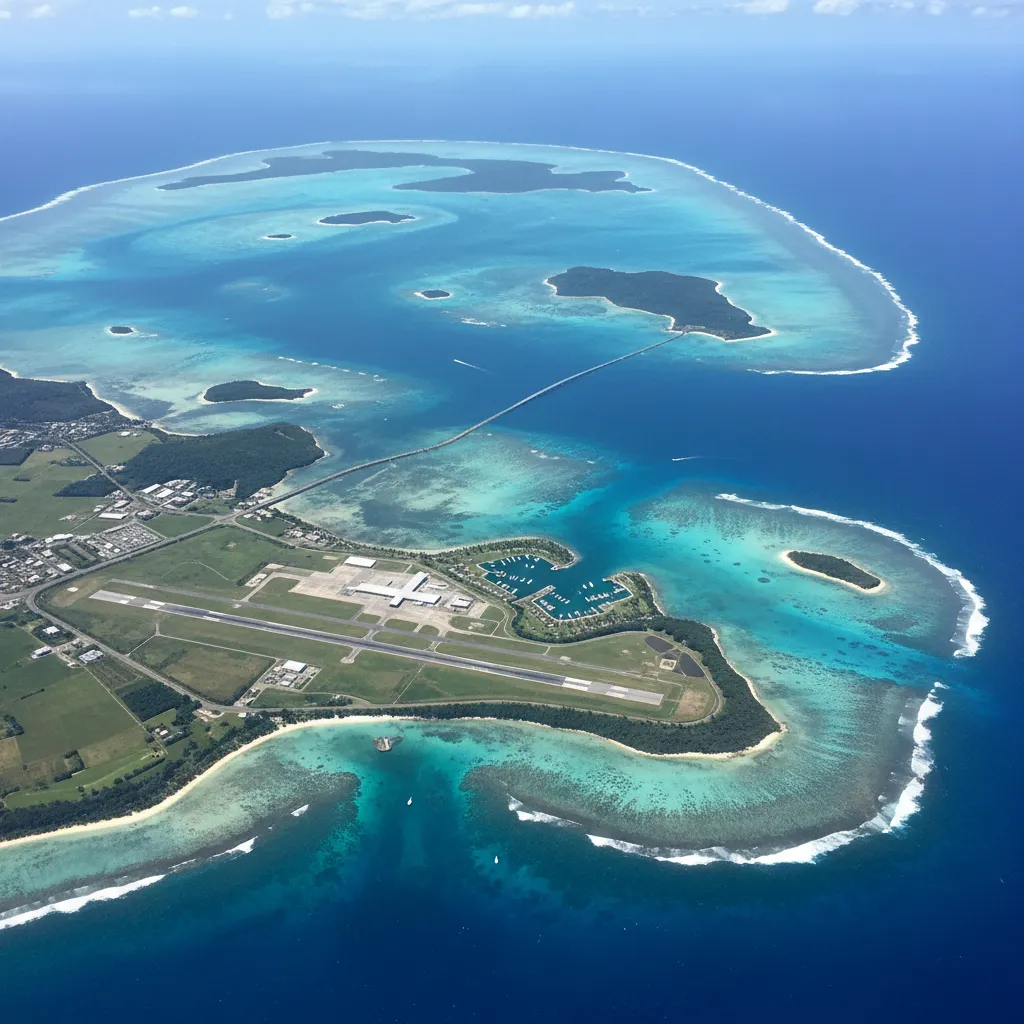
Denarau Island
Best for: Short stays, convenience, dining variety, golfers.
Denarau is not a “real” island but a reclaimed mangrove area attached to the mainland by a short causeway. The beaches here have darker sand and are not the white-sand idylls of brochures. However, it is only 20 minutes from Nadi Airport. You can access the Bula Bus to hop between resorts, giving you access to dozens of restaurants.
The Coral Coast
Best for: Adventure, cultural immersion, value for money.
Located on the southern coast of Viti Levu (a 1-2 hour drive from Nadi), this area features vast fringing reefs. It is home to massive resorts like the Outrigger and Warwick. The beaches can be tidal, meaning swimming is sometimes restricted to high tide.
The Mamanuca & Yasawa Islands
Best for: White sand beaches, snorkeling, the “Castaway” vibe.
This is the Fiji of postcards. Accessed by the Malolo Cat ferry, private water taxi, or helicopter, these islands offer crystal clear water and better snorkeling. The trade-off is isolation; you are generally restricted to the resort’s dining options.
Head-to-Head Battle: The Family Titans
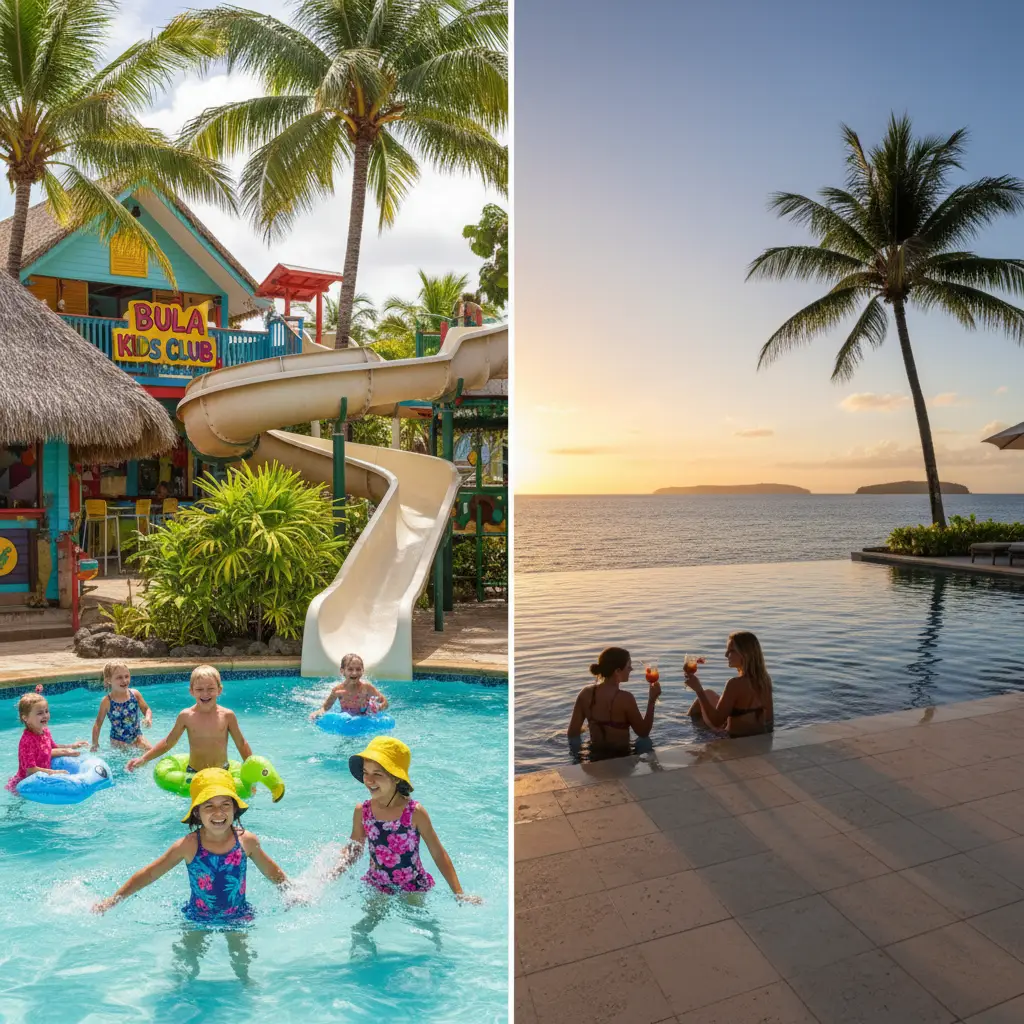
For Kiwi families, the holy grail is a resort with a kids’ club that the children actually want to attend, allowing parents to relax by the pool with a cocktail. Here is the definitive comparison of the two heavyweights.
Shangri-La Yanuca Island vs. Outrigger Fiji Beach Resort
The Shangri-La (Yanuca Island)
- Location: Connected to the mainland by a causeway (Coral Coast).
- The Vibe: Massive, self-contained private island. It feels like a small village.
- The Kids’ Club: The “Little Chief’s Club” is legendary. The resort also features an inflatable water park in the lagoon which is a massive hit for teenagers.
- The Verdict: Choose Shangri-La if you want a swimmable beach at all tides (rare for the Coral Coast) and don’t plan on leaving the resort.
Outrigger Fiji Beach Resort
- Location: Heart of the Coral Coast (Sigatoka).
- The Vibe: Traditional Fijian village feel with thatched bures. More vertical terrain (requires buggy service or walking up hills).
- The Kids’ Club: They offer the “Meimei” nanny service, which is arguably the best in the South Pacific. Dedicated nannies for very young children allow new parents genuine downtime.
- The Verdict: Choose Outrigger if you want authentic cultural hospitality and have toddlers requiring one-on-one care. Note that the beach here is very tidal and rocky at low tide.
Head-to-Head Battle: Adults-Only Luxury
When the goal is romance or a break from the kids, the Mamanuca Islands offer two distinct forms of luxury.
Likuliku Lagoon Resort vs. Tokoriki Island Resort
Likuliku Lagoon Resort
Famous for being the first in Fiji to offer authentic over-water bures. This is high-end, barefoot luxury. The focus here is on the architecture and the unique location. It is incredibly quiet and private. The food is sophisticated, often utilizing produce from their own gardens.
Tokoriki Island Resort
Tokoriki leans heavily into the “romantic” aspect. The staff are renowned for remembering every detail of your preference. The villas often come with private plunge pools. While Likuliku is about the water, Tokoriki is about the garden-meets-beach privacy.
Winner for Honeymoons: Likuliku for the bucket-list overwater experience; Tokoriki for a slightly more intimate, garden-setting privacy.
Head-to-Head Battle: The Denarau Showdown
Denarau is often the first stop for Kiwis because of the ease of access. The “Big Three” sit side-by-side, yet offer different experiences.
- Sofitel Fiji Resort & Spa: Recently renovated, the Sofitel feels the most modern and chic. The “Waitui Beach Club” is an adults-only sanctuary within the resort that is worth the extra upgrade cost. It has the best pool scene on Denarau.
- Radisson Blu Resort: The undisputed king of family pools on Denarau. With a whitewater tunnel slide and multiple temperature-controlled pools, it is a hit with kids. The apartments also feature kitchenettes and laundry facilities, which is a massive plus for families staying longer than 5 nights.
- Hilton Fiji Beach Resort: Spread out along a long stretch of coastline, the Hilton feels less crowded but requires more walking (or buggy rides). The rooms are villas rather than hotel blocks, offering a more residential feel.
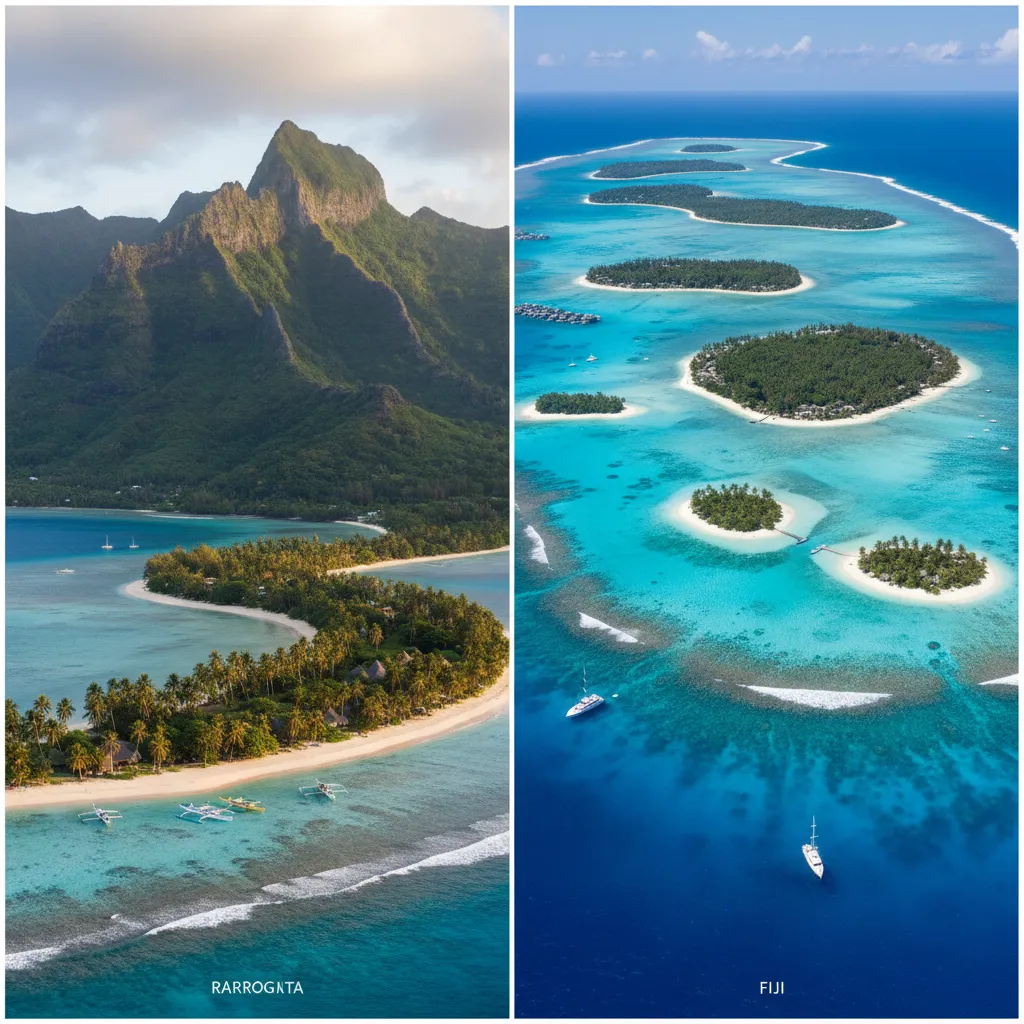
Destination Comparison: Fiji vs. Rarotonga
For New Zealanders, the choice often isn’t just which resort, but which country. Both use English, both are friendly, but the holiday mechanics differ significantly.
Currency and Cost
Rarotonga: Uses the New Zealand Dollar. This is a massive psychological advantage for Kiwis. No exchange rate math, no bank fees for currency conversion. Prices at supermarkets are similar to NZ (slightly higher due to freight).
Fiji: Uses the Fijian Dollar (FJD). You generally get around $1.30 to $1.40 FJD for $1 NZD, but resort prices are high. A cocktail in a 5-star Fiji resort can cost $25-$30 FJD.
The Vibe
Rarotonga: You don’t stay in your resort. You rent a scooter or car and drive the 32km ring road. You eat at local cafes and markets. It feels like a small town.
Fiji: Resort-centric. Especially if you are on an island, you are “captive” to the resort. Fiji offers a higher standard of luxury service and significantly larger resorts.
Beaches
Fiji’s outer islands (Mamanucas/Yasawas) have superior beaches to Rarotonga’s main island. However, Rarotonga’s Muri Lagoon offers better off-the-beach snorkeling than Denarau or the Coral Coast.
Budget vs. Luxury: What Does Your NZD Buy?
Understanding the tiers of Fiji accommodation is crucial to managing expectations.
Budget / Mid-Range (Under $400 NZD/night)
Examples: Plantation Island Resort, The Naviti.
At this price point, expect older fit-outs. Rooms may be basic “hotel style” blocks rather than private bures. Buffets are abundant but quantity is prioritized over gourmet quality. These resorts are often packed with families and have a high energy.
High-End (Over $900 NZD/night)
Examples: Six Senses, Vomo Island, Nanuku.
Here, you are paying for space and ratios. Staff-to-guest ratios are often 2:1 or higher. Inclusions usually cover non-motorized watersports, stocking of minibars, and sometimes nanny services. The dining changes from buffet to a la carte.
Booking Guide: Agents vs. Direct vs. OTAs
How you book affects your price and your security, especially regarding flight disruptions from Auckland.
NZ Travel Agents (Flight Centre, House of Travel)
Pros: They have exclusive “package” rates that combine Fiji Airways flights with accommodation. They often secure “kids eat free” or “bonus resort credit” deals that you cannot find online. If a cyclone hits or flights are cancelled, they handle the rebooking.
Cons: Service fees may apply.
Online Travel Agencies (Booking.com, Expedia)
Pros: Good for comparing room-only rates. Flexible cancellation policies are often clearly displayed.
Cons: Transfers are rarely included. You might book a cheap room on an island only to find the boat transfer costs an extra $400 NZD per person.
Direct Booking
Pros: Loyalty points (Accor, Hilton Honors, Marriott Bonvoy). The hotel is more likely to upgrade a direct booking than an Expedia booking.
Cons: Often the most expensive headline rate unless you are a loyalty member.
People Also Ask
Which part of Fiji is best for families?
The Coral Coast and Denarau are best for families due to accessibility and large resorts with dedicated kids’ clubs. The Coral Coast (e.g., Outrigger, Shangri-La) offers a more authentic beach experience, while Denarau offers convenience to the airport and hospital.
Is it worth staying on Denarau Island?
Yes, if you prioritize convenience, dining variety, and short transfer times. It is ideal for short trips (4-5 days). However, if you want pristine white sand and snorkeling, you should look at the Mamanuca Islands instead.
What is the difference between a Bure and a Villa?
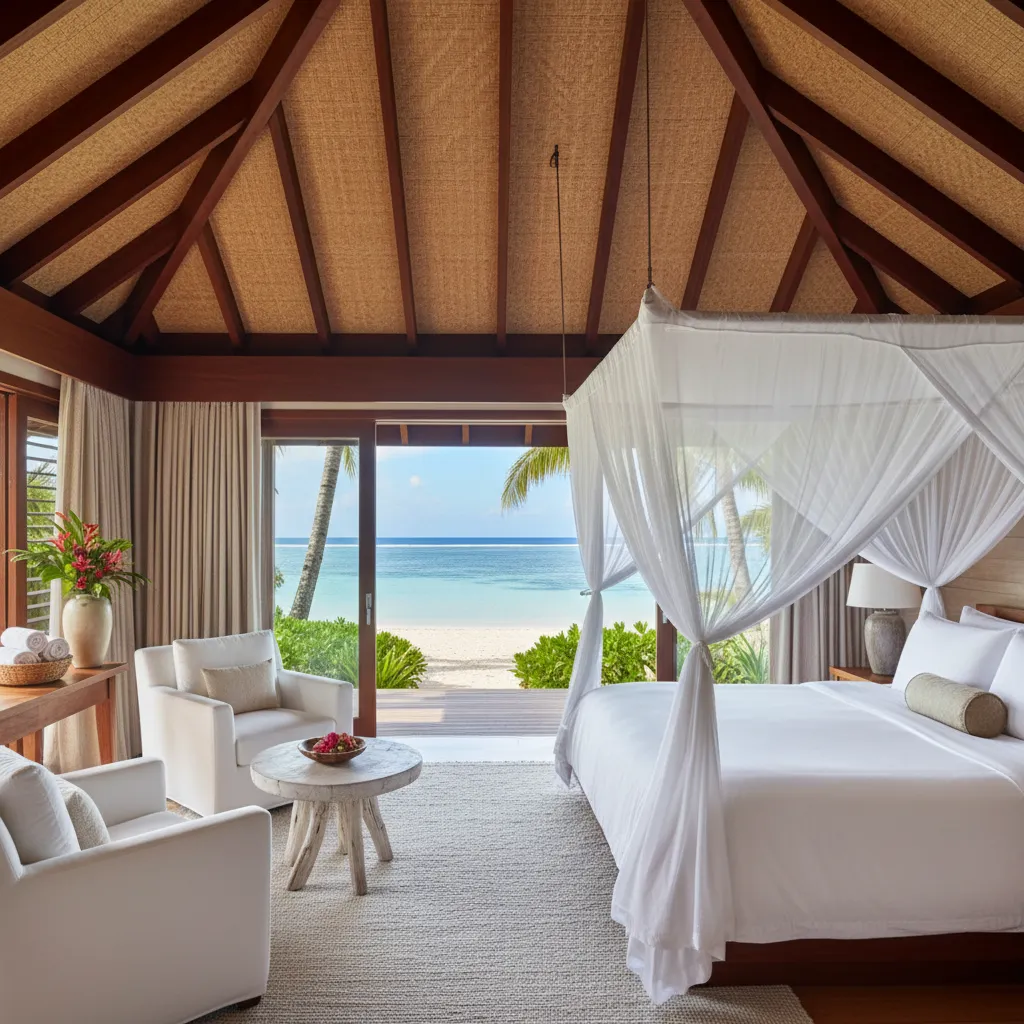
A “Bure” (pronounced boo-ray) is the Fijian word for a wood and straw hut. In resorts, it refers to a standalone cottage, usually with traditional thatched roofing and timber interiors. A Villa is typically a more modern, western-style structure, often with multiple bedrooms.
Is Rarotonga cheaper than Fiji for NZ travellers?
Generally, on-the-ground costs are cheaper in Rarotonga because you use NZD and eat at local cafes. However, Fiji package deals (flights + accommodation + food) can be cheaper upfront due to the volume of tourism and competition between large resorts.
Do I need to book resort transfers in advance?
Absolutely. Taxis are available on the mainland, but boat transfers to islands (like the Malolo Cat) run on strict schedules. Helicopter transfers require pre-booking. Arriving without a transfer booked can leave you stranded at the marina or facing exorbitant private charter fees.
What is the best month to visit Fiji?
The best time to visit is during the dry season, from May to October. This coincides with the NZ winter, making it a perfect escape. The wet season (November to April) is hotter and more humid, with a higher risk of cyclones, though prices are often lower.