
The best Fiji SIM card for tourists is typically Vodafone Fiji for superior coverage across the Mamanuca and Yasawa islands, while Digicel offers competitive data-heavy packages for mainland stays. Most New Zealand travelers should purchase a travel SIM at Nadi International Airport arrivals, where massive data packs cost approximately $35-$50 NZD, offering significant savings over NZ carrier roaming fees.
For New Zealanders escaping the winter chill for the tropical warmth of Fiji, staying connected is often a top priority. Whether it is uploading photos of the Coral Coast to Instagram, checking weather reports for your island-hopping tour, or simply keeping in touch with whānau back home, a reliable internet connection is essential. While New Zealand carriers like One NZ, Spark, and 2degrees offer roaming packs, they often pale in comparison to the value and data volume provided by local Fijian networks.
Vodafone vs Digicel: Which Fiji SIM card has better coverage?
When you land in Fiji, you are essentially choosing between two major telecommunications providers: Vodafone Fiji and Digicel. For New Zealand tourists, the choice largely depends on your itinerary.
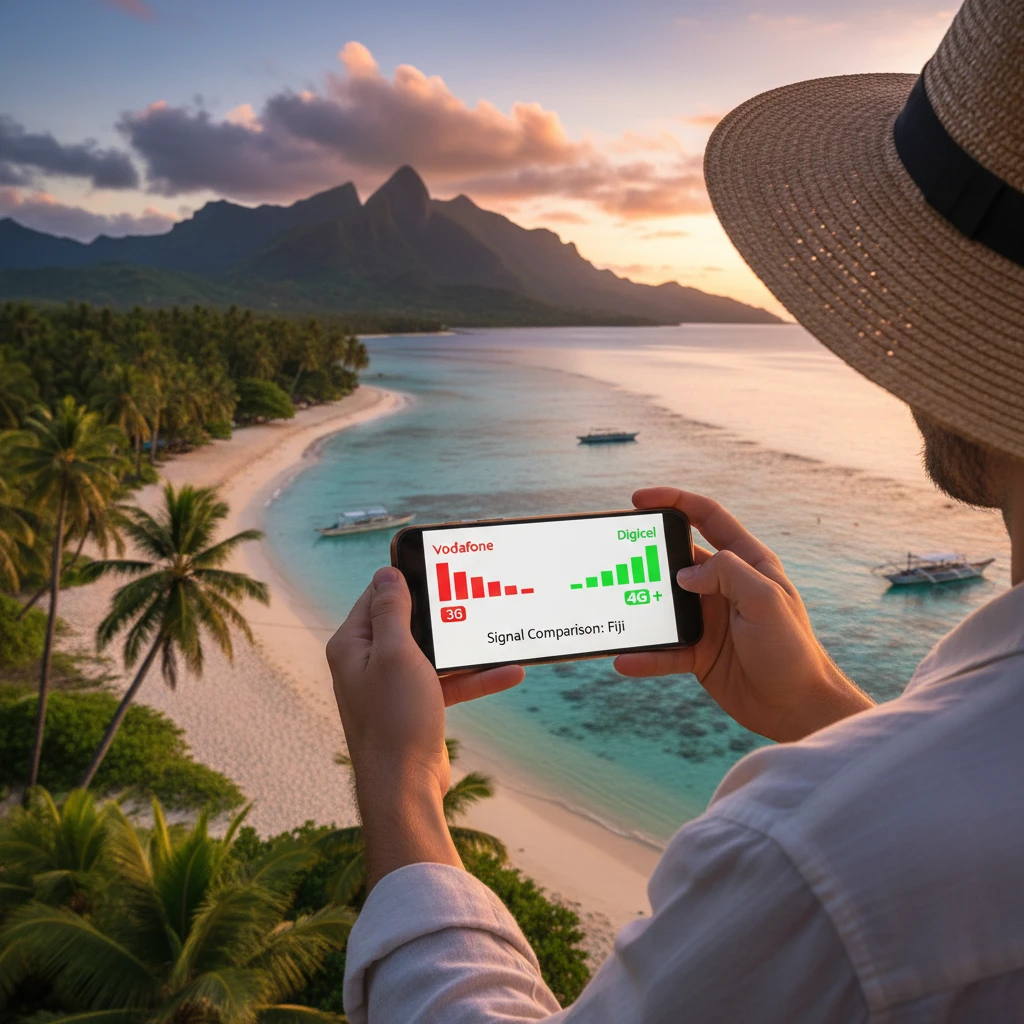
Vodafone Fiji Coverage
Vodafone is generally considered the market leader regarding geographical reach, particularly for maritime coverage. If your holiday involves leaving Viti Levu (the main island) to visit the Mamanuca or Yasawa island groups, Vodafone typically offers a stronger, more consistent 4G signal. They have invested heavily in infrastructure to support the tourism belt. For travelers heading to remote areas like Vanua Levu or Taveuni, Vodafone remains the safer bet for maintaining connectivity.
Digicel Fiji Coverage
Digicel is a robust competitor and provides excellent 4G+ coverage in major towns like Nadi, Suva, and Lautoka, as well as along the popular Coral Coast. However, users often report spotty connections once they venture far out to sea or to the more secluded islands. If you plan to stay exclusively at a resort on Denarau Island or the Coral Coast, Digicel is perfectly adequate and often provides slightly faster download speeds in urban centers.
The Verdict for NZ Tourists
If you are doing the classic Kiwi holiday—a mix of resort relaxation and island day trips—Vodafone Fiji is the recommended choice for peace of mind. The slight price difference is worth the extended coverage range.
Where are the SIM card kiosks at Nadi Airport?
Buying a SIM card in Fiji is incredibly streamlined for tourists. Unlike some countries where you have to hunt for a store in the city, Fiji brings the connectivity to you immediately upon arrival.
Once you clear immigration and collect your baggage at Nadi International Airport, you will pass through customs and enter the Arrivals Hall. Immediately as you exit the restricted area, you will see the Vodafone and Digicel kiosks. They are impossible to miss and are usually staffed by friendly locals eager to help you get set up.
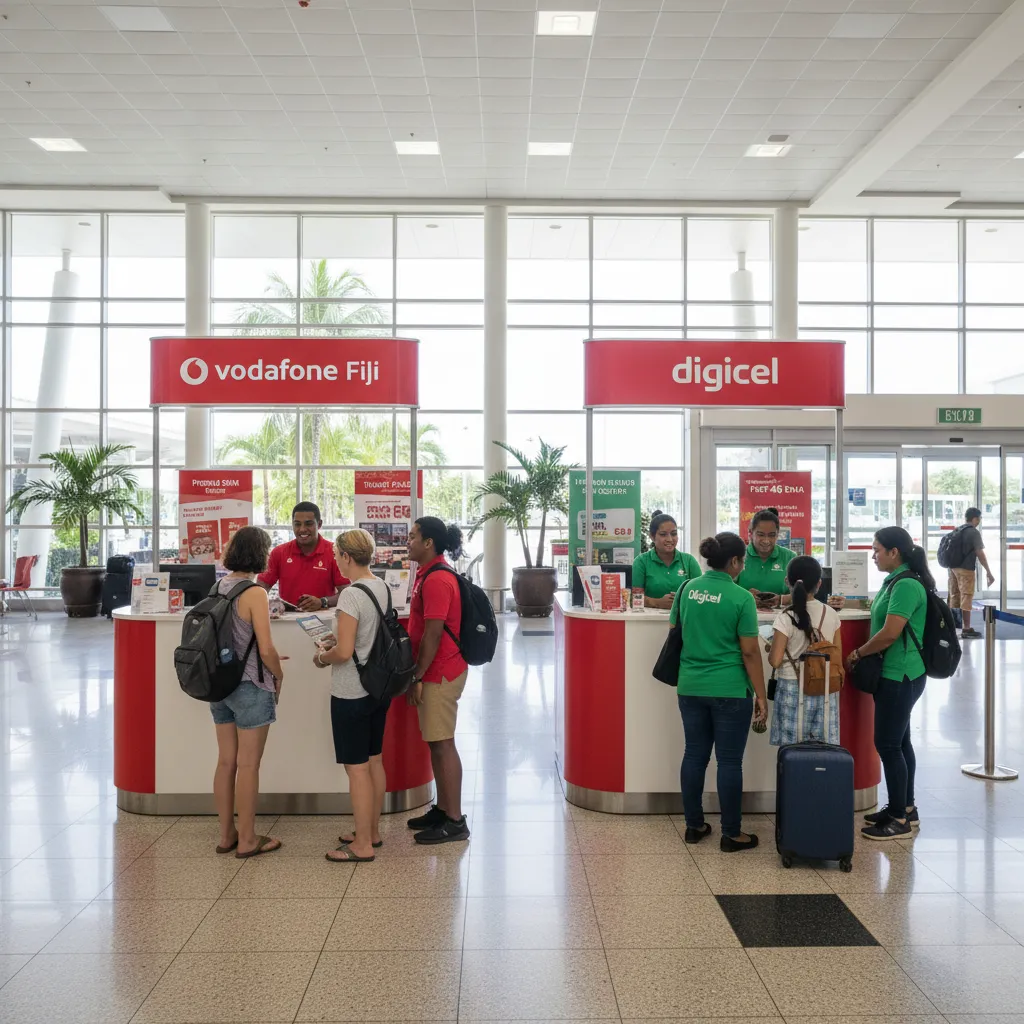
Opening Hours: These kiosks are designed to service international flights. Whether your Air New Zealand or Fiji Airways flight lands at 2:00 PM or 2:00 AM, the kiosks remain open to service arriving passengers.
The Process:
- Approach the counter (expect a short queue if a large plane just landed).
- Hand over your unlocked phone and your passport (registration is mandatory by Fijian law).
- The staff will insert the SIM, configure the APN settings, and ensure your data is working before you leave the counter.
How much do data packs cost compared to NZ roaming?
For New Zealanders, the cost savings of switching to a local SIM are substantial. Most NZ carriers charge a daily roaming fee (e.g., $7-$8 NZD per day) which allows you to use your home plan. Over a 10-day holiday, this adds up to $80 NZD, and you are still limited by your NZ plan’s data caps.
Local Tourist SIM Pricing
Fijian providers offer specific “Tourist SIM” bundles that are valid for 15 to 30 days. While prices fluctuate slightly, here is a typical breakdown of what you can expect to pay:
- Vodafone Fiji: A typical tourist pack costs around $35 – $50 FJD (approx. $25 – $37 NZD). This usually includes a massive data allowance (often 100GB or more), unlimited local calls, and a modest amount of international minutes to New Zealand.
- Digicel Fiji: Digicel often undercuts on price or offers “unlimited” data promotions for similar durations. A standard traveler pack might cost $30 FJD (approx. $22 NZD) for similarly high data caps.
The Math: Spending $30 NZD for 100GB of data on a local SIM is significantly better value than paying $80 NZD in roaming fees to use your limited NZ data allowance.
Is Resort WiFi reliable enough for video calls?
A common mistake travelers make is assuming they can rely solely on hotel WiFi. While luxury resorts like the Sheraton, Hilton, or InterContinental offer WiFi, the reality often falls short of expectations.

The “Island Time” Connection
WiFi in Fiji, even at 5-star resorts, can be notoriously slow and unstable. Bandwidth is often shared among hundreds of guests. In the evenings, when everyone returns from the pool to check their emails or stream Netflix, speeds can crawl to a halt. Furthermore, WiFi signals often do not reach the bures (villas) located further away from the main lobby.
If you need to make Zoom calls for work or FaceTime family back in Auckland or Wellington, relying on resort WiFi is a gamble. A local SIM card on 4G provides a dedicated, faster, and more secure connection that works poolside, in your room, and on the boat transfer.
Are eSIMs a good alternative for Fiji?
For Kiwis with newer iPhones or Android devices, eSIMs (embedded SIMs) are becoming a popular alternative to physical SIM cards. Providers like Airalo or Holafly offer Fiji-specific digital SIMs that you can install before you even leave Auckland Airport.
Pros and Cons of eSIMs in Fiji
- Pros: You keep your NZ SIM in your phone to receive 2FA texts from your bank; instant activation; no queuing at Nadi airport.
- Cons: Generally more expensive per GB than physical local SIMs; often roam on Digicel networks which may have less coverage than Vodafone in remote islands; data-only (no local phone number for booking restaurants or taxis).
If convenience is your primary driver and you don’t mind paying a premium (e.g., $15 USD for 3GB), an eSIM is a viable backup. However, for heavy data users, the physical SIM bought at the airport remains the king of value.
How to set up your phone for a Fiji SIM
Before you fly out of New Zealand, there are a few technical checks you must complete to ensure a smooth transition to the Fijian network.
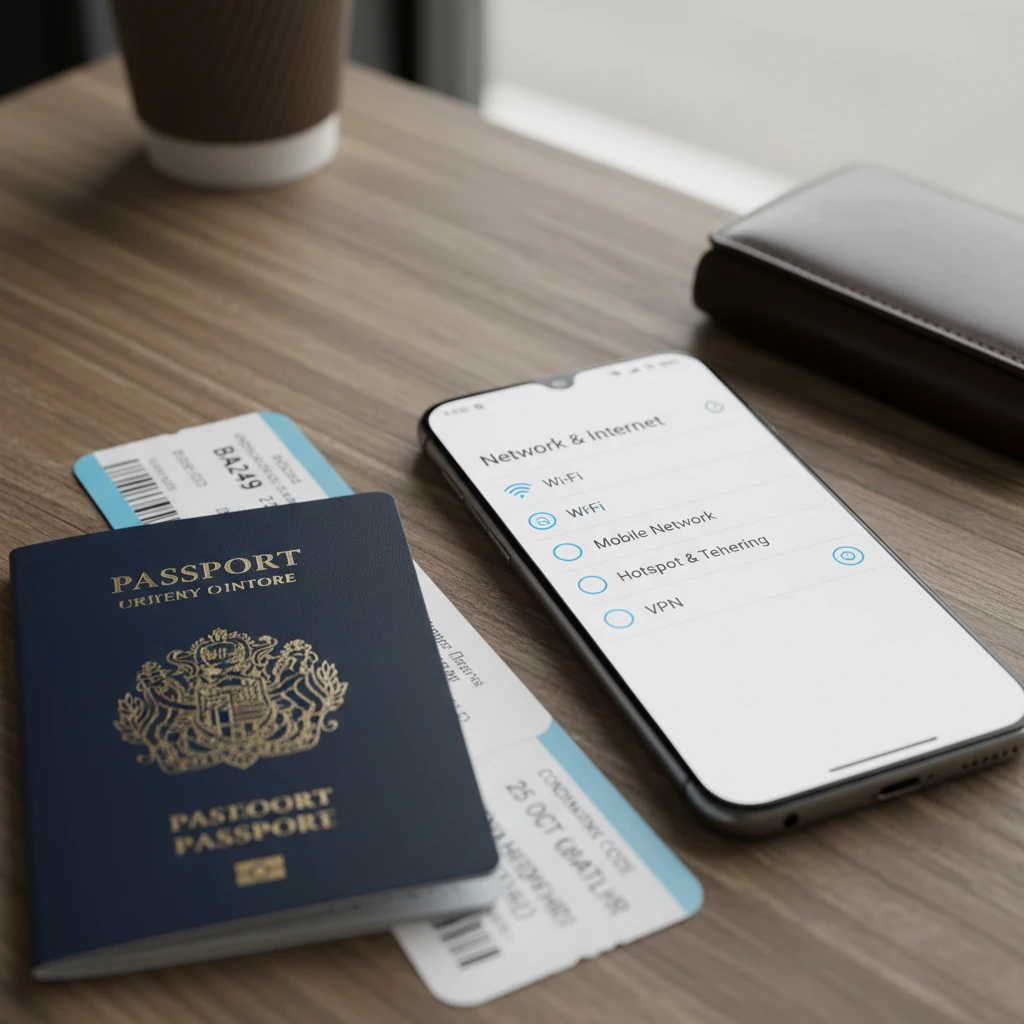
1. Check Network Locking
While most modern phones sold in NZ on open terms are unlocked, some devices purchased on contract (specifically older plans from Spark or Vodafone NZ) might still be network locked. Contact your provider to confirm your device can accept a foreign SIM.
2. The Registration Law
Fiji has strict laws regarding SIM card registration. You cannot buy a SIM “off the shelf” at a dairy without identification. You must present your physical passport at the kiosk. The agent will scan it and take a digital photo of you to register the SIM.
3. APN Settings
Usually, the network configuration happens automatically. However, if your data isn’t working immediately:
- Vodafone APN: live.vodafone.com.fj
- Digicel APN: web.digicelpacific.com
Restart your phone after inserting the new SIM to force it to latch onto the local towers.
Frequently Asked Questions
Can I use my NZ home plan in Fiji?
Yes, major NZ carriers like One NZ, Spark, and 2degrees offer roaming packs (usually $7-$8 per day). However, this is significantly more expensive than buying a local SIM if you are staying for more than 3 days.
Which Fiji SIM card is best for the Yasawa Islands?
Vodafone Fiji generally offers superior coverage in the Yasawa and Mamanuca island groups compared to Digicel.
Does Starlink work in Fiji for tourists?
Starlink is available in Fiji and is increasingly used by high-end resorts and charter boats to provide WiFi, but it is not a personal mobile solution for tourists carrying smartphones.
Can I buy a SIM card in Suva or Denarau instead of the airport?
Yes, both Vodafone and Digicel have retail stores in Port Denarau, Suva, and most major towns. However, the airport kiosks often have exclusive “tourist bundles” with higher data caps that aren’t available in standard retail stores.
How fast is mobile internet in Fiji?
In main areas like Nadi and Suva, you can expect decent 4G+ speeds (20-50 Mbps). On outer islands, speeds may drop to standard 4G or 3G levels depending on your distance from the tower.
Do Fiji SIM cards expire?
Yes, tourist SIMs usually have a validity period of 15 or 30 days. If you plan to return to Fiji later in the year, you will likely need to purchase a new SIM card as inactive numbers are recycled quickly.