
A comprehensive Fiji food and dining guide reveals a rich culinary tapestry blending indigenous Kaiviti traditions with bold Indo-Fijian flavors. From the smoky earth-oven delights of a traditional Lovo feast to fresh seafood kokoda and evolving luxury fine dining, Fiji offers a diverse gastronomic journey rooted in fresh, local ingredients and communal hospitality.
While Fiji is globally renowned for its pristine turquoise waters and white sandy beaches, the archipelago’s culinary landscape is equally vibrant, offering a sensory journey that mirrors its cultural diversity. For the discerning traveler, understanding the nuances of Fijian cuisine—from the humblest roadside stalls to the most exclusive resort dining rooms—is essential to experiencing the true heart of the South Pacific.
This guide serves as your authoritative resource for navigating the flavors of Fiji. Whether you are planning a specialized culinary tour or simply wish to eat like a local during your island getaway, we break down the history, safety protocols, and regional delicacies that define this unique market niche.
The Dual Heritage: Indigenous vs. Indo-Fijian Cuisine
To truly appreciate the Fiji food and dining guide, one must first understand the historical bifurcation that created the modern Fijian palate. The cuisine is broadly categorized into two distinct yet harmonious pillars: Native Fijian (Kaiviti) and Indo-Fijian.
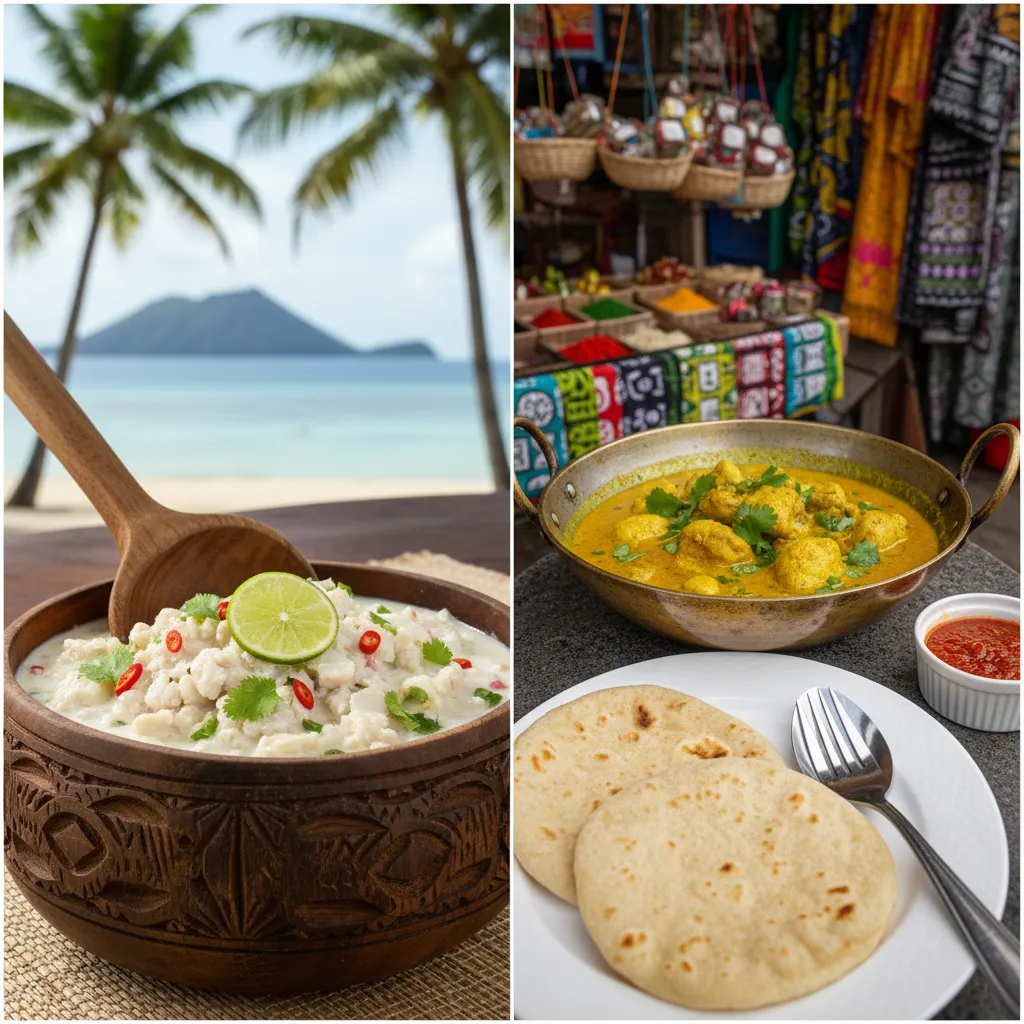
What Defines Native Fijian Cuisine?
Native Fijian cuisine relies heavily on the ocean and the land. It is a diet historically low in processed foods and high in root crops, coconut, and seafood. The flavor profile is often mild, creamy, and earthy.
Key Ingredients:
- Taro (Dalo) & Cassava (Tavioka): These starchy tubers are the caloric backbone of the meal, boiled or roasted and served with almost every dish.
- Coconut (Niu): Used in various forms, from the hydrating water of the green nut to the rich cream (lolo) squeezed from the grated flesh of the mature nut.
- Seafood: Freshly caught reef fish, mud crabs, and lobster are staples.
The most iconic dish is Kokoda (pronounced ‘ko-kon-da’). Often compared to ceviche, Kokoda features raw Walu (Spanish Mackerel) or Mahi Mahi cured in lemon or lime juice. However, unlike its Latin American counterpart, the acidity is balanced with fresh coconut cream, diced tomatoes, onions, and chilies, creating a soup-like consistency that is both refreshing and rich.
How Did Indo-Fijian Cuisine Influence the Islands?
Between 1879 and 1916, British colonial rulers brought over 60,000 indentured laborers from India to work on sugar cane plantations. These laborers brought with them their spices, religious dietary restrictions, and culinary techniques, which evolved over generations to utilize local Fijian ingredients.
Indo-Fijian cuisine is distinct from the food found in India. It tends to use less ghee and dairy, relying instead on vegetable oils and local produce. The curries are often richer in turmeric, cumin, and chilies.
Staple Dishes:
- Curried Goat or Duck: Often reserved for special occasions or Sunday meals.
- Roti: A flatbread eaten daily, often used as a utensil to scoop up curry.
- Surwa: A spicy fish curry that highlights the local catch.
What is a Lovo Feast?
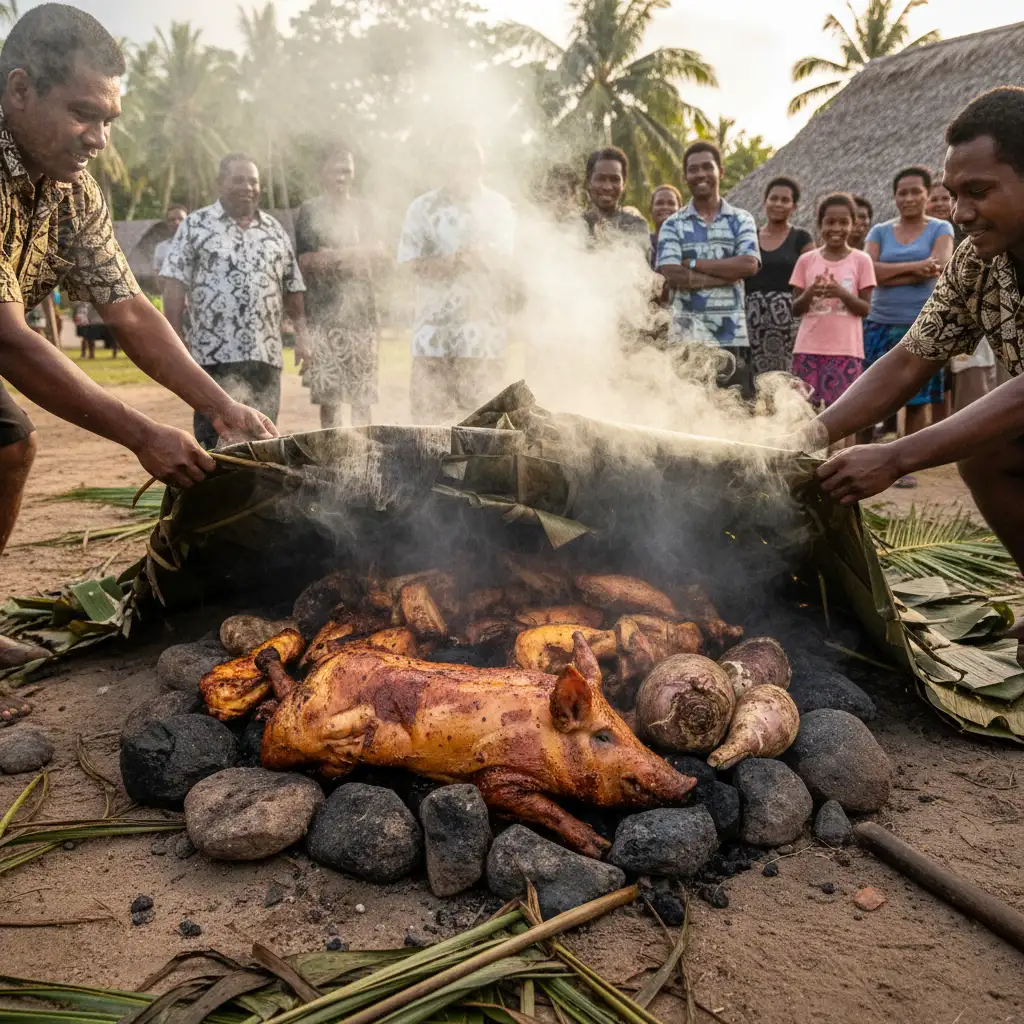
The Lovo is the quintessential Fijian culinary experience, functioning as both a cooking method and a communal event. It is the Pacific equivalent of a roast, but the cooking takes place underground.
How is a Lovo Prepared?
The process begins hours before the meal. A pit is dug into the earth and lined with heat-resistant stones. A fire is built over the stones to heat them until they are white-hot. Once the wood burns down, the stones are leveled.
Food—typically marinated chicken, pork shoulder, whole fish, and root vegetables like dalo and cassava—is wrapped tightly in woven palm fronds or banana leaves. These parcels are placed on the hot stones and covered with more leaves, wet sacks, and finally, earth. This creates a pressure-cooker effect where the food steams and smokes for several hours.
The result is meat that falls off the bone, infused with a distinct smoky, earthy flavor that cannot be replicated in a conventional oven. For travelers, attending a Lovo night at a resort or, better yet, in a local village, is mandatory.
Street Food Safety and Market Etiquette
Venturing outside the resort buffet allows travelers to access authentic flavors at a fraction of the price. However, navigating street food requires knowledge of safety and etiquette.
Is Street Food Safe in Fiji?
Generally, street food in Fiji is safe if you follow standard travel health precautions. The risk of foodborne illness is lower than in many other developing nations, but vigilance is still required.
Safety Guidelines for Travelers:
- Eat Cooked Food Hot: Ensure that BBQ items or fried snacks are cooked fresh in front of you or are kept piping hot.
- Peel It or Leave It: For fruit, stick to items with thick skins you can peel yourself, such as bananas, pineapples, and papayas. Avoid pre-cut fruit that may have been sitting out.
- Water Wisdom: While tap water in major hotels and resorts is generally treated, it is advisable to stick to bottled water or boiled water when dining at roadside stalls or in rural villages.
Must-Try Street Snacks
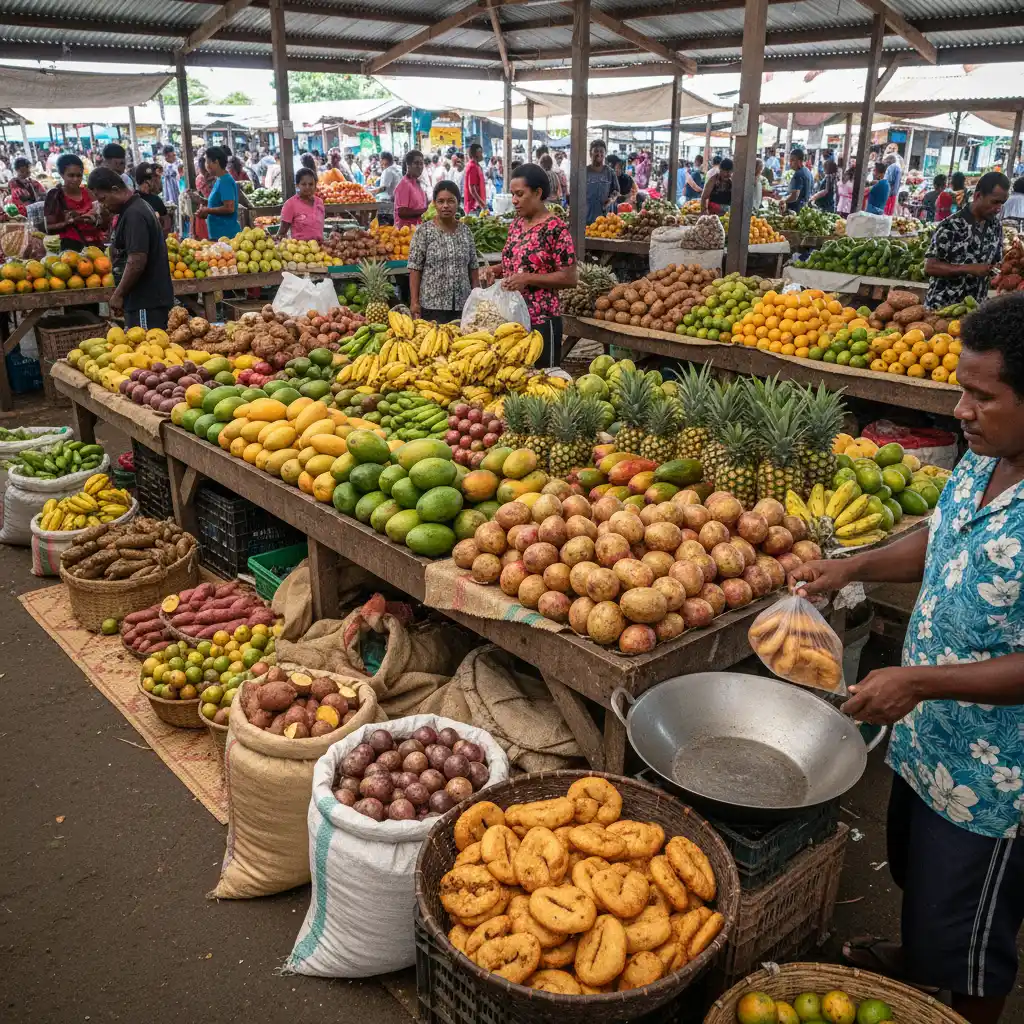
When wandering the municipal markets of Nadi or Suva, look for these items:
- Bara: Spicy split-pea fritters, similar to Indian vada, usually sold in paper bags with tamarind chutney.
- Cassava Cake: A dense, sweet cake made from grated cassava, coconut milk, and sugar.
- Babakau: Deep-fried yeast dough, often eaten for breakfast.
Regional Specialties: Where to Eat What
Fiji is an archipelago of over 330 islands, and while the core cuisine is consistent, regional variations exist based on climate and demographics.
Suva: The Melting Pot
As the capital city, Suva offers the most diverse dining scene. Here, you will find the highest concentration of authentic Chinese restaurants (due to a long-standing Chinese community), expansive municipal markets, and high-end cafes catering to diplomats and expats. It is the best place to find fusion cuisine.
Nadi & Denarau: The Tourist Hub
Nadi is the gateway to Fiji. The dining here is heavily influenced by tourism. Denarau Island features polished, international-standard restaurants ranging from Italian to Japanese. However, downtown Nadi offers excellent, authentic Indo-Fijian curry houses that are far cheaper and often spicier than resort offerings.
The Outer Islands (Yasawas & Mamanucas)
Dining in the outer islands is dictated by the “catch of the day.” Logistics make importing beef or lamb expensive and inconsistent. Therefore, the specialty here is seafood. Expect lobster, coral trout, and octopus caught just hours before dinner, grilled simply over open fires.
Savusavu: The Hidden Gem
Located on Vanua Levu, Savusavu is known as the “Hidden Paradise.” The region has a strong copra (coconut) plantation history. The food here often features richer coconut creams and an abundance of crab, specifically the giant mud crabs found in the mangroves.
The Evolution of Fine Dining in Fiji
Historically, “dining” in Fiji for tourists meant all-you-can-eat buffets. However, the last decade has seen a massive shift toward sophisticated, a la carte fine dining that rivals metropolitan hubs.
How has High-End Dining Changed?
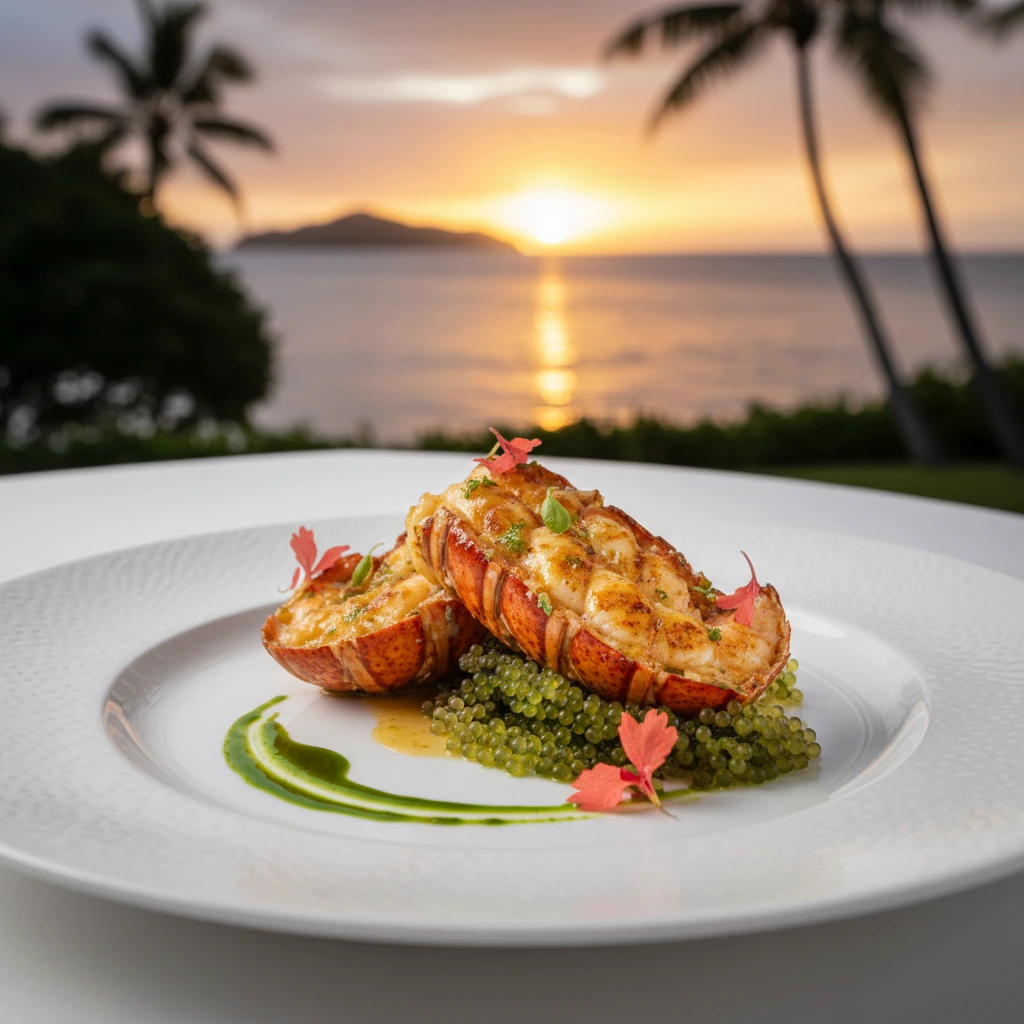
The modern Fiji food and dining guide highlights a “farm-to-table” and “ocean-to-plate” philosophy. Executive chefs, many of whom are award-winning expatriates or returning Fijians, are now leveraging local ingredients rather than importing frozen goods.
Key Trends in Luxury Dining:
- Nama (Sea Grapes): Once a village staple, these briny, caviar-like seaweed pearls are now garnishing high-end seafood dishes in 5-star resorts.
- Local Chocolate: Fiji produces high-quality cacao. Luxury resorts are now making their own single-origin chocolate for desserts.
- Fusion Menus: Expect to see dishes like “Kokoda Risotto” or “Taro Leaf Gnocchi,” blending European techniques with Fijian flavors.
Kava and Beverages
No dining guide is complete without mentioning beverages. While Fiji Water is famous globally, the true national drink is Yaqona, commonly known as Kava.
What is Kava?
Kava is a drink made from the pulverized root of the pepper plant (Piper methysticum). It is not alcoholic but has a mild sedative and anesthetic effect, causing a tingling sensation in the lips and tongue.
Drinking Kava is a ceremonial activity. In a formal setting, there is a strict protocol involving clapping (cobo) and drinking from a communal coconut shell (bilo). For the traveler, it is a way to bond with locals. It is polite to accept a bowl if offered, drinking it in one gulp (maca).
Alcoholic Beverages
Fiji has a robust local brewery scene. Fiji Gold and Fiji Bitter are the ubiquitous lagers found everywhere. For spirits, Fiji Rum Co. produces award-winning rums derived from local sugar cane, with flavors often infused with coconut, coffee, or chocolate.
People Also Ask
What is the national dish of Fiji?
While there is no single official national dish, Kokoda is widely regarded as the quintessential Fijian dish. It consists of raw white fish cured in citrus juice and finished with fresh coconut cream, onions, chilies, and tomatoes.
Is food expensive in Fiji?
The cost of food varies drastically. Local markets and roadside curry stalls are very affordable (FJD $5-$10 per meal). However, dining at resorts and fine dining establishments on Denarau or private islands can be comparable to prices in Sydney or Los Angeles.
Can you drink tap water in Fiji?
In major tourist hubs like Nadi, Suva, and high-end resorts, tap water is generally treated and safe. However, due to varying pipe conditions, most travelers prefer bottled water or boiled water to avoid stomach upsets.
What is a Lovo feast?
A Lovo is a traditional Fijian banquet where food (meats, fish, and root vegetables) is wrapped in banana leaves and cooked in an earth oven over hot stones for several hours, imparting a smoky flavor.
Do Fijians eat with their hands?
Yes, in traditional settings and villages, it is common to eat with your hands. When eating indoors, you sit on the floor on mats. However, restaurants and resorts always provide cutlery.
What is breakfast like in Fiji?
A traditional Fijian breakfast often includes Babakau (fried dough), fresh tropical fruit, and tea. In Indo-Fijian households, it might include Roti and curry. Resorts offer standard international buffet options.