
Group travel Fiji logistics refers to the strategic management of transportation, accommodation, scheduling, and equipment handling for large parties, particularly sports teams. It involves coordinating private charters, securing twin-share lodging, pre-booking sporting facilities, and managing dietary requirements to ensure a seamless itinerary from New Zealand to Fiji.
Strategic Planning for Sports Tours
Organizing a sports tour from New Zealand to Fiji is a complex operation that transcends simple holiday booking. For rugby clubs, netball teams, cricket squads, and golf groups, the success of the tour hinges entirely on precision logistics. The concept of “Fiji Time”—a relaxed approach to punctuality—is charming for tourists but can be a nightmare for team managers trying to adhere to kickoff times or tee reservations.
Effective group travel Fiji logistics requires a military-style approach to the itinerary while allowing the athletes to enjoy the island atmosphere. The primary goal is to minimize friction. Every minute a team captain spends worrying about whether the bus will arrive or if the hotel rooms are ready is a minute not focused on the game. For New Zealand organizers, understanding the local infrastructure is paramount to bridging the gap between Kiwi expectations and Fijian delivery.
Accommodation: Twin-Share and Team Configurations
When managing group travel Fiji logistics, accommodation selection is the single largest line item and the most critical variable for team morale. Unlike leisure travelers who prioritize ocean views, sports groups prioritize functionality, sleep quality, and proximity to venues.
The Necessity of Twin-Share Options
Cost-efficiency is vital for amateur and semi-pro clubs. Twin-share configurations are the industry standard for keeping per-player costs down. However, not all “twin” rooms in Fiji are created equal. Logistics planners must verify bed configurations explicitly:
- Split King vs. Double Beds: Many resorts market a room as sleeping two people but provide one King bed. For a sports team, you specifically require “Split King” setups or two distinct double beds to ensure athletes have their own sleeping space.
- Room Capacity and Layout: For junior teams, triple or quad-share bures can further reduce costs, but this increases the logistical challenge of bathroom scheduling before morning matches.
Location Strategy: Denarau vs. Coral Coast
The geography of your accommodation dictates your transport logistics.
Denarau Island: Offers high-end infrastructure, reliable Wi-Fi, and proximity to Nadi Airport (20 minutes). It is ideal for golf groups playing at the Denarau Golf & Racquet Club or teams requiring quick access to Prince Charles Park.
Coral Coast: Located 60-90 minutes from the airport, this region offers larger resort footprints often suitable for training runs and recovery sessions in the lagoon. However, the travel time must be factored into match-day schedules.
Private Bus Charters and Equipment Transport
Transport is the backbone of group travel Fiji logistics. Relying on public shuttles or piecemeal taxi services is a recipe for disaster when moving 20+ people and heavy sporting equipment.
Managing Heavy Equipment
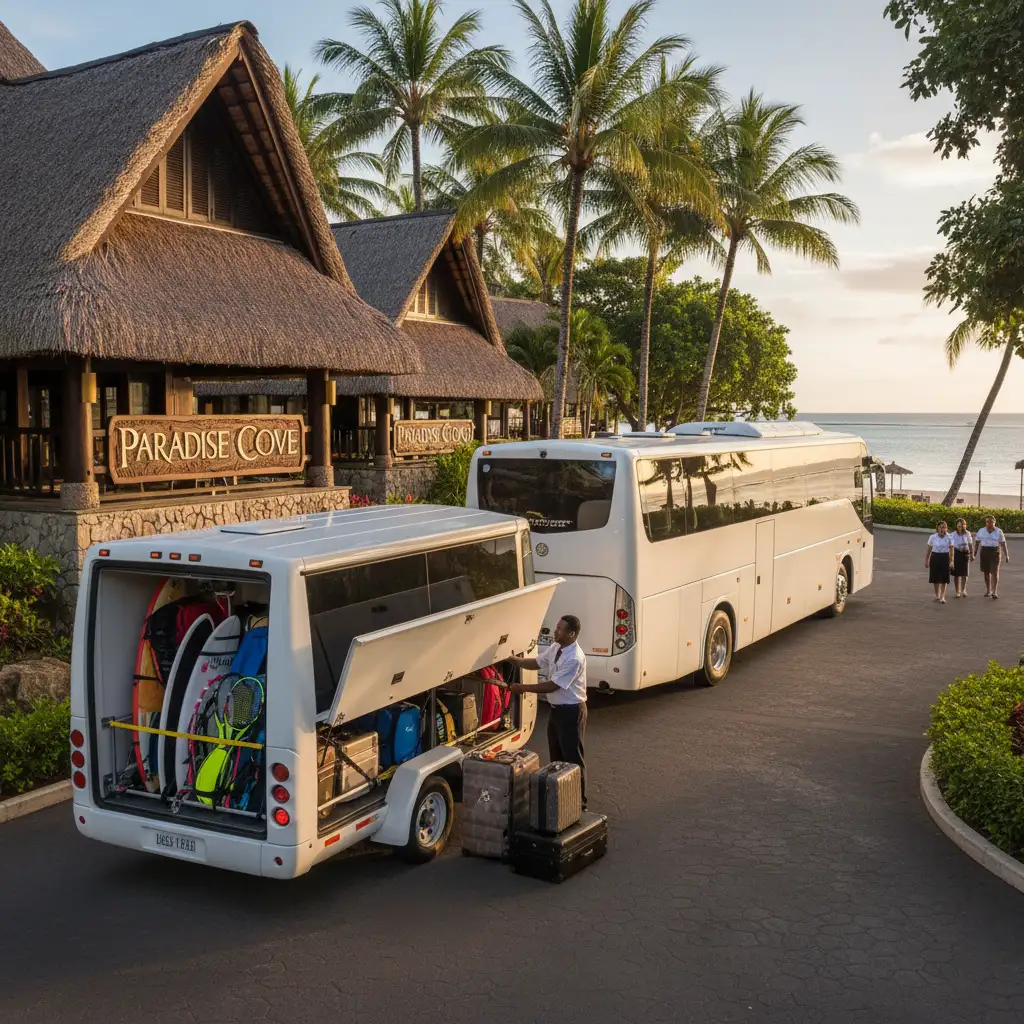
Golf clubs, cricket coffins, and rugby tackle bags require significant cargo space. Standard tourist coaches often prioritize passenger comfort over luggage capacity. When booking private charters, it is essential to request:
- Dedicated Luggage Trailers: Essential for cricket and golf groups. The internal storage of a 22-seater coaster bus is insufficient for 22 passengers plus golf bags.
- Air Conditioning Reliability: In the humid Fijian climate, a breakdown in A/C can lead to heat exhaustion before the team even reaches the pitch. Ensure the charter company maintains a modern fleet.
Airport Transfers and Multi-Point Logistics
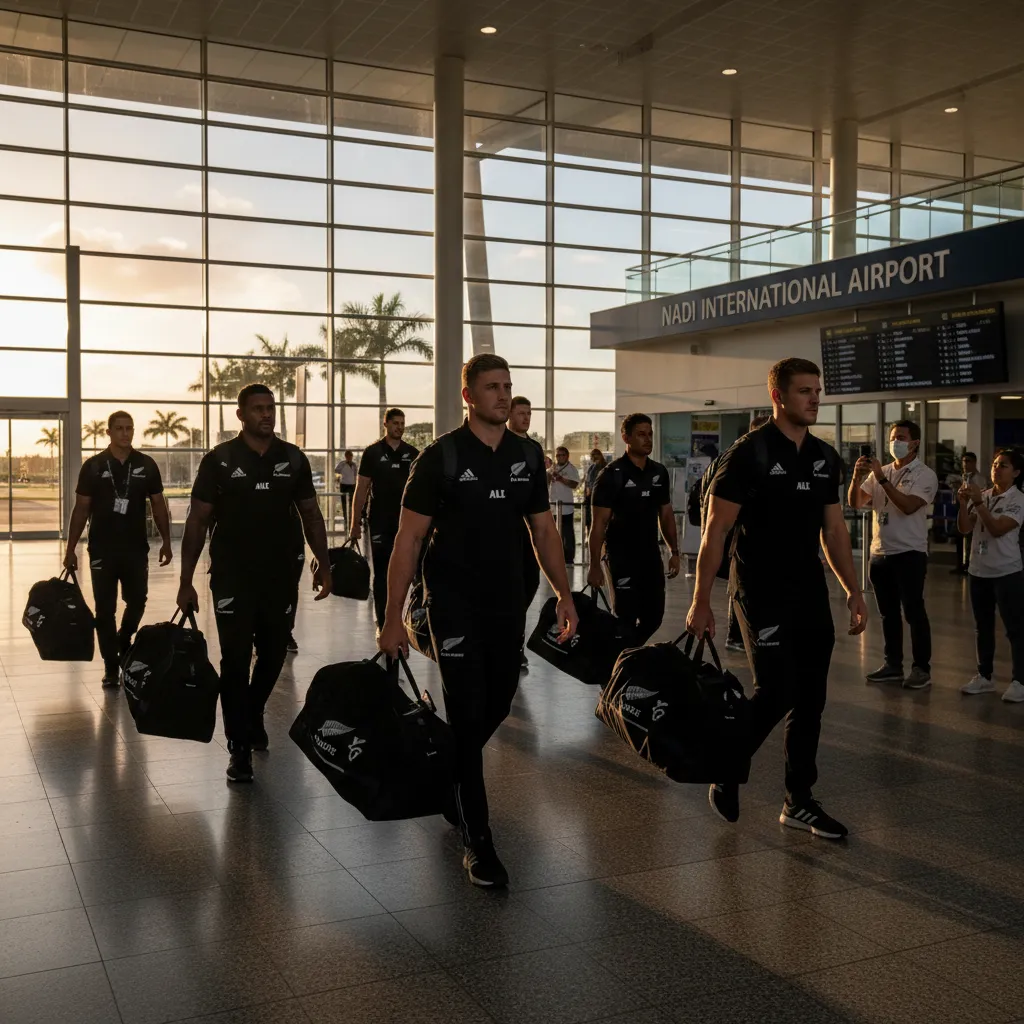
The arrival phase sets the tone for the tour. A dedicated “Meet and Greet” service is crucial. This involves a coordinator meeting the team manager at Nadi International Airport arrivals to facilitate the transfer of gear to the waiting vehicle. For complex itineraries involving matches at different schools or clubs around Viti Levu, retaining the same driver and vehicle for the duration of the trip provides continuity and security for equipment left on board.
Pre-Booking Tee Times and Activities
Commercial intent in sports travel revolves around the main event. Whether it is a golf tournament or a rugby fixture, these elements cannot be left to chance or booked upon arrival.
Securing Premium Tee Times
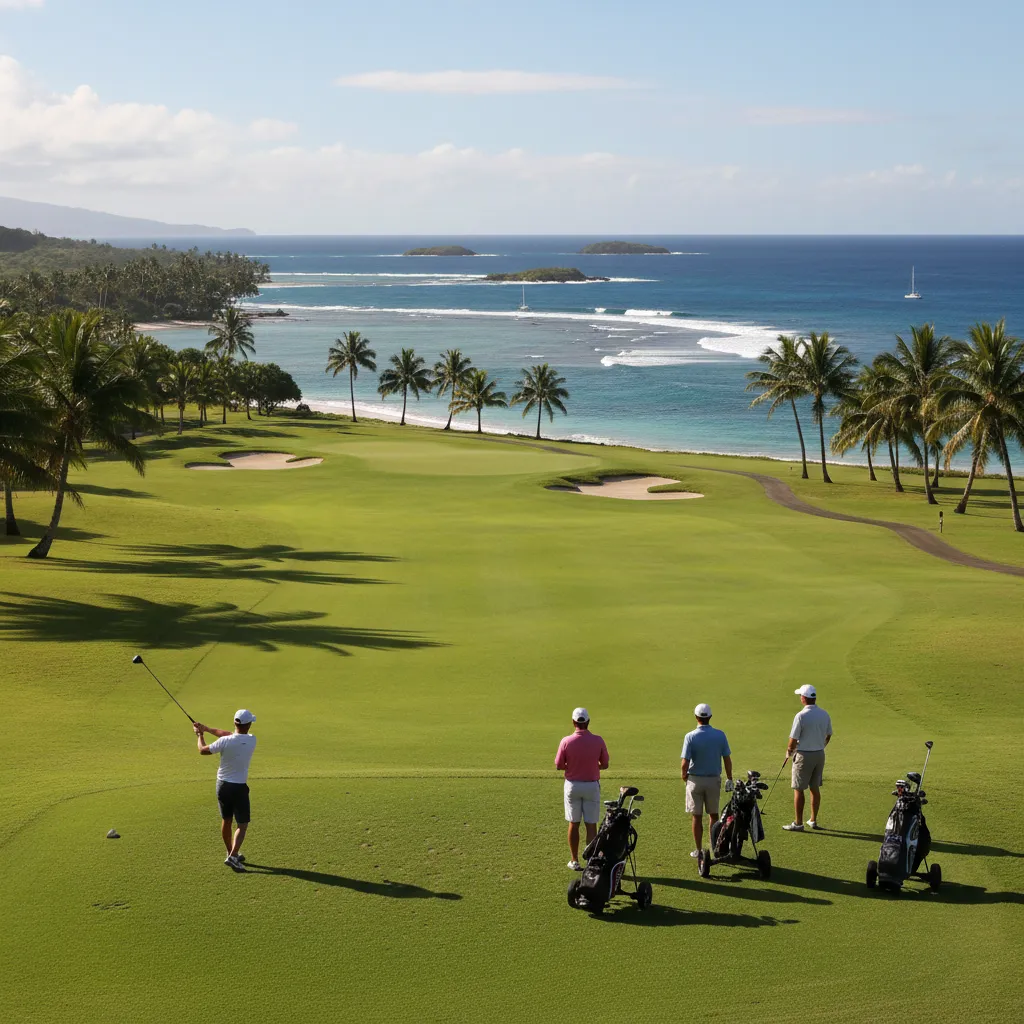
For golf groups, courses like Natadola Bay Championship Golf Course and the Denarau Golf & Racquet Club are high-demand venues.
Logistics Tip: Booking tee times 6-9 months in advance is recommended for groups larger than 12. Morning slots (pre-10:00 AM) are critical to avoid the peak heat of the day. Furthermore, logistics planners must pre-arrange cart rentals, as walking these courses in Fijian heat is physically taxing and may slow down the pace of play.
Arranging Fixtures with Local Teams
For rugby and netball, the highlight is often playing against local Fijian talent. This requires coordination with the Fiji Rugby Union or local village chiefs.
The Challenge: Local schedules can be fluid.
The Solution: Hire a local ground handler who can confirm pitch availability and referee attendance 24 hours prior. Ensure the logistics plan includes “Plan B” options, such as a training session at a resort facility, in case a fixture is cancelled due to weather or local circumstances.
Group Dining and Nutritional Logistics
Feeding a squad of hungry athletes is a logistical hurdle that impacts budget and performance. Resort dining prices can be high, so strategic meal planning is necessary.
Pre-Booking Meal Plans
Most resorts offer full-board or half-board meal plans. For sports groups, negotiating a custom meal plan is often possible. This might include:
Carb-Loading Buffets: requesting pasta or rice-heavy options the night before a game.
Hydration Stations: Ensuring unlimited bottled water is available during meals and training, as tap water in some remote areas may not suit sensitive Kiwi stomachs.
Off-Site Group Venues
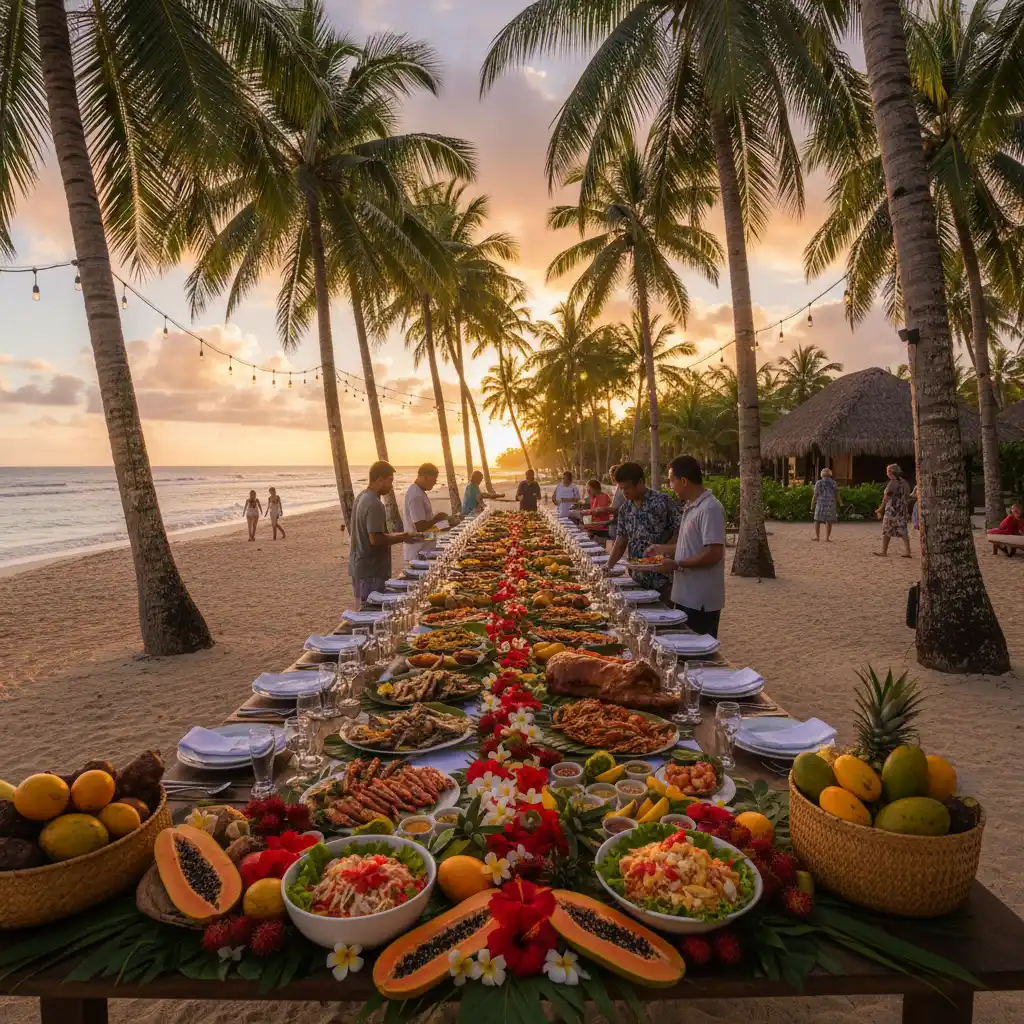
To break the monotony of hotel food, booking off-site group dining requires transport coordination. Venues like the Nadina Authentic Fijian Restaurant in Denarau or Eco Café on the Coral Coast can accommodate large tables, but they require reservations weeks in advance. The logistics provider must ensure the bus charter is scheduled to wait or return for pickup, as taxis for 30 people are impossible to hail simultaneously.
Cultural Protocols for NZ Teams
New Zealand teams often have a strong cultural connection to Fiji, but understanding specific protocols is part of the logistics of respect. If your team visits a village for a match or ceremony, a Sevusevu (gift giving) is customary.
Logistics of Sevusevu:
Teams should procure Kava (Yaqona) roots before leaving Nadi or at a local market. It is the responsibility of the tour manager to ensure this is purchased and wrapped properly. Allocating time in the schedule for the welcoming ceremony is vital; rushing a chief is considered highly disrespectful. A 30-minute buffer should be added to any village visit itinerary to accommodate these formalities.
Risk Management and Insurance
No logistics plan is complete without a risk mitigation strategy. Sports tours carry an inherent risk of injury.
Medical Logistics: Identify the nearest medical facility to your accommodation and sports venue. For serious injuries, medical evacuation to New Zealand may be required. Ensure all group travel insurance policies cover contact sports, as standard policies often exclude them.
Gear Insurance: High-value items like golf clubs and cameras should be itemized. Confirm that the transport provider carries liability insurance for luggage in transit.
People Also Ask
What is the best time of year for sports groups to travel to Fiji?
The best time for sports groups is during the dry season, from May to October. This period offers lower humidity and less rainfall, providing optimal conditions for rugby, golf, and outdoor training, aligning well with the New Zealand winter sports season.
How do we transport large sports equipment from NZ to Fiji?
Large equipment like tackle bags or golf clubs must be booked as “Oversized Baggage” with the airline (Air New Zealand or Fiji Airways) in advance. On the ground in Fiji, you must book a private charter bus with a dedicated luggage trailer or a separate luggage van.
Do Fijian resorts offer laundry services for sports teams?
Yes, most resorts offer laundry services, but they can be expensive per item. For sports teams, it is best to negotiate a “bulk laundry” rate with the resort prior to arrival or locate a local laundromat in Nadi or Sigatoka for a more cost-effective solution.
Can we organize matches against local Fijian teams?
Absolutely. Organizing matches requires contacting the relevant local sporting union or leveraging a specialized sports tour operator. It is recommended to arrange this at least 3 months in advance to ensure the local team has a venue and officials ready.
Is tap water safe for NZ athletes in Fiji?
While tap water is generally safe in major hotels in Nadi and Suva, it is highly recommended that visiting sports teams stick to bottled water to avoid any stomach upsets that could impact performance. Ensure your logistics plan includes bulk purchasing of water.
What is the voltage for electrical equipment in Fiji?
Fiji operates on 240V AC 50Hz, using the same three-pin power outlets as New Zealand and Australia. Teams generally do not need adapters, but bringing power boards is smart for charging multiple devices in twin-share rooms.