
Fiji travel safety and logistics require proactive planning regarding tropical health precautions, reliable inter-island transportation, and financial preparedness. While the islands are generally safe, travelers must prioritize comprehensive medical insurance, understand local currency needs for remote areas, and observe strict cultural protocols when visiting villages to ensure a secure and respectful journey.
Traveling to the Fiji Islands offers an unparalleled escape into paradise, but like any international destination, it requires specific logistical preparation to ensure a seamless experience. From navigating the unique geography of an archipelago to understanding the nuances of the local healthcare system, being prepared allows you to focus on the pristine beaches rather than administrative headaches. This guide serves as your authoritative resource for all aspects of health, safety, and operational logistics in Fiji.
Is Fiji Safe for Tourists?
Fiji is widely regarded as one of the safer destinations in the South Pacific, yet it is not devoid of risks. The primary safety concerns for travelers revolve around petty crime in urban centers and environmental hazards rather than violent crime.
Urban Safety and Crime Prevention
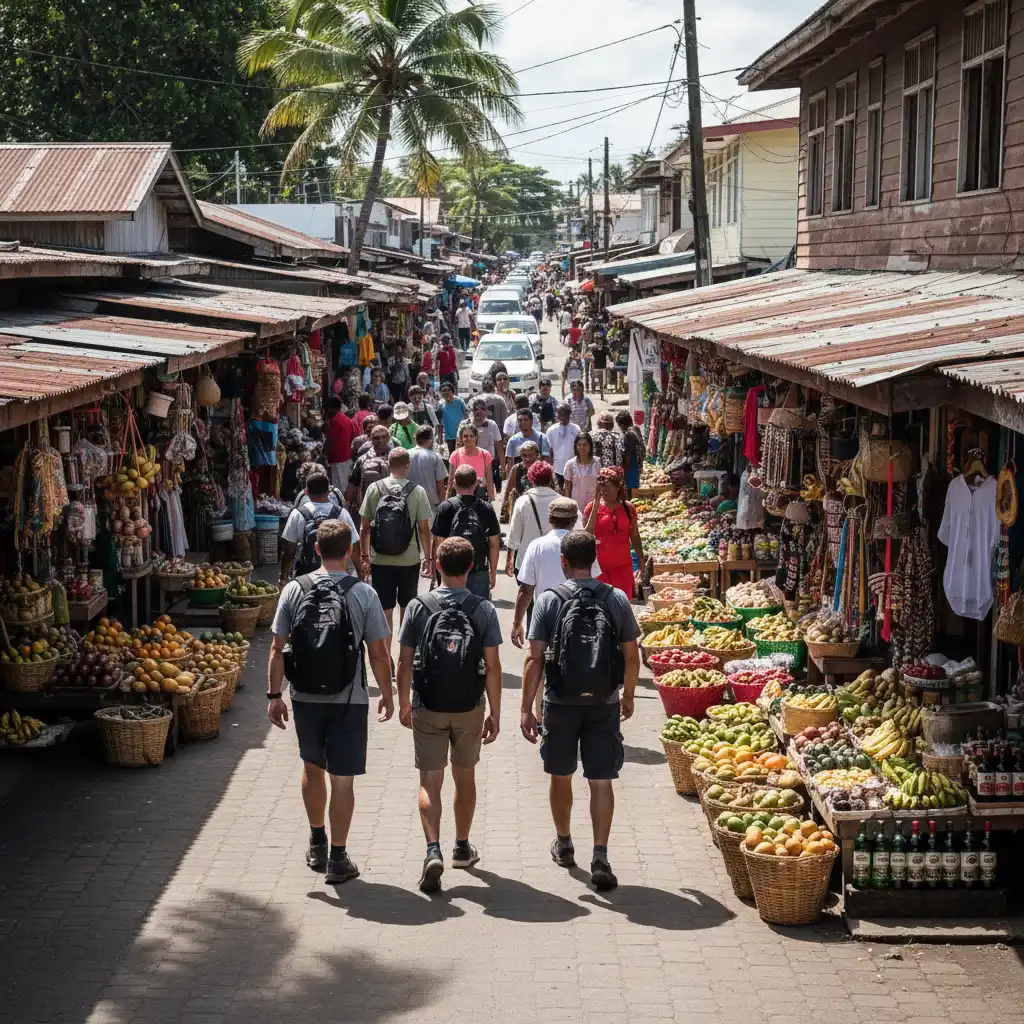
While violent crime against tourists is rare, opportunistic theft does occur. High-risk areas include downtown Suva and Nadi after dark. Travelers should avoid walking alone at night in unlit areas and keep valuables out of sight. “Sword sellers” in Suva are a common nuisance; these vendors may carve your name into a wooden sword without permission and then demand exorbitant payment. A firm but polite refusal is the best strategy.
Environmental and Water Safety
The ocean presents the most significant statistical risk to tourists. Strong currents and riptides can be unpredictable, even in shallow waters. Always swim in designated areas and heed local warnings. If you are reef walking, wear sturdy footwear to protect against coral cuts and stonefish, which are camouflaged and highly venomous.
Cyclone Season: Fiji lies in a cyclone belt. The season runs from November to April. During this period, travelers must monitor local weather reports from the Fiji Meteorological Service. Hotels are generally well-equipped with storm protocols, but logistics can be severely disrupted during a weather event.
Healthcare Facilities and Medical Preparedness
Understanding the limitations and capabilities of Fiji’s healthcare system is critical for travel safety and logistics. While basic care is available, specialized treatment often requires evacuation.
What is the Standard of Hospitals in Fiji?
Medical facilities in Fiji vary significantly by location. In major towns like Nadi, Lautoka, and Suva, you will find public hospitals and private clinics capable of handling routine issues and some emergencies. The Colonial War Memorial Hospital (CWM) in Suva is the largest referral hospital. However, for serious trauma or complex medical conditions, the facilities may not meet the standards found in Australia, New Zealand, or the US.
Private Clinics: For tourists, private medical centers such as Zen’s Medical Centre (Nadi and Lautoka) often offer faster service and better facilities than public hospitals. Be prepared to pay upfront for services.
Is Travel Insurance Mandatory?
While not strictly legally mandatory for entry post-COVID, it is logistically essential. Your policy must cover medical evacuation (medevac). An air ambulance to Australia or New Zealand can cost upwards of $50,000 USD. Ensure your policy explicitly covers adventure activities if you plan on diving or surfing.

Tropical Diseases and Water Quality
Mosquito-Borne Illnesses: Dengue fever is endemic to Fiji and outbreaks occur annually, particularly during the wet season. There is no vaccine available for travelers, so prevention is key. Use high-strength insect repellent containing DEET, wear long sleeves at dawn and dusk, and ensure your accommodation has screens or mosquito nets.
Water Safety: Tap water in major hotels and resorts in Nadi and Suva is generally treated and safe to drink. However, in rural areas and outer islands, tap water may not be potable. To mitigate risk, stick to bottled water or boiled water when venturing off the main resort tracks. Avoid ice in drinks at roadside stalls.
Navigating Fiji: Transport Logistics
Fiji is an archipelago of over 330 islands, making transport logistics a core component of your travel planning. Moving between islands requires coordination between flights, ferries, and land transport.
Inter-Island Travel: Flights vs. Ferries
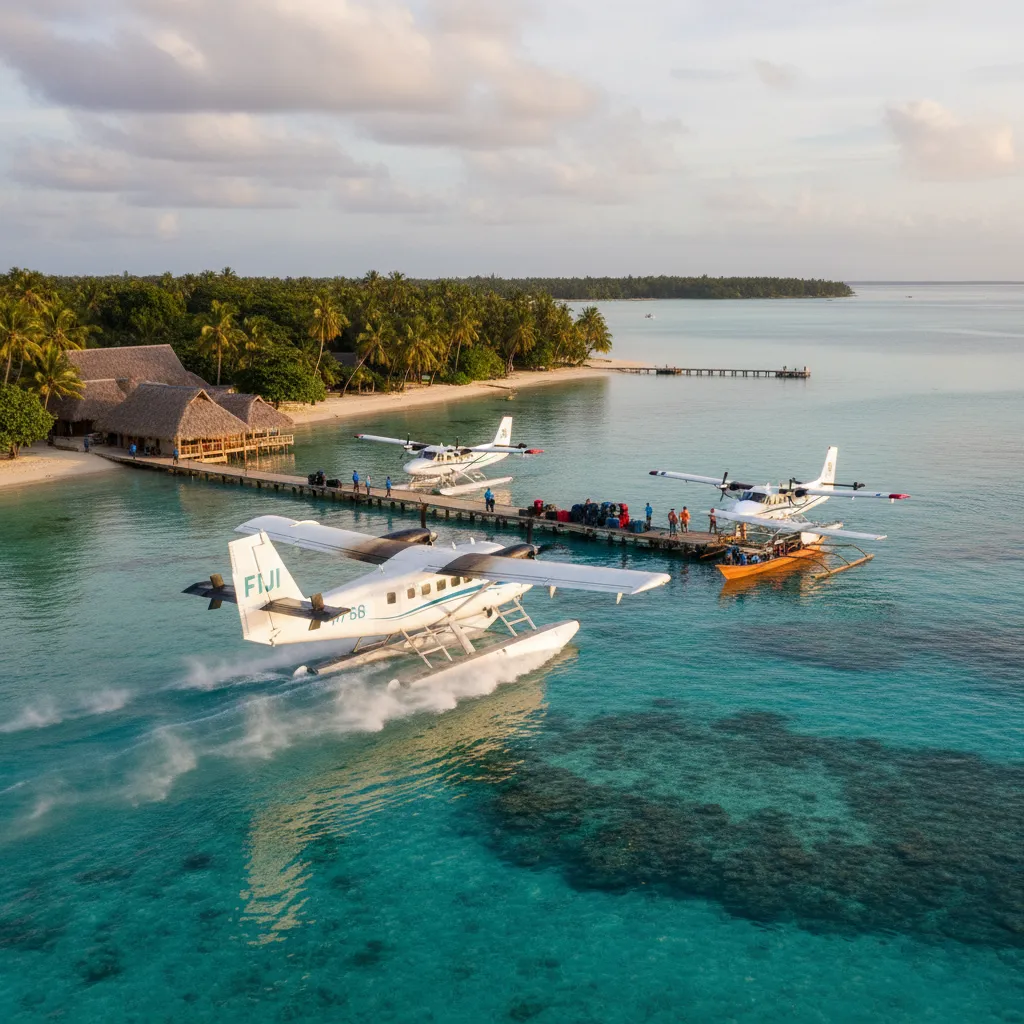
Domestic Flights: Fiji Link (a subsidiary of Fiji Airways) and Northern Air operate flights to larger islands like Vanua Levu and Taveuni. These flights save time but are weather-dependent. Small baggage allowances are strictly enforced on smaller aircraft.
Ferries: For the Mamanuca and Yasawa groups, high-speed catamarans like the Yasawa Flyer are the standard. They are reliable and run on strict schedules. It is advisable to book these transfers in advance, especially during peak season (June-September), as they can sell out.
Driving and Taxis
Driving is on the left side of the road. The main road around Viti Levu (Queens Road and Kings Road) is sealed and in fair condition, though potholes and stray livestock are common hazards. Avoid driving at night due to poor lighting and animals on the road.
Taxis: Taxis are abundant. In Nadi and Suva, legally registered taxis have yellow number plates. Always ask the driver to use the meter. If the taxi does not have a meter (common in rural areas), negotiate the fare before getting into the vehicle to avoid disputes.
Money, Connectivity, and SIM Cards
Financial and digital logistics are often overlooked but are crucial for a smooth trip, especially given Fiji’s mix of modern resorts and remote villages.
Currency and Payment Methods
The currency is the Fijian Dollar (FJD). While resorts and major tour operators accept Visa and Mastercard, cash is king in Fiji’s real economy. You will need cash for markets, taxis, small shops, and village donations.
ATMs: ATMs are widely available in Nadi, Suva, and major resorts. However, on outer islands (like the Yasawas or Taveuni), ATMs are scarce or non-existent. Withdraw sufficient cash before leaving the main island of Viti Levu.
Mobile Connectivity and SIM Cards
Staying connected is relatively easy. Fiji has two main mobile providers: Vodafone and Digicel. Both offer tourist SIM packages that include generous data allowances.
- Where to buy: You can purchase a SIM card immediately upon arrival at Nadi International Airport in the arrivals hall. Staff will set it up for you.
- Coverage: Coverage is excellent in towns and main tourist hubs. It can be spotty in remote interior highlands or far-flung outer islands. Vodafone generally has slightly broader coverage in maritime areas.
- Wi-Fi: Most hotels offer Wi-Fi, though speeds can be slower than what you are used to at home. High-speed internet is not guaranteed in budget accommodations.

Cultural Etiquette and Social Norms
Fiji is deeply traditional. Understanding cultural logistics is as important as booking your flight; failing to observe protocol can cause offense and limit your access to authentic experiences.
Village Visits and Dress Code
When visiting a Fijian village, you are entering a community’s private living space. Strict protocols apply:
- Dress Modestly: Women should cover their shoulders and knees. Men should not wear hats or sunglasses inside the village, as the head is considered sacred.
- Sevusevu: It is customary to present a gift of kava (yaqona) to the village chief upon arrival. This request for permission to enter is called sevusevu. Your guide will usually handle the logistics of this, but buying a bundle of kava roots at a local market beforehand is a sign of respect.
- Remove Shoes: Always take off your shoes before entering a house or community hall.
The Kava Ceremony
Kava is a mild sedative drink made from the pulverized root of the pepper plant. If offered a bowl (bilo), clap once with cupped hands, say “Bula,” drink the contents in one go, and then clap three times. It is a communal bonding ritual and refusing it can be seen as rude unless you have a medical reason.
People Also Ask (PAA)
Do I need a visa to travel to Fiji?
Most travelers, including citizens of the USA, Canada, UK, Australia, and New Zealand, do not need a visa for stays of up to 4 months. You are issued a visitor permit on arrival. However, you must have a passport valid for at least 6 months beyond your stay and proof of an onward or return ticket.
Is the water in Fiji safe to drink?
Tap water is generally safe to drink in the major hotels and towns of Nadi and Suva. However, in rural areas and on outer islands, it is recommended to drink bottled, boiled, or purified water to avoid stomach upsets. Always avoid ice in drinks when purchasing from street vendors.
What is the best currency to take to Fiji?
The best currency to use is the Fijian Dollar (FJD). While you can exchange major currencies like USD, AUD, and NZD at the airport or banks, paying in local currency is always preferred. Carry cash for small purchases, as credit cards are usually only accepted at resorts and large supermarkets.
Are there poisonous animals in Fiji?
Fiji has no dangerous land animals or venomous snakes that pose a threat to humans on land. The primary dangers are in the ocean, including stonefish, sea snakes (which are docile but venomous), and fire coral. Always wear reef shoes when walking in shallow waters.
How do I get around the islands in Fiji?
Transport options include domestic flights (Fiji Link), passenger ferries (like the Yasawa Flyer), water taxis, and local buses. For the main island of Viti Levu, taxis, rental cars, and express buses are the primary modes of transport. Booking boat transfers in advance is crucial for island hopping.
What should I pack for a trip to Fiji?
Pack lightweight, breathable clothing, high-SPF sunscreen (reef-safe), strong insect repellent, and a basic first-aid kit. Include modest clothing (covering knees and shoulders) for village visits. Reef shoes are essential for water activities to protect against coral cuts.