
Fiji small ship cruises offer intimate voyages through the archipelago’s 333 islands, accessing shallow lagoons and remote villages that large liners cannot reach. These expeditions typically carry fewer than 130 passengers, focusing on cultural immersion, daily water activities, and personalized service within the Mamanuca, Yasawa, and remote Lau island groups.
For the discerning traveler, the allure of Fiji is not found in its main ports, but in the hidden coves and pristine reefs that lie beyond the reach of mass tourism. Unlike the Caribbean or the Mediterranean, where large cruise liners dominate, Fiji’s geography is uniquely suited to small ship expeditions and private yachting. The archipelago’s complex reef systems and shallow bays necessitate vessels with shallow drafts, making small ship cruising the premier method for experiencing the authentic South Pacific.
Small Ship Expeditions vs. Large Cruise Liners
When planning a maritime adventure in the South Pacific, understanding the distinction between expedition cruising and standard cruising is vital. In Fiji, this difference defines the entire nature of your holiday.
The Access Advantage
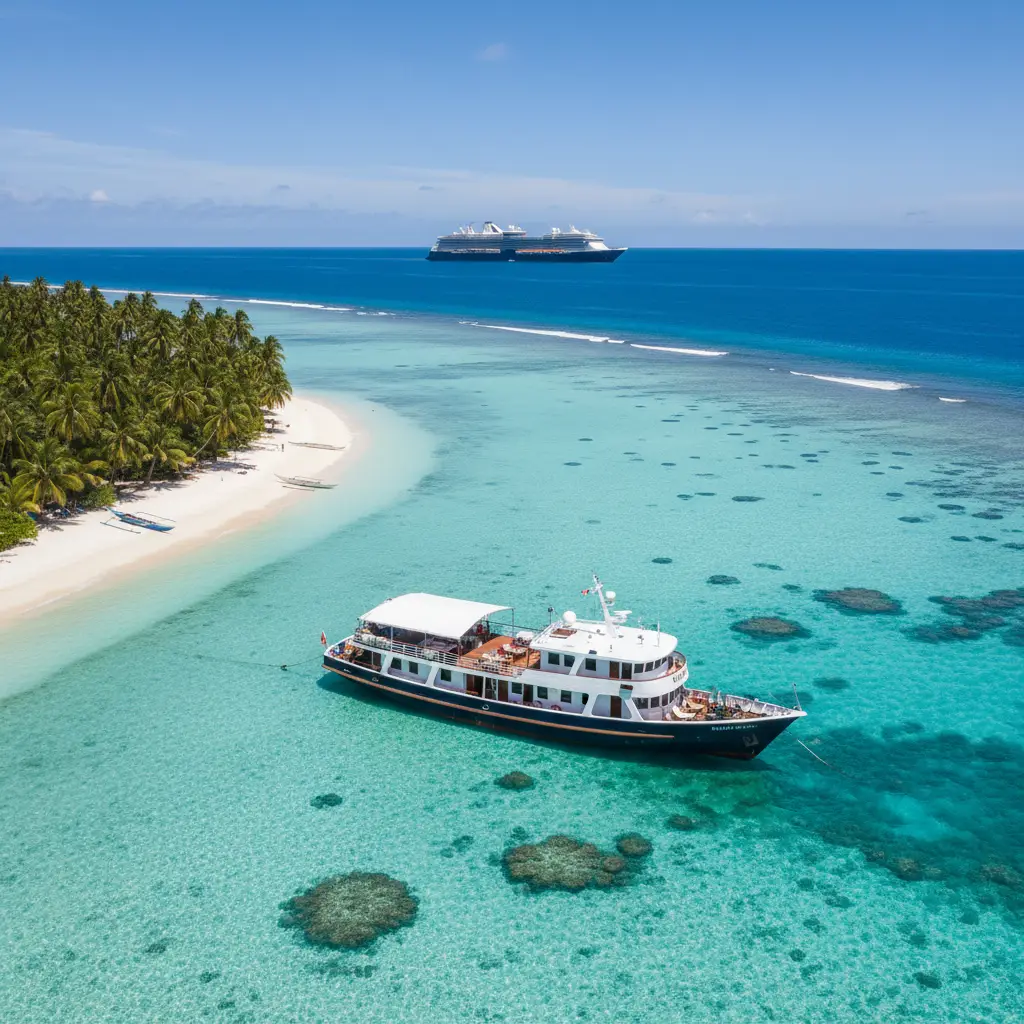
Large cruise liners, often carrying 2,000+ passengers, are restricted to deep-water ports such as Suva and Lautoka. While these stops offer a glimpse of Viti Levu (the main island), they fail to capture the essence of the outer islands. Conversely, Fiji small ship cruises utilize vessels designed to navigate narrow reef passes. This allows for “wet landings” directly onto uninhabited beaches and anchoring in protected bays like the Blue Lagoon.
Cultural Immersion and Onboard Atmosphere
The atmosphere on a Fijian small ship is communal and relaxed, often referred to as “Fiji Time.” With passenger counts ranging from 8 to 130, the crew-to-guest ratio is high, ensuring personalized attention. The smaller headcount allows for genuine interactions with local villagers. When a large ship docks, thousands of tourists can overwhelm a local community. Small ships, however, visit villages by invitation, participating in traditional Sevusevu (gift-giving) ceremonies and kava drinking rituals in a respectful, sustainable manner.
Activity-Based Itineraries
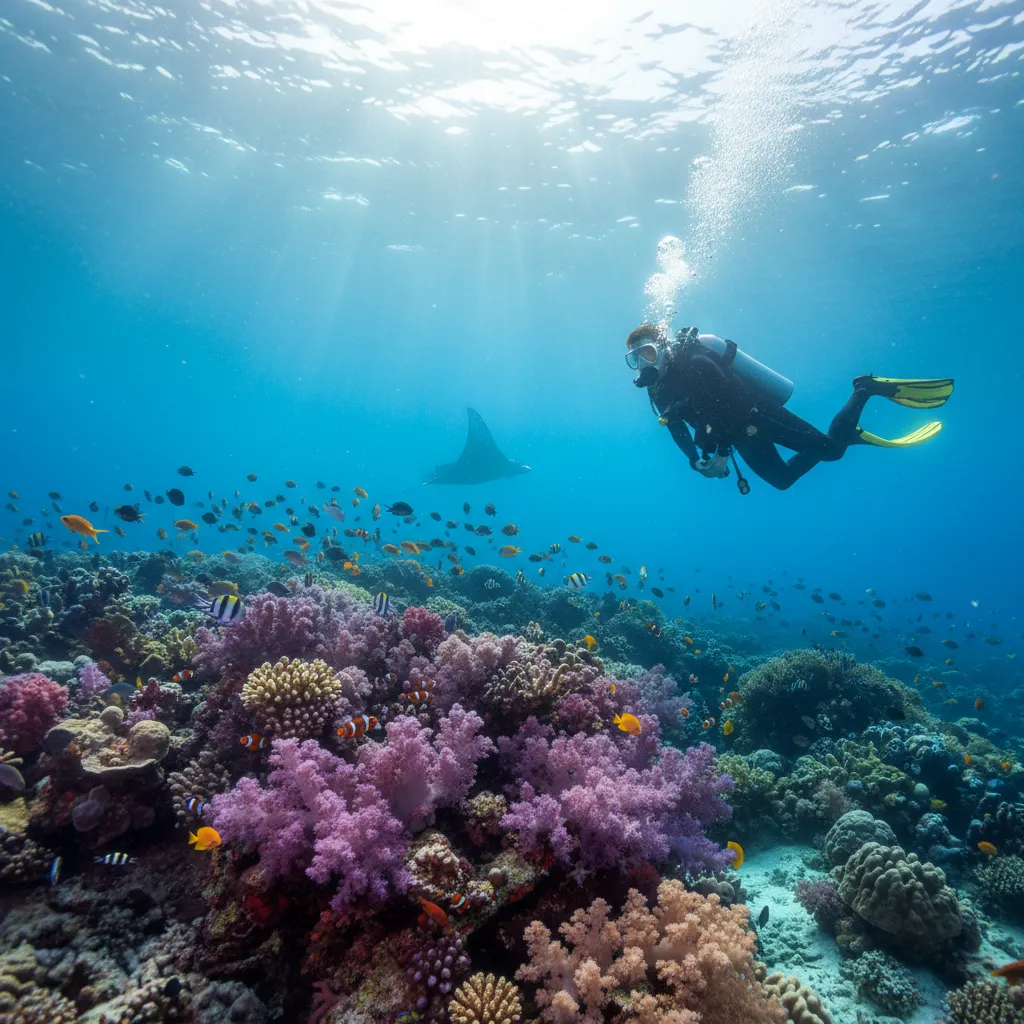
On a large liner, the ship is the destination. On a small ship, the islands are the destination. Mornings typically begin with snorkeling or diving directly from the ship’s tender. Mid-days are spent beachcombing or hiking to island peaks, and evenings often involve beach BBQs under the stars rather than formal dining halls. The focus is on the marine environment, with many vessels employing marine biologists to guide snorkeling trips.
Overview of Fiji’s Prime Cruising Grounds
Fiji’s 333 islands offer diverse sailing environments, ranging from resort-studded archipelagos to virtually untouched frontiers. Choosing the right region is the first step in commercial travel planning.
The Mamanuca Islands
Located immediately west of Nadi International Airport, the Mamanucas are the most accessible cruising ground. This chain is characterized by calm, protected waters, making it ideal for those prone to seasickness or on shorter 3- or 4-night itineraries. The islands here are famous for their white sand bars and high-end resorts. While beautiful, this area is busier than others, serving as a popular hub for day-trippers and private yachts.
The Yasawa Islands
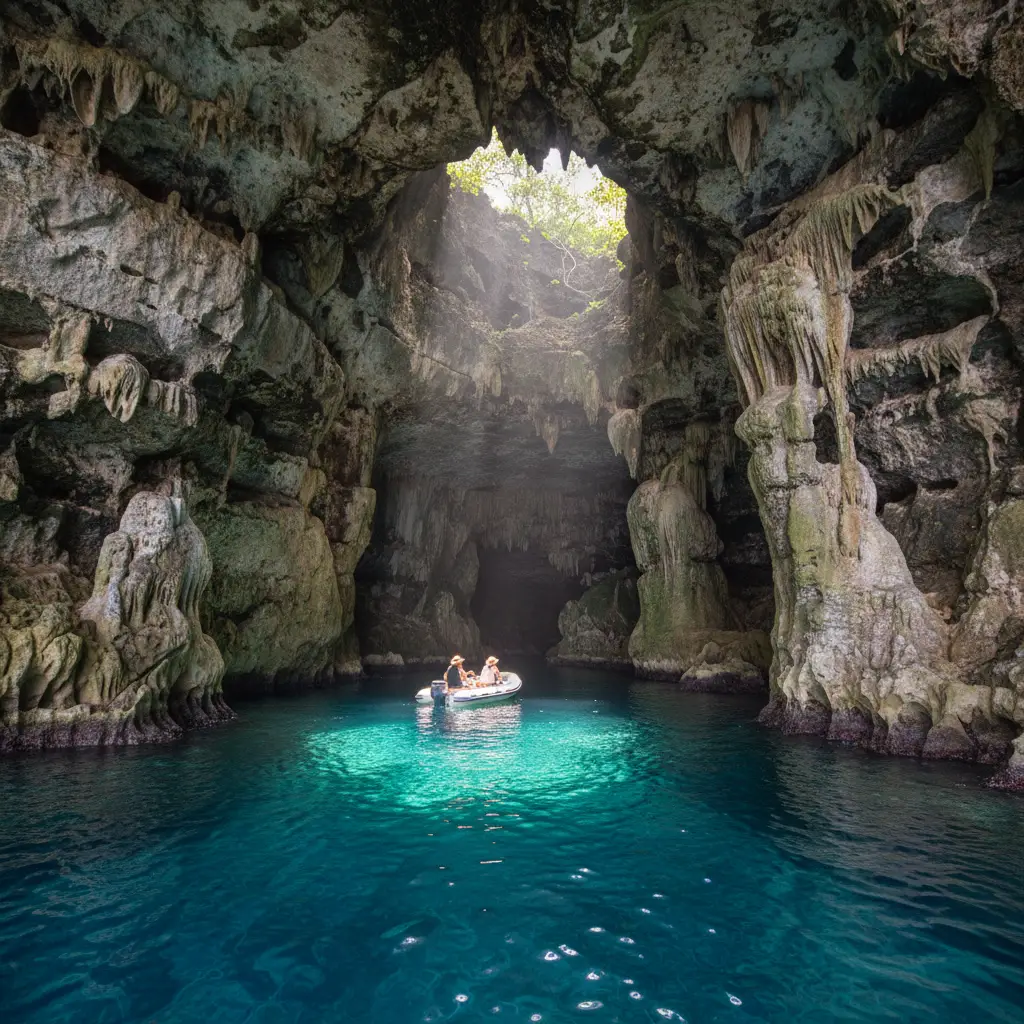
Stretching north from the Mamanucas, the Yasawa group is the quintessential destination for most Fiji small ship cruises. These islands are volcanic, dramatic, and less developed. The region is home to the famous Blue Lagoon and the Sawa-i-Lau limestone caves. The Yasawas offer a perfect blend of dramatic scenery and cultural connection, as many islands are inhabited by traditional villages that maintain a symbiotic relationship with visiting expedition ships.
The Remote North and Lau Group
For the veteran traveler, the remote north (Vanua Levu and Taveuni) and the eastern Lau Group represent the final frontier. The Lau Group, in particular, has only recently opened up to limited tourism. These islands are geologically distinct, featuring mushroom-shaped limestone islets and untouched coral gardens. Cruising here requires a spirit of adventure, as the infrastructure is minimal, and the sailing distances are longer. Only select expedition vessels and long-range private charters venture this far.
The Private Yacht Charter Experience
While scheduled small ship cruises (such as those offered by Captain Cook Cruises or Blue Lagoon Cruises) offer a structured, social experience, chartering a private yacht provides the ultimate in exclusivity and flexibility.
Crewed vs. Bareboat Charters
In Fiji, the market is dominated by crewed charters due to the complexity of the reef systems. A crewed charter includes a captain, chef, and often a deckhand/steward. This option removes all responsibility from the guest, allowing for a completely curated experience. Bareboat charters (renting the boat without crew) are available but are strictly regulated; skippers must demonstrate significant experience and certification to navigate the coral-laden waters.
The Superyacht Sector
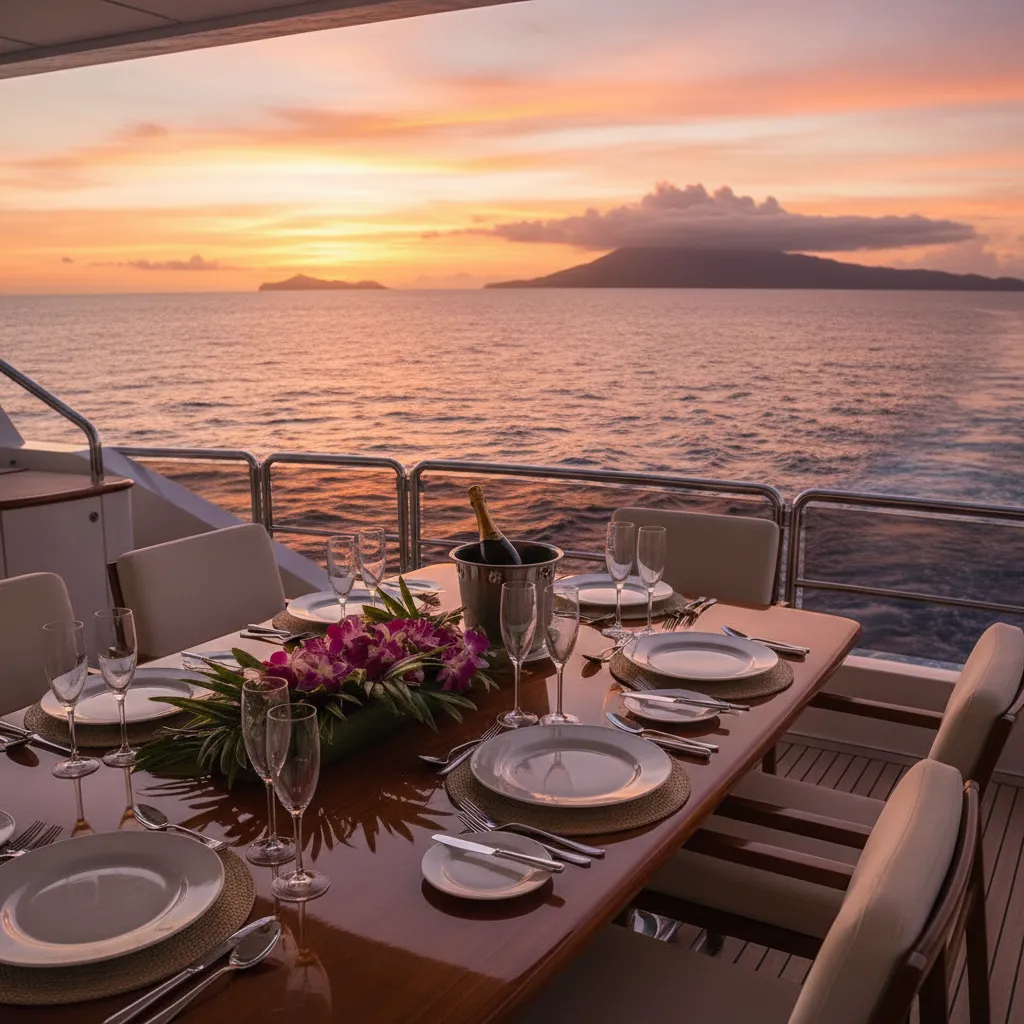
Fiji has emerged as a superyacht hub in the South Pacific. Port Denarau Marina serves as the primary base, capable of berthing vessels up to 85 meters. For high-net-worth individuals, chartering a superyacht allows for bespoke itineraries that can combine the luxury of the Mamanucas with the isolation of the Lau Group, all while maintaining 5-star service standards, gourmet cuisine, and total privacy.
Seasonal Sailing Conditions and When to Go
Unlike the Caribbean, Fiji is a year-round cruising destination, but distinct seasons affect sea conditions, pricing, and weather.
The Dry Season (May to October)
This is the peak season for tourism in Fiji. The humidity is lower, and the risk of cyclones is negligible. However, for sailors, this period is characterized by the southeast trade winds. While this provides excellent sailing conditions for yachts, it can occasionally result in choppier seas in exposed areas. The water temperature is slightly cooler (around 26°C/79°F), which is still comfortable for swimming but may require a wetsuit for long dives.
The Wet Season (November to April)
Also known as the “green season,” this period sees higher temperatures and humidity. The trade winds die down, often resulting in glass-out conditions—perfect for motor cruising and water skiing. The water is warmer (up to 30°C/86°F). The primary drawback is the increased chance of rain showers (usually short and intense) and the potential for tropical cyclones. Most commercial small ship operators continue to run during this time, often offering lower rates, but flexibility is key.
Shoulder Seasons
The months of May and October are considered the “sweet spot” for Fiji small ship cruises. These months offer a balance of good weather, lower crowd levels, and reasonable pricing before the peak holiday rushes of June/July and December/January.
Sample Itineraries: What to Expect
When booking a commercial small ship cruise, itineraries generally fall into three categories based on duration and focus.
3-4 Night Introductions
Short cruises typically focus on the Mamanuca and Southern Yasawa islands. These are fast-paced, hitting the highlights like Modriki Island (filming location of “Cast Away”) and the Sacred Islands. This is an excellent add-on to a land-based resort stay.
7-Night Cultural Deep Dives
A 7-night voyage allows the vessel to reach the Northern Yasawas or Vanua Levu. This duration is necessary to reach the Sawa-i-Lau caves and more traditional villages that see fewer tourists. The pace is more relaxed, allowing for ample “beach time” and multiple snorkeling excursions per day.
11-14 Night Expeditions
These rare itineraries are for the true explorer. They often circumnavigate Vanua Levu or head out to the Lau Group. Expect long sailing legs overnight, waking up in completely different ecosystems. These cruises focus heavily on history, biology, and experiencing the raw, unpolished side of Fiji.
People Also Ask
What is the best month to cruise Fiji?
The best time to cruise Fiji is during the shoulder seasons of May and October. During these months, you avoid the peak tourist crowds of July and August, yet the weather is dry and warm with a lower risk of cyclones compared to the wet season (November to April).
Are Fiji small ship cruises suitable for children?
Yes, many Fiji small ship cruises are family-friendly, particularly those offered by Captain Cook Cruises and Blue Lagoon Cruises. They often have dedicated kids’ clubs, family cabins, and itineraries filled with active water sports. However, some luxury charters or expedition routes may be adults-only, so it is essential to check the specific policy.
Do I need a visa for a Fiji cruise?
Most travelers, including those from the USA, UK, Canada, Australia, and New Zealand, do not need a visa for stays up to 4 months. You will need a valid passport with at least 6 months of validity remaining and proof of onward travel. Visa requirements can change, so always verify with Fijian immigration before booking.
Is seasickness a problem on small ships in Fiji?
While small ships move more than large liners, most Fijian cruising grounds, particularly the Mamanucas and Yasawas, are protected by barrier reefs which minimize ocean swell. However, crossing open water channels can be choppy. If you are prone to motion sickness, choose a cabin on a lower deck mid-ship and travel during the calmer wet season (November-April) when trade winds are lower.
What is the cost of a small ship cruise in Fiji?
Prices vary significantly based on luxury level. A standard 3-4 night cruise typically starts around $1,500 USD per person. Luxury 7-night expeditions can range from $3,000 to $6,000+ USD per person. Private yacht charters can range from $15,000 to over $100,000 per week depending on the size of the vessel and crew.
What should I pack for a Fiji cruise?
Pack light, casual clothing. Essentials include swimwear (multiple sets), reef-safe sunscreen, a hat, sunglasses, and a rash guard for snorkeling. You will need a “sulu” (sarong) or modest clothing for village visits to cover shoulders and knees. Reef shoes are highly recommended for wet landings and coral beaches.