
A Lovo feast is a traditional Fijian banquet cooked in an underground earth oven. Heated volcanic stones slow-cook coconut-wrapped meats, fish, and root vegetables like taro and cassava for several hours. This communal cooking method imparts a distinct smoky flavor and serves as the centerpiece for weddings, festivals, and significant village celebrations.
For travelers venturing to the South Pacific, the culinary landscape is as diverse and vibrant as the coral reefs surrounding the islands. However, no gastronomic experience in Fiji is as iconic or culturally significant as the Lovo. Far more than a simple meal, the Lovo represents the heart of Fijian hospitality, community structure, and ancestral tradition. It is a slow-food experience that predates modern ovens by centuries, relying on the elements of earth, fire, and steam to transform simple ingredients into a feast fit for chiefs.
Understanding the intricacies of this earth oven cooking method transforms a standard resort dinner into a profound cultural encounter. Whether you are a culinary anthropologist or a luxury traveler seeking authenticity, grasping the mechanics and meaning behind the Lovo is essential for a specialized Fiji travel itinerary.
The Mechanics of the Earth Oven
The term “Lovo” literally translates to “earth oven” in Fijian. Unlike open-flame grilling or smoking, the Lovo utilizes a combination of conduction and convection heat within a sealed environment. It is essentially a primitive, yet highly effective, pressure cooker buried underground.
The Pit and The Stones
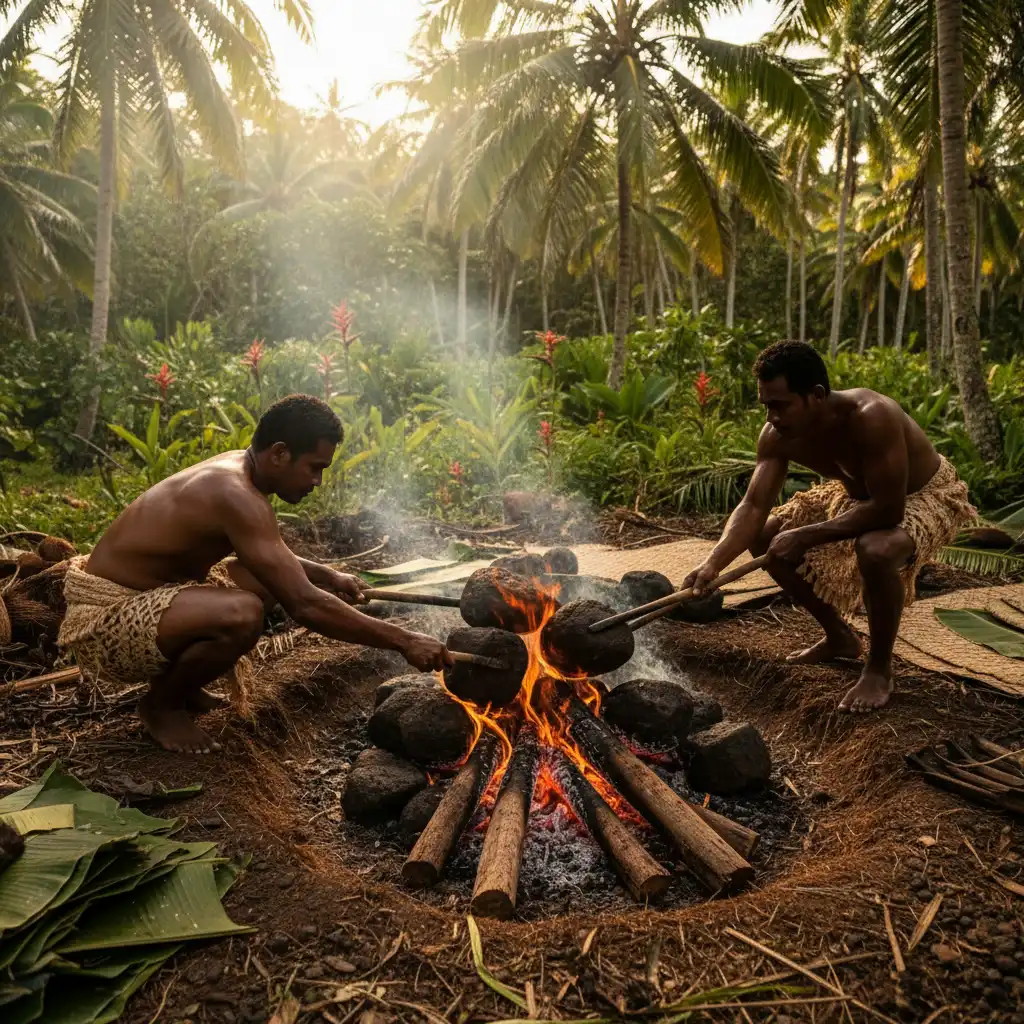
The foundation of the feast is the pit itself. Typically, a bowl-shaped hole is dug into the ground, measuring roughly two feet deep and varying in width depending on the amount of food required. The bottom of the pit is lined with large, heat-resistant stones. River stones or volcanic rocks are preferred because they can withstand intense temperatures without cracking or exploding.
A large fire is built atop these stones using specialized firewood chosen for its clean burn and ability to generate high heat. As the wood burns down to ash, the stones absorb the thermal energy, turning white-hot. This process can take several hours before any food is even introduced to the equation.
The Insulation Layers
Once the stones are sufficiently heated, the remnants of the wood and ash are cleared away. The stones are then spread out to form a level cooking surface. To prevent the food from burning upon direct contact with the rocks, a layer of green material—usually banana stumps or stems—is placed over the stones. This layer serves a dual purpose: it acts as a buffer to modulate the heat and releases moisture to create the steam necessary for the cooking process.
Key Ingredients: The Taste of Fiji
The contents of a Lovo feast are a direct reflection of Fiji’s agricultural abundance. The menu relies heavily on root crops and proteins that benefit from long, slow braising in their own juices.
Root Crops: The Starch Foundation
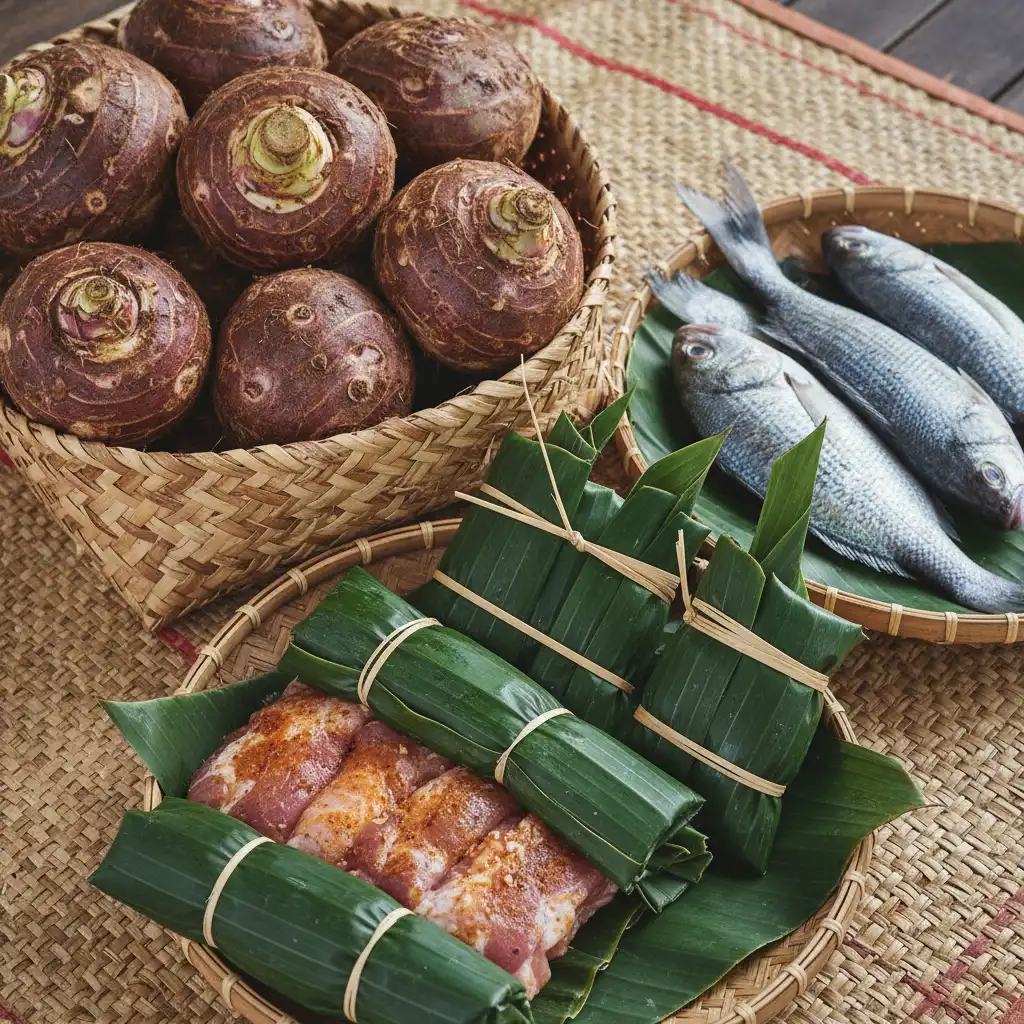
No Lovo is complete without the “true food” (kakana dina) of Fiji. The two primary staples are:
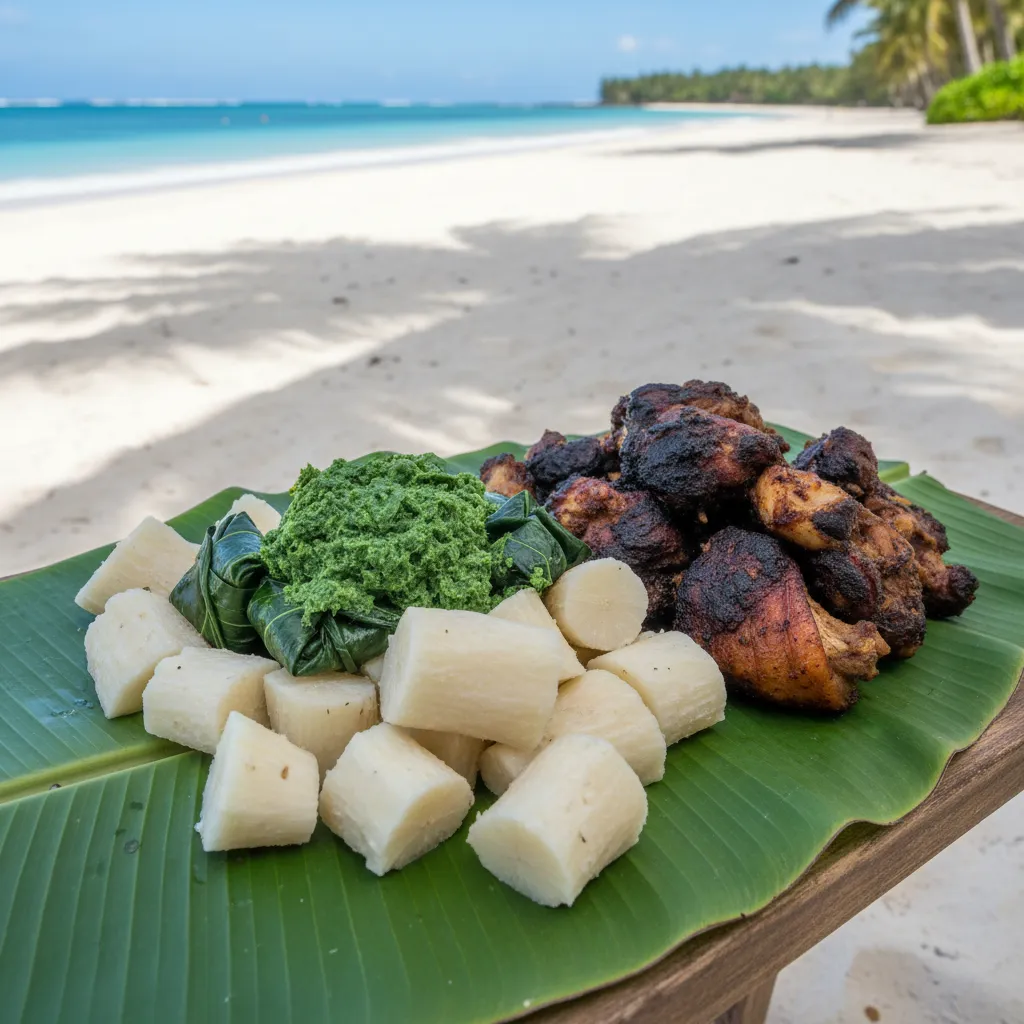
- Dalo (Taro): A heavy, purple-fleshed tuber that serves as the carbohydrate backbone of the meal. It has a dense texture and a nutty flavor that pairs perfectly with the smokiness of the oven.
- Tavioka (Cassava): Slightly lighter than Dalo, cassava is starchy and fibrous. When cooked in a Lovo, it becomes incredibly tender, absorbing the savory steam from the meats.
Palusami: The Delicacy
Perhaps the most beloved component of the feast is Palusami. This dish consists of young taro leaves (rourou) filled with thick coconut cream, onions, and sometimes corned beef or fresh seafood. The mixture is wrapped tightly in foil or banana leaves and placed in the oven. The result is a rich, creamy, spinach-like dish that acts as a natural sauce for the drier root vegetables.
Proteins: Pork, Chicken, and Fish
Meat in a Lovo is generally marinated in soy sauce, garlic, ginger, and chili before being wrapped.
- Pork: Often the star of the show, pork shoulder or leg cuts are favored for their fat content, which renders down during the long cook, keeping the meat moist.
- Fish: Whole fish, usually reef varieties like snapper or grouper, are wrapped in plaited coconut leaves. The gentle steam cooks the fish perfectly without drying it out.
- Chicken: Usually quartered and heavily marinated, chicken takes on a profound smoky flavor that differs significantly from roasted or fried preparations.
The Cultural Significance of the Ritual
To ask “what is a lovo feast” is to inquire about the social fabric of Fiji. In traditional village life, the Lovo is reserved for special occasions. It is not an everyday cooking method due to the labor and time involved. It is employed for weddings, funerals, birthdays, and the welcoming of honored guests.
The preparation is traditionally a communal activity, often divided along gender lines, though these lines are blurring in modern times. Men generally handle the heavy labor: digging the pit, gathering the firewood, selecting the stones, and managing the fire. Women typically prepare the food, weaving the coconut frond baskets and wrapping the palusami.
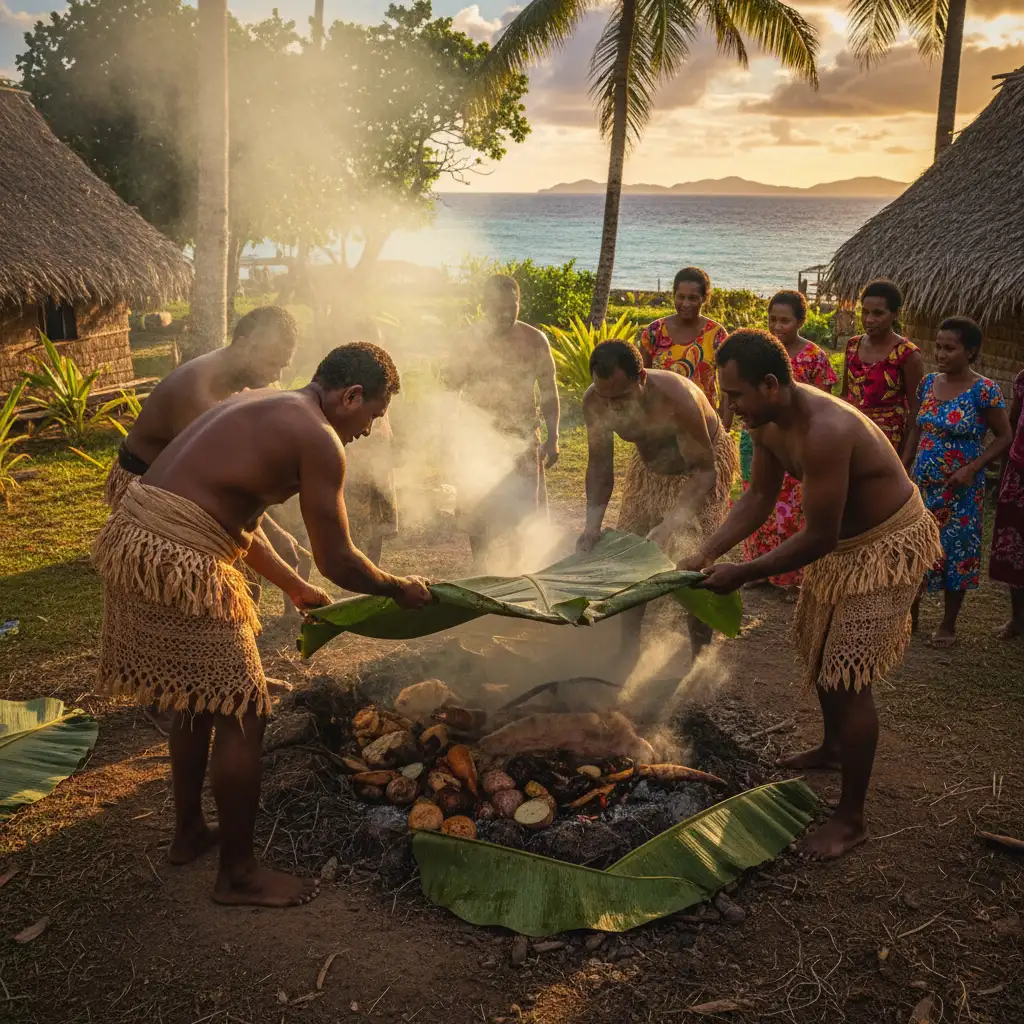
The unearthing of the Lovo is a moment of celebration. As the dirt and leaves are peeled back, a cloud of aromatic steam billows out, signaling to the village that the feast is ready. This moment reinforces the concept of kerekere (sharing) and community interdependence. In a Lovo, food is almost always prepared in surplus to ensure there is enough to share with neighbors or anyone passing by.
The Step-by-Step Process
For those interested in the technical execution, the timeline of a Lovo is a lesson in patience.
- Preparation (0-2 Hours): The pit is dug, and the fire is lit. While the stones heat up, the food is harvested, cleaned, and wrapped. Weaving the baskets from coconut fronds is an art form in itself, ensuring the food is contained but accessible to the heat.
- Loading the Oven (Hour 2-3): Once the stones are white-hot, the wood ash is removed. The banana stumps are placed on the stones. The food is then layered strategically: hard root vegetables go at the bottom where the heat is most intense. Meats are placed in the middle, and delicate items like fish and palusami are placed at the very top.
- Sealing the Oven (Hour 3): The pile of food is covered with more banana leaves or coconut fronds. Finally, the entire mound is buried under a thick layer of soil or heavy sacks. This seal must be airtight; if steam escapes, the oven loses pressure and heat, potentially ruining the meal.
- Cooking (Hour 3-6): The food cooks undisturbed for 2 to 4 hours, depending on the quantity of food and the size of the pork cuts.
- Unearthing (Hour 6+): The soil is carefully shoveled away, the leaves removed, and the feast is served immediately.
Lovo vs. Other Pacific Earth Ovens
The concept of the earth oven is not unique to Fiji; it is a shared heritage across the Austronesian world. However, regional variations exist that distinguish the Lovo from its neighbors.
The Maori Hangi (New Zealand): Similar in construction, the Hangi often uses wire baskets today for ease of lifting. The flavor profile can differ based on the wood used (Manuka is common in NZ) and the inclusion of sweet potato (Kumara) rather than Cassava.
The Hawaiian Imu: Famous for Kalua pork, the Imu is often deeper. The seasoning is frequently simpler—often just sea salt—relying on the flavor of the Ti leaves and the pork itself, whereas Fijian Lovo marinades often utilize soy sauce, ginger, and garlic.
The Samoan Umu: Unlike the Lovo and Hangi, the Samoan Umu is often built above ground rather than in a pit, with stones piled over the food. It is a faster method used more frequently, sometimes for Sunday meals, rather than just special occasions.
Where to Experience an Authentic Lovo
For travelers, finding an authentic Lovo experience is a priority. There is a spectrum of authenticity ranging from commercial hotel buffets to genuine village invitations.
Resort Cultural Nights
Most major resorts in Denarau, the Coral Coast, and the Mamanuca Islands offer a weekly “Lovo Night.”
Pros: predictable schedule, high food safety standards, often accompanied by Meke (traditional dance) performances.
Cons: The flavors are sometimes toned down for western palates (less chili, less fat on the pork), and the cooking time might be shortened.
Village Tours
Specialized tour operators offer day trips to local villages that include a Lovo lunch.
Pros: Higher authenticity. You witness the preparation and the unearthing. The flavors are traditional.
Cons: Requires travel time and adherence to village protocol.
Private Island Charters
For the ultimate luxury experience, some private charters allow you to visit uninhabited islands where the crew prepares a fresh Lovo on the beach using catch-of-the-day seafood. This combines the exclusivity of luxury travel with the rugged authenticity of the cooking method.
Dining Etiquette and Tips
If you are invited to a village Lovo, knowing a few rules of etiquette will show respect to your hosts.
- Dress Modestly: Shoulders and knees should be covered when entering a village.
- Wait to be Seated: Do not sit until directed. In a traditional setting, there is a hierarchy regarding seating arrangements.
- Eating with Hands: While resorts provide cutlery, eating with your hands is traditional in villages. Wash your hands thoroughly before and after.
- Accepting Food: It is polite to try a little bit of everything. Refusing food can be seen as a rejection of hospitality.
- Gratitude: Use the phrase “Vinaka vakalevu” (Thank you very much) to show appreciation for the immense effort that went into the meal.
The Lovo is more than a method of cooking; it is a preservation of history. In a world of instant gratification and fast food, the Lovo demands patience. It requires a connection to the land and a connection to the people around you. To experience a Lovo is to taste the very soul of Fiji, smoky, earthy, and rich with tradition.
How long does a Lovo take to cook?
A Lovo typically takes between 2 to 4 hours to cook once the food is buried. However, the entire process, including digging the pit, heating the stones (which takes 1-2 hours), and preparation, usually consumes most of the day.
What does Lovo food taste like?
Lovo food has a unique taste profile characterized by a deep, earthy smokiness. The food remains incredibly moist due to the steaming process. The meats are tender, often falling off the bone, while the vegetables absorb the savory aromas of the leaves and smoke.
Is Lovo food healthy?
Generally, yes. The Lovo method uses no added oils for frying; the food is steamed in its own juices. Root vegetables like taro and cassava are complex carbohydrates. However, dishes like Palusami are high in calories due to the coconut cream, and pork cuts can be fatty.
Can vegetarians eat at a Lovo feast?
Yes, vegetarians can enjoy a Lovo. The root crops (Dalo, Cassava, Sweet Potato) and Palusami (taro leaves in coconut cream) are vegetarian staples. However, strict vegans should check if the Palusami contains corned beef or fish, which is a common variation.
What is the difference between Lovo and Hangi?
While both are earth ovens, the Fijian Lovo typically uses coconut fronds and banana leaves for insulation and flavor, whereas the Māori Hangi often uses wet sacks and sometimes wire baskets. The flavor profiles differ based on local wood and the specific root vegetables used (Kumara in NZ vs. Cassava in Fiji).
What kind of stones are used for a Lovo?
Volcanic rocks or smooth river stones are essential for a Lovo. These dense stones can withstand intense heat without exploding. Porous stones or concrete blocks should never be used as they can crack or shatter dangerously when heated.