
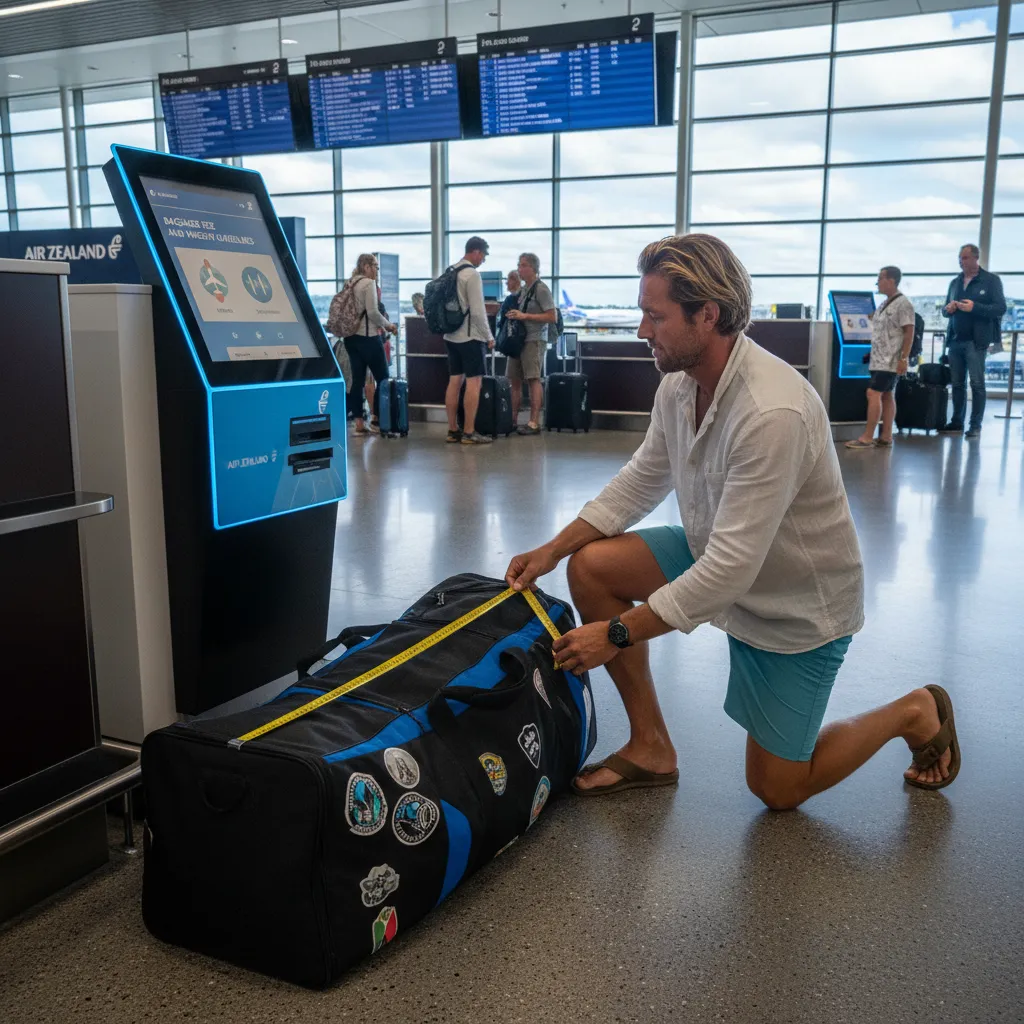
When flying Air New Zealand to Fiji, sporting items under 2 meters (6.5 feet) in length and 23kg (50lb) count as a standard checked bag. If the item is in addition to your allowance, you must purchase a prepaid extra bag. Items exceeding 23kg or linear dimensions incur significant overweight or oversized surcharges at the airport.
What are the Air New Zealand Oversized Baggage Fees for Fiji?
For Kiwi travelers heading to the tropical paradise of Fiji, bringing your own equipment—whether it is a surfboard for Cloudbreak, golf clubs for Denarau, or a bike for the Coral Coast—is often non-negotiable. Understanding the specific fee structure of Air New Zealand is critical to avoiding sticker shock at the check-in counter.
Air New Zealand operates on a “piece” system. This means they do not generally distinguish between a suitcase and a surfboard bag, provided the sporting equipment fits within specific weight and length parameters. If your ticket includes a checked bag (Seat + Bag, The Works, or Works Deluxe), your sports gear can take that spot.
The 2-Meter Rule and Weight Limits
The most critical threshold for Air New Zealand is the 2-meter length limit. Most shortboards and standard golf bags fit easily within this. However, longboards, windsurfing gear, and large bike boxes often push this limit.
- Standard Allowance: Items up to 2m long and 23kg are treated as a standard bag.
- Oversized Items: If an item exceeds 2m in length (up to 2.5m), it is considered oversized. While Air New Zealand often accepts these, they may require prior notification and can incur handling fees depending on the aircraft type (A320 vs. Widebody).
- Overweight Charges: This is where costs escalate. A bag weighing between 23kg and 32kg will attract a heavy surcharge. For flights to the Pacific Islands, this can be upwards of NZD $60-$100 paid at the airport if not prepaid.
Prepaid vs. Airport Rates
The golden rule for transporting gear on Air New Zealand is to prepay. Purchasing an extra bag online prior to your flight is significantly cheaper than paying the excess baggage fee at the airport. If you plan to bring a suitcase plus a golf bag, buy the “Extra Bag” option when booking your ticket. Airport rates for excess baggage can be double the prepaid rate.
How Does Fiji Airways Compare for Sports Gear?
When analyzing air nz oversized baggage fees fiji, one must compare the national carrier against its primary competitor, Fiji Airways. The policies differ, and depending on your specific equipment, one airline may offer a distinct financial advantage over the other.
Fiji Airways Sports Allowance
Fiji Airways has historically marketed itself as a surfer-friendly airline. Their policy occasionally fluctuates, but generally, they allow for checking in bulky items with a different fee structure. In some instances, business class passengers receive complimentary sports handling, while economy passengers must pay a fixed fee per piece.
Crucially, Fiji Airways often has a higher tolerance for linear dimensions compared to the strict 2-meter cutoff on some Air New Zealand narrow-body aircraft. However, Fiji Airways charges for “Bulky Items” are strictly enforced at Nadi International Airport upon return. Travelers should verify the current “Bulky Item Fee” on the Fiji Airways website, as this is often a fixed currency amount (e.g., FJD) rather than a weight-based calculation.
Aircraft Constraints
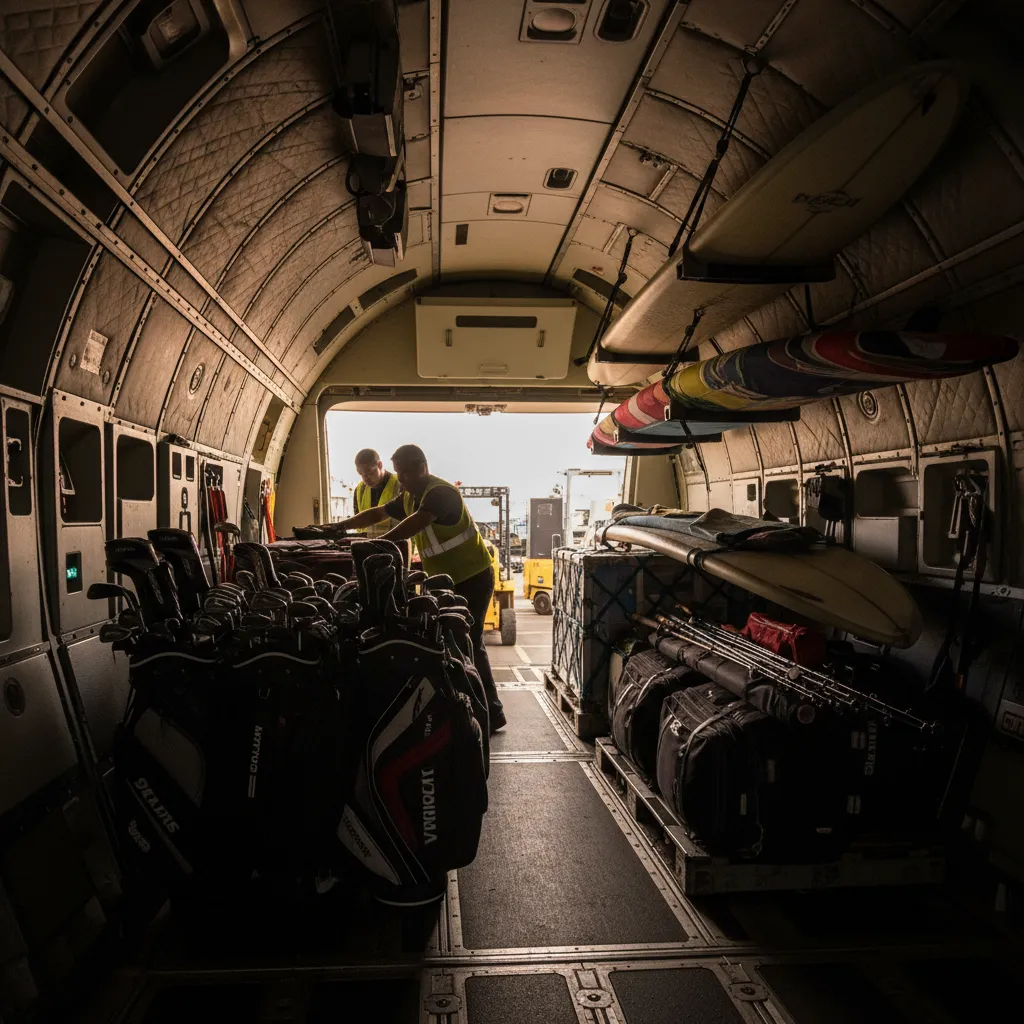
Both airlines utilize a mix of wide-body and narrow-body aircraft for the Auckland to Nadi route. If you are flying on a smaller aircraft (like the A320 or 737), cargo space is limited. On full flights, oversized sports gear is the first cargo to be offloaded if weight restrictions are met. Always check your aircraft type when booking; a wide-body flight (like a 777 or A350) offers much greater security that your longboard will arrive when you do.
Packing Tips for Protection: Avoiding the “Ding”
Regardless of which airline you choose, baggage handlers are under time pressure and cannot treat every bag with delicate care. When traveling to Fiji, you must assume your gear will be stacked, thrown, and subjected to turbulence. Proper packing is your only insurance against damage.
Surfboard Protection Strategy
For surfers targeting the Mamanucas, a broken board is a trip-ender. Follow these steps:
- Remove Fins: Never travel with fins in. They will snap or puncture the board.
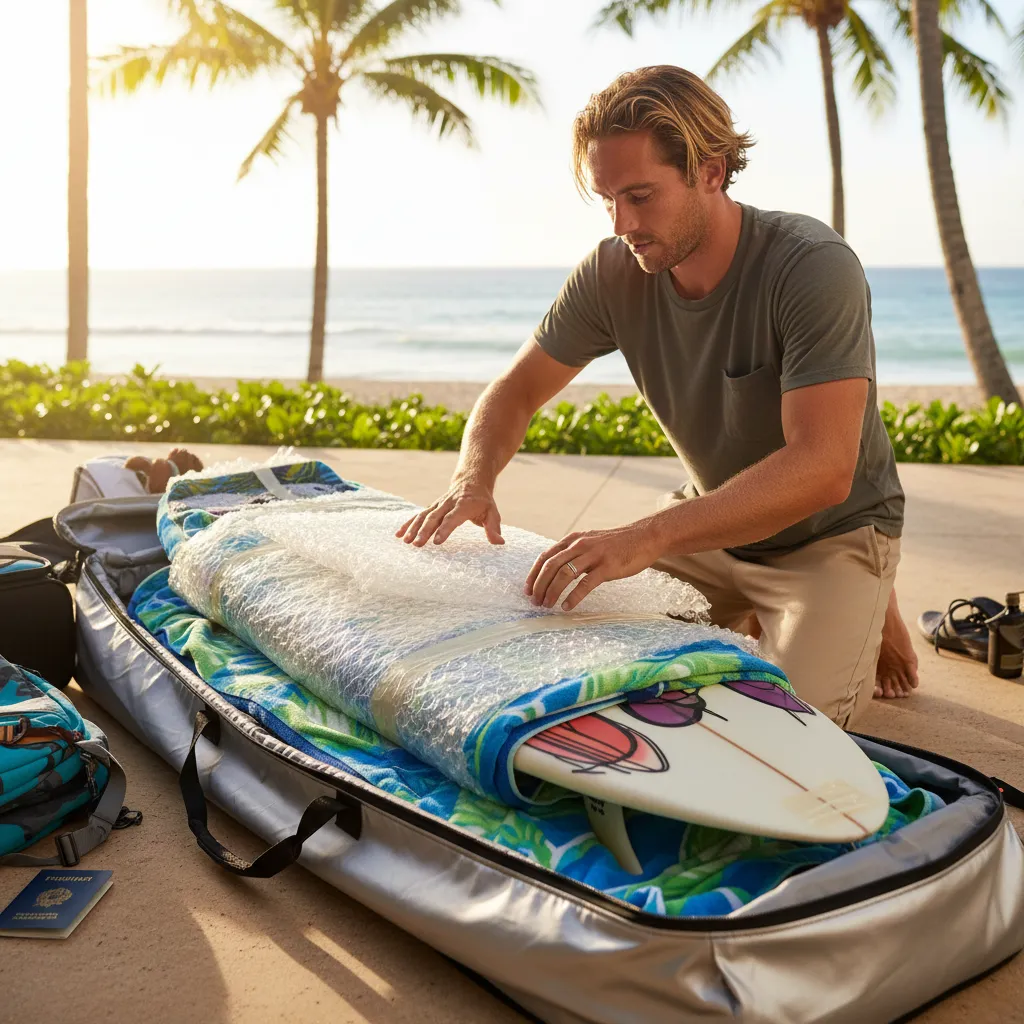
- Pipe Insulation: Buy foam pipe insulation from a hardware store (like Bunnings) and tape it around the rails (edges) of your board.
- Nose and Tail Blocks: Use extra bubble wrap or cardboard to create hard blocks at the nose and tail, the most vulnerable points.
- The Towel Wrap: Wrap your board in your beach towels inside the bag. This saves luggage space in your suitcase and adds padding.
- Day Bag inside Coffin: If you have a heavy-duty “coffin” travel bag, put your board inside a lightweight day sock or bag first for double layering.
Golf Club Security
Golf clubs are prone to snapping at the head. To prevent this:
- Stiff Arm: Invest in a “Stiff Arm” or adjustable support pole. This sits in your bag and extends longer than your driver, absorbing any impact if the bag is dropped upside down.
- Weave the Irons: Bundle your irons together and wrap the heads in a towel to stop them clattering against graphite shafts.
- Remove Heads: If you have an adjustable driver or wood, remove the head and pack it in your carry-on or the pocket of the golf bag.
Bicycle Boxing
Air New Zealand requires bikes to be in a recognized bicycle box or bag. Only handlebars can be turned, and pedals removed. Tyres must be partially deflated to accommodate pressure changes in the hold, though not fully flat to protect the rim.
Transfer Vehicles for Oversized Luggage
You have landed in Nadi, cleared customs, and your gear has arrived intact. Now, you face the next logistical hurdle: getting to your resort. The standard taxi sedans in Fiji run on LPG tanks often located in the boot (trunk), severely limiting luggage space.
The Taxi Trap
Do not assume a standard taxi can take a surfboard bag or a bike box. Most cannot. If you attempt to strap gear to the roof of a standard taxi using improvised tie-downs, you risk damage to the gear and the vehicle, not to mention safety hazards.
Pre-Booking Private Shuttles
The most effective strategy is to pre-book a private transfer service. Companies like Rosie Holidays or private van operators allow you to specify “Oversized Luggage” during booking. Ensure you request a van (Toyota HiAce or similar) rather than a sedan. Explicitly state the length of your longest item in the booking notes.
Boat Transfers to Islands
If you are heading to the Mamanuca or Yasawa Islands via the Malolo Cat or South Sea Cruises, be aware that they also have baggage limits. While they are generally accommodating of surfboards, very large items (like kayaks or windsurf gear) may require freighting on a separate barge service, which takes longer. Always check the ferry operator’s terms of carriage for “bulky items.”
Storage Solutions at Fiji Resorts
Once you arrive at your destination, where does the gear go? High humidity and salt air are the enemies of sports equipment.
Security Considerations
While Fiji is generally safe, leaving expensive carbon-fiber road bikes or pro-level surfboards on a balcony is unwise. Most reputable resorts offer a “Sports bure” or a secure luggage room. Request this upon check-in.
Climate Control
If you are bringing expensive golf clubs or photography equipment, avoid leaving them in non-air-conditioned storage for extended periods. The humidity can cause grips to disintegrate and lenses to fog. Keep sensitive gear inside your climate-controlled room if space permits.

Insurance and Final Logistics
It is imperative to verify that your travel insurance covers sporting equipment while in transit. Many standard policies have a “per item” limit (e.g., $1,500), which may not cover a high-end bike or a quiver of surfboards. You may need to purchase a specific “Sports” add-on to cover the full replacement value.
Furthermore, inspect your gear immediately upon retrieval at Nadi Airport. If there is damage, you must file a Property Irregularity Report (PIR) with the airline before you leave the terminal. Once you step outside, the airline is no longer liable for damage claims.
By understanding the nuances of Air NZ oversized baggage fees for Fiji, packing defensively, and arranging appropriate ground transport, you ensure your sporting holiday remains focused on the activity, not the logistics.
Does Air New Zealand charge for surfboards to Fiji?
Air New Zealand does not charge a specific “surfboard fee” if the board bag is under 2 meters in length and 23kg in weight; it simply counts as one of your checked bags. If it exceeds 2 meters or is an extra bag beyond your ticket allowance, prepaid extra bag fees or oversized handling charges apply.
What is the maximum length for baggage on Air New Zealand?
The standard maximum length is 2 meters. Items up to 2.5 meters can sometimes be carried but are considered oversized and depend on the aircraft’s cargo hold capacity. You should always contact Air New Zealand prior to travel if your item exceeds 2 meters.
Can I take golf clubs on Fiji Airways for free?
Fiji Airways often includes a sporting allowance, but this depends on your ticket class. Generally, golf clubs can be counted as part of your checked luggage allowance. If they exceed the weight limit, excess baggage fees will apply per kilogram or per piece.
How much does an extra bag cost on Air New Zealand to Fiji?
Costs vary by fare type and season, but prepaying for an extra bag is always cheaper than paying at the airport. Prepaid bags typically range from NZD $35 to $70, whereas airport charges for excess baggage can exceed NZD $100 per piece.
Do I need to deflate bike tires for flying?
Yes, you must partially deflate bicycle tires before checking them in. They do not need to be completely flat, but reducing the pressure prevents potential blowouts caused by pressure changes in the unpressurized or partially pressurized cargo hold.
Will a surfboard bag fit in a Fiji taxi?
Standard Fiji taxis (sedans) usually cannot accommodate surfboard bags inside due to LPG tanks in the trunk. You must request a station wagon or a van, or pre-book a private transfer service that specializes in carrying oversized sports equipment.