
Air New Zealand generally permits sports equipment as part of your standard checked baggage allowance if it weighs under 23kg and is less than 2 meters in length. However, for items exceeding these dimensions or your ticketed allowance, prepaid excess baggage fees apply, typically ranging from NZD $35 to $60 per bag when booked online. Paying these fees at the airport is significantly more expensive.
Understanding Air NZ Oversized Baggage Fees to Fiji
For Kiwi travelers heading to the tropical paradise of Fiji, the journey often involves more than just a swimsuit and sunscreen. Whether you are chasing the breaks at Cloudbreak, teeing off at Natadola Bay, or cycling the Coral Coast, transporting expensive sports gear requires meticulous planning. The primary concern for most travelers is the cost and regulation surrounding air nz oversized baggage fees fiji.
Air New Zealand operates a specific set of rules regarding sporting goods that differs from standard cargo. Understanding these nuances is critical to avoiding exorbitant fees at the check-in counter.
What Counts as Standard Baggage?
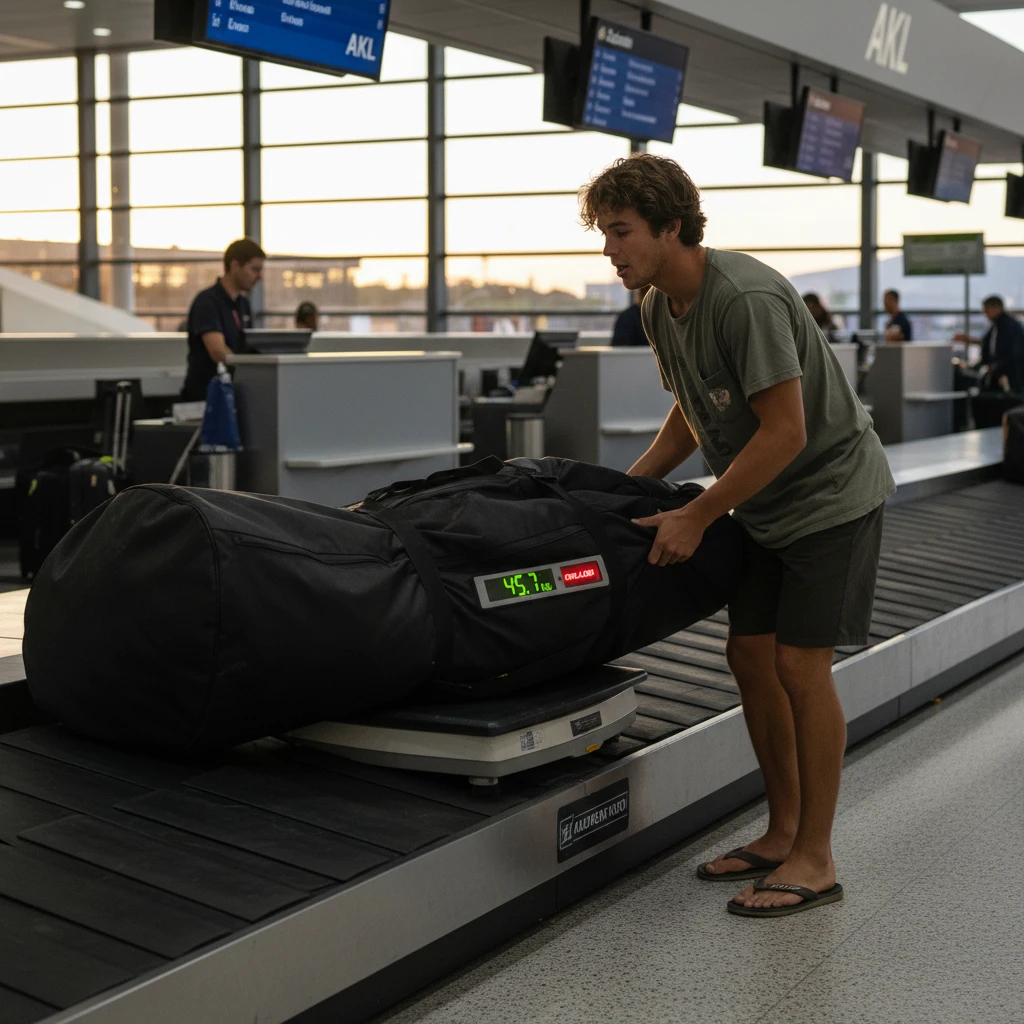
Contrary to popular belief, Air New Zealand is relatively accommodating regarding sports gear, provided it fits within specific parameters. Your sporting item counts as one piece of your checked baggage allowance if:
- It weighs no more than 23kg (50lb).
- It has a maximum length of 2 meters (6.5 feet).
- It is properly packed to prevent damage to other luggage.
If your ticket includes one checked bag and you check a suitcase plus a golf bag, the golf bag is considered your second bag. If you have not prepaid for a second bag, you will be charged the excess baggage rate.
The 2-Meter Rule and Oversized Charges
The most critical limitation for surfers and windsurfers is the length restriction. Items exceeding 2 meters but under 2.5 meters usually incur an oversized handling fee. However, on certain aircraft types often used for the short-haul Auckland (AKL) to Nadi (NAN) route—such as the A320 or A321neo—space is strictly limited. Items over 2 meters may be refused entirely if the cargo hold cannot accommodate them. It is imperative to check the aircraft type listed on your booking.
Prepaid vs. Airport Fees
The “Golden Rule” of transporting gear on Air New Zealand is to always pay in advance. Prepaid extra bags can cost up to 50% less than airport rates.
- Prepaid: Generally ranges between NZD $35 – $80 depending on your fare class and Airpoints status.
- Airport Rate: Can escalate rapidly, often exceeding NZD $150 for the same item if declared at the counter.
Air New Zealand vs. Fiji Airways: The Baggage Showdown
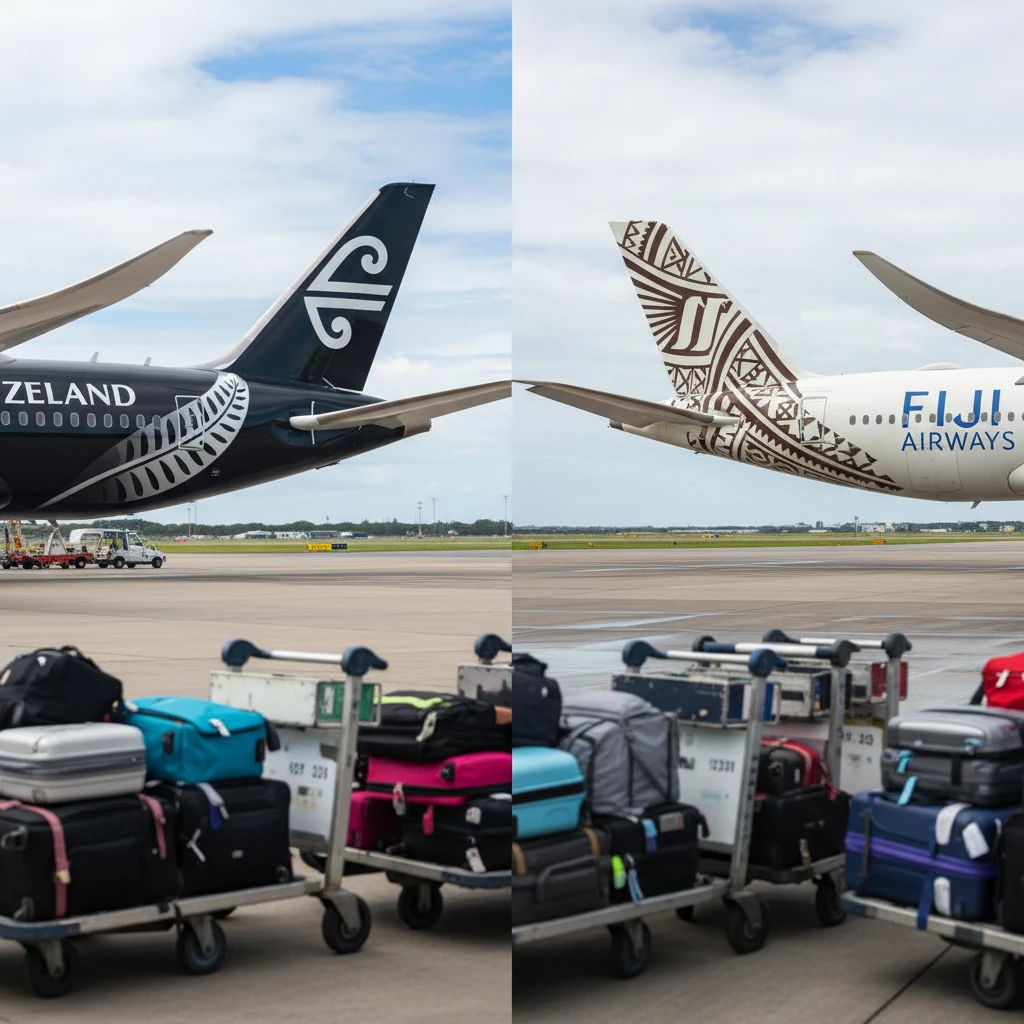
When planning a sports-oriented trip, choosing the right carrier can save you hundreds of dollars. Fiji Airways is the direct competitor on the NZ-Fiji route, and their policies differ in ways that may benefit specific types of travelers.
Fiji Airways Baggage Policies
Fiji Airways has historically marketed itself as a surfer-friendly airline. While policies evolve, they often allow for a more generous weight allowance for specific sports items without the strict linear dimension caps found on other carriers, although weight limits still apply.
Key Differences for the New Zealand Traveler
1. Weight Limits:
Air New Zealand strictly enforces the 23kg limit per bag. If your bike box weighs 25kg, you may be forced to unpack items or pay a heavy overweight fee (which is different from an excess bag fee). Fiji Airways business class or specific frequent flyer tiers may offer higher weight caps (up to 30kg) which is crucial for heavy equipment like scuba gear or downhill mountain bikes.
2. Linear Dimensions:
Fiji Airways is often more lenient with the total linear dimensions (Length + Width + Height) compared to Air New Zealand’s strict 2-meter length cap on narrow-body aircraft. If you are bringing a longboard (9ft+), you must contact the airline. Air NZ often places an absolute embargo on items over 2.5m on passenger flights, requiring them to be sent as cargo.
3. Multi-Piece Allowances:
Air New Zealand operates on a “per piece” concept. Fiji Airways sometimes operates on a “total weight” concept depending on the ticket type, meaning you could theoretically check two smaller sports bags if they fit within the total weight allowance, though the piece concept is becoming the industry standard. Always verify your specific ticket conditions.
Packing Strategies: Protecting Your Gear from Tarmac to Tarmac
Understanding the fees is only half the battle. Ensuring your carbon fiber bike frame or fiberglass surfboard arrives in Nadi in one piece is the other. Baggage handlers deal with thousands of bags daily; your “Fragile” sticker is a request, not a guarantee.
Hard Case vs. Soft Bag
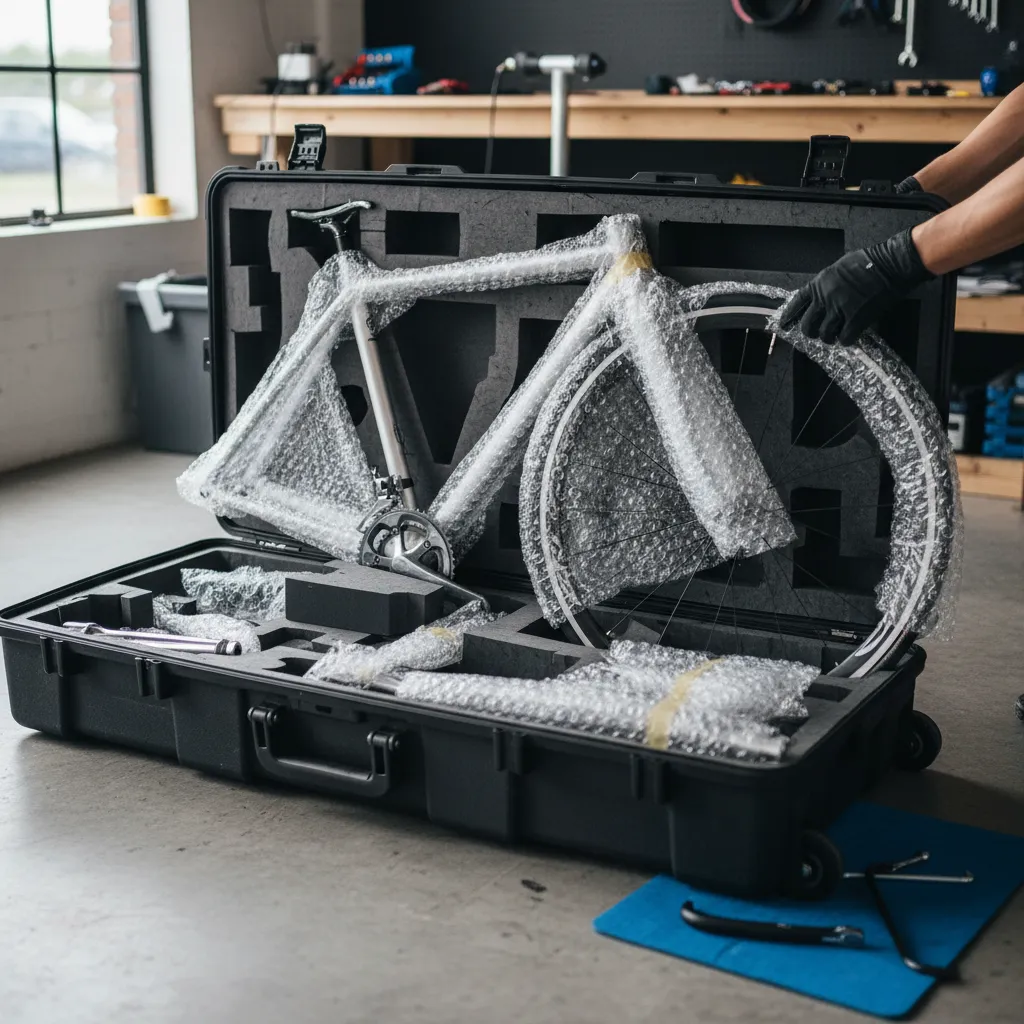
For golf clubs and bicycles, a hard-shell travel case is non-negotiable. Soft bags offer minimal protection against crushing forces in the cargo hold. While hard cases add to the weight (eating into your 23kg allowance), the protection they offer is worth the potential excess weight fee compared to the cost of replacing a cracked frame.
The “Russian Doll” Method
Maximize your allowance by using your sports bag as extra luggage space.
For Surfers: Wrap your rails in pool noodles (cut lengthwise) and use bubble wrap on the nose and tail. Place wetsuits, towels, and soft clothing around the most vulnerable parts of the board. This provides cushioning and saves space in your main suitcase.
For Golfers: Weave your irons through the arms of your sweaters. Use a “stiff arm” support rod in your travel bag to absorb impact if the bag is dropped upside down, protecting the heads of your drivers.
Depressurization Precautions
Remember that cargo holds are pressurized, but temperature fluctuations occur.
Inflatables: If you are bringing Stand Up Paddleboards (iSUPs) or kitesurfing kites, ensure they are fully deflated.
Tires: Deflate bicycle tires slightly (not fully, to protect the rim) to accommodate pressure changes.
Navigating Nadi: Transfers with Oversized Luggage
You have landed at Nadi International Airport (NAN), cleared customs, and your gear has arrived safely. Now, how do you get a 7-foot board bag or a bike box to your resort? This is a common bottleneck for travelers who assume a standard taxi can accommodate them.
The Taxi Limitations
Standard Fiji taxis are often sedans (typically Toyota Priuses or similar hybrids). They do not have roof racks, and their trunks typically contain LPG tanks, leaving almost no room for luggage, let alone sports gear. Attempting to squeeze a surfboard into a standard taxi is a recipe for damage and frustration.
Booking Specialized Transfers
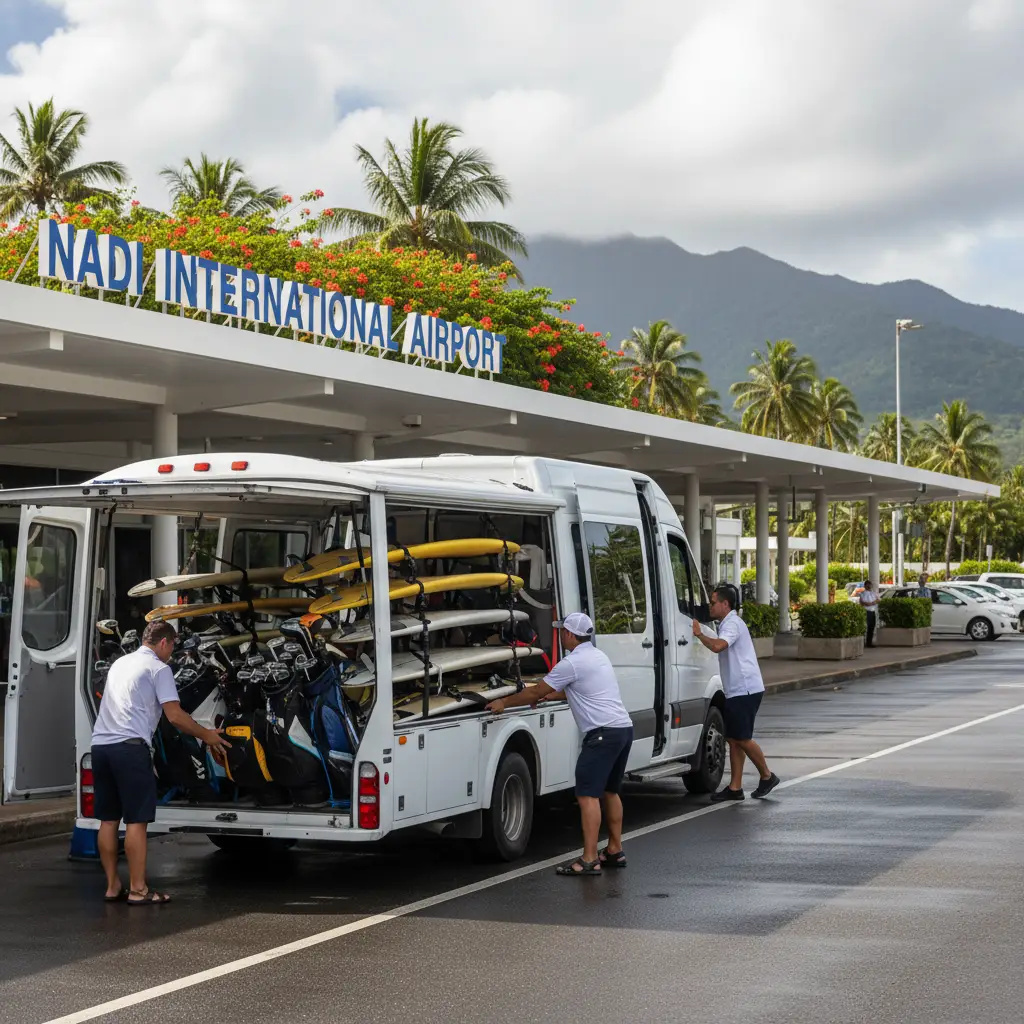
For seamless transport, you must pre-book a transfer vehicle specified for “oversized luggage.”
- Private Vans: Companies like Rosie Holidays, TTF (Tourist Transport Fiji), and private operators offer 12-seater vans. When booking, explicitly state: “I have oversized sports gear [dimensions].”
- Cost Implications: Expect to pay a premium. A transfer that costs FJD $50 in a taxi may cost FJD $120+ for a private van, but it is the only safe way to move equipment.
Inter-Island Ferries
If you are heading to the Mamanuca or Yasawa Islands via the Malolo Cat or South Sea Cruises, be aware of their luggage rules. They handle thousands of bags. Ensure your gear has a robust handle and is water-resistant, as bags are often stacked on the back deck of the ferry and can be exposed to sea spray.
Resort Storage and Island Hopping Logistics
Once you arrive at your accommodation, storage becomes the priority. The humid, tropical climate of Fiji affects equipment differently than the cooler New Zealand air.
Climate Control and Security
High humidity can rust bike chains and zipper pulls overnight.
Maintenance: Rinse all gear with fresh water immediately after use to remove salt. Dry it thoroughly before storing.
Storage Rooms: Most high-end resorts (like InterContinental or Shangri-La) have dedicated storage rooms for golf clubs and surfboards. However, smaller bures may require you to keep gear in your room. If storing in your room, ask for extra towels to place under the gear to protect the floor and prevent moisture buildup.
Insurance Considerations
Before leaving New Zealand, verify your travel insurance policy. Many standard policies have a “per item” limit (e.g., NZD $1,500) which may not cover a high-end carbon road bike or a custom surfboard. You may need to purchase a specific “sports equipment” add-on to ensure you are fully covered for theft or damage while in transit or at the resort.
People Also Ask (PAA)
How much does Air NZ charge for a surfboard bag to Fiji?
If your surfboard bag is under 2 meters in length and under 23kg, it can count as your standard checked bag (free if your fare includes a bag). If it is an extra bag, prepaid fees generally start around NZD $35-$60. If it is overweight or oversized, fees increase significantly.
Can I take a 9ft longboard on Air New Zealand to Fiji?
It is difficult. Air New Zealand has a strict 2-meter (approx 6.5ft) length limit on many narrow-body aircraft (A320/A321) used for short-haul flights. Items up to 2.5m may be accepted on wide-body aircraft (777/787), but you must verify the aircraft type and contact the airline in advance.
Does Fiji Airways charge extra for golf clubs?
Fiji Airways generally includes golf clubs as part of your checked baggage allowance provided they are within the weight limit. However, if the golf bag is an additional piece beyond your ticket allowance, excess baggage fees will apply.
What is the weight limit for sports gear on Air NZ?
The standard weight limit is 23kg (50lb). You can pay an overweight fee to increase this to 32kg (70lb), but no single item can weigh more than 32kg for health and safety reasons.
Do I need to declare sports gear before my flight?
Yes, it is highly recommended. You should add the extra bag to your booking online to get the prepaid rate. For unusually large items (bikes, large board bags), calling the airline ensures the aircraft cargo hold has space for your item.
How do I transport a surfboard from Nadi Airport to my hotel?
Standard taxis in Fiji cannot accommodate surfboards. You must book a private transfer van or a shuttle service specifically requesting a vehicle for oversized luggage. Companies like Rosie Holidays or private transfer operators can arrange this.