
The best Fiji SIM card for tourists is generally Vodafone Fiji due to its superior coverage in the outer islands (Mamanucas and Yasawas) and maritime areas. Travelers can purchase a tourist SIM at Nadi International Airport immediately after customs, with 100GB data packs costing approximately $35-$50 FJD ($25-$37 NZD), offering significantly better value than New Zealand roaming plans.
Stay Connected in Paradise: A Kiwi’s Guide to Fiji Connectivity
For New Zealanders escaping the winter chill for the tropical warmth of Fiji, staying connected is often a top priority. Whether it is uploading stories of your cocktail by the pool to Instagram, checking weather reports for your snorkeling trip, or simply keeping in touch with whānau back home, reliable internet is essential. While the idea of a “digital detox” sounds appealing, the reality is that we rely on our phones for maps, bookings, and emergency contacts.
The telecommunications landscape in Fiji has improved drastically over the last decade. Gone are the days of relying solely on expensive hotel business centers. Today, 4G+ is widely available, and 5G is rolling out in major hubs. However, navigating the options between roaming with your NZ provider and buying a local SIM card can save you hundreds of dollars.
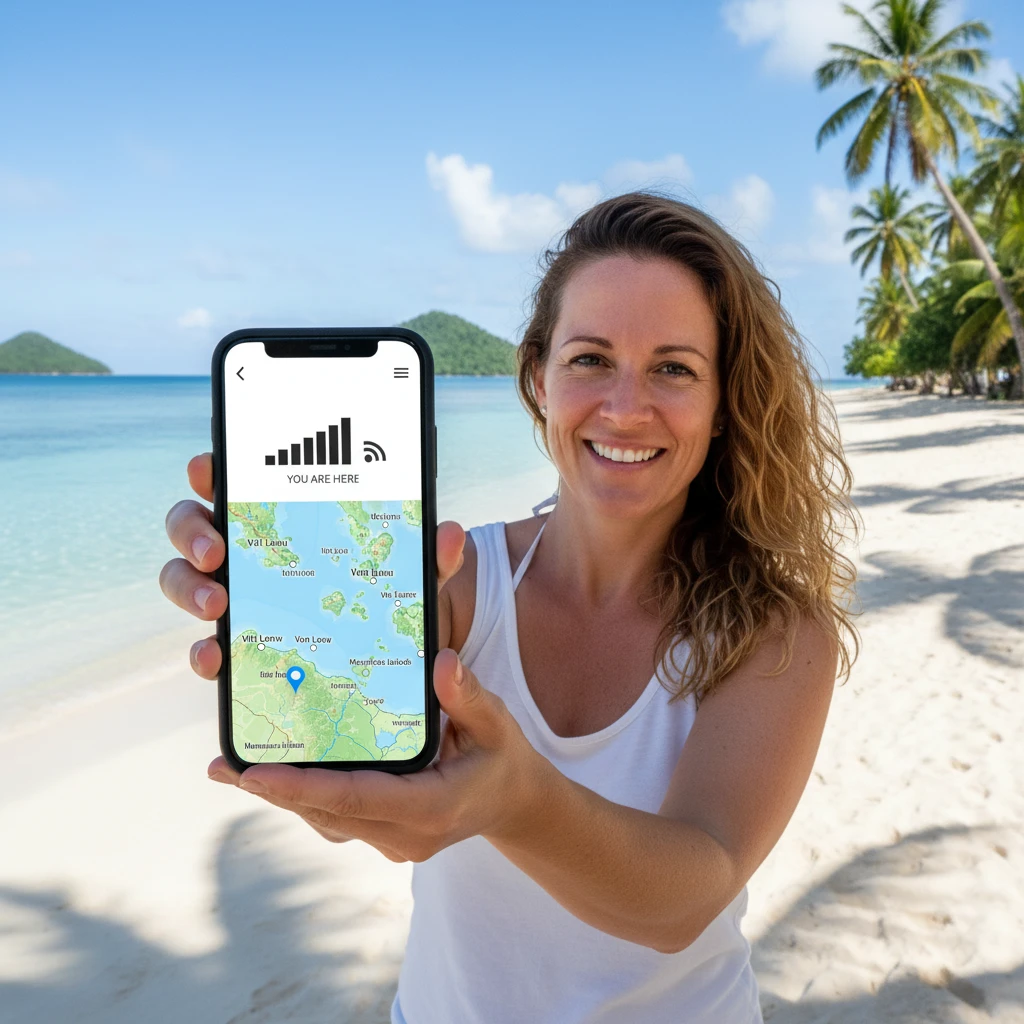
NZ Roaming vs. Local SIM: The Cost Reality
Before you board your Fiji Airways or Air New Zealand flight, it is crucial to understand the math. Most major New Zealand carriers offering roaming packs, such as One NZ (formerly Vodafone NZ), Spark, and 2degrees, charge a daily roaming fee.
The Cost of Convenience
Typically, NZ roaming costs around $7 to $8 NZD per day. For a standard 10-day holiday, you are looking at:
- Roaming Cost: $70 – $80 NZD
- Data Cap: Often limited to your domestic plan caps or throttled after a certain usage.
In contrast, a local Fiji SIM card offers a significantly higher data allowance for a fraction of the price. A “Tourist SIM” package in Fiji generally costs between $35 and $50 FJD (approx. $25 – $37 NZD) and remains valid for the duration of your stay (usually 14 to 30 days).
The Verdict: Unless you are on a very short business trip (1-2 days), buying a local SIM card is the undisputed winner for value.
Vodafone vs. Digicel: The Coverage Battle
Fiji is effectively a duopoly when it comes to mobile networks: Vodafone Fiji and Digicel Fiji. While Telecom Fiji exists, they are primarily focused on landlines and home broadband, making them irrelevant for the average tourist.
Vodafone Fiji: The King of Maritime Coverage
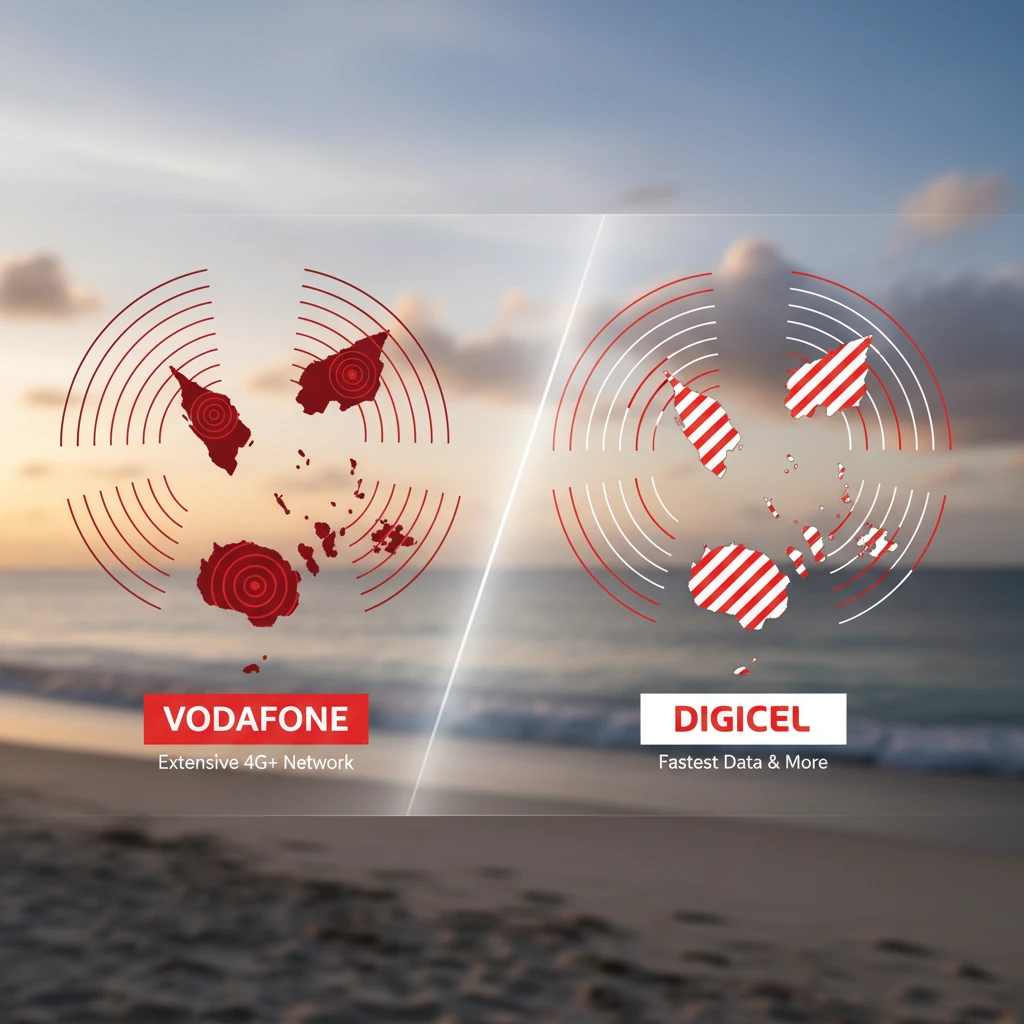
For most New Zealand tourists, Vodafone is the recommended choice. Why? Because Kiwis love the outer islands.
If your itinerary includes the Mamanuca Islands (Musket Cove, Plantation Island, Likuliku) or the Yasawa Islands, Vodafone generally offers stronger and more consistent signal strength. They have invested heavily in maritime coverage, meaning you will likely get a signal even while on the ferry transfer (South Sea Cruises or the Yasawa Flyer).
Digicel Fiji: The Competitive Challenger
Digicel is a strong competitor and often undercuts Vodafone on price. Their coverage on the main island of Viti Levu (Nadi, Denarau, Coral Coast, Suva) is excellent and comparable to Vodafone. If you are staying exclusively at a resort on the mainland, Digicel is a perfectly viable option and may save you a few dollars.
However, users frequently report spotty coverage with Digicel in remote areas of Vanua Levu and the northern Yasawas compared to Vodafone.
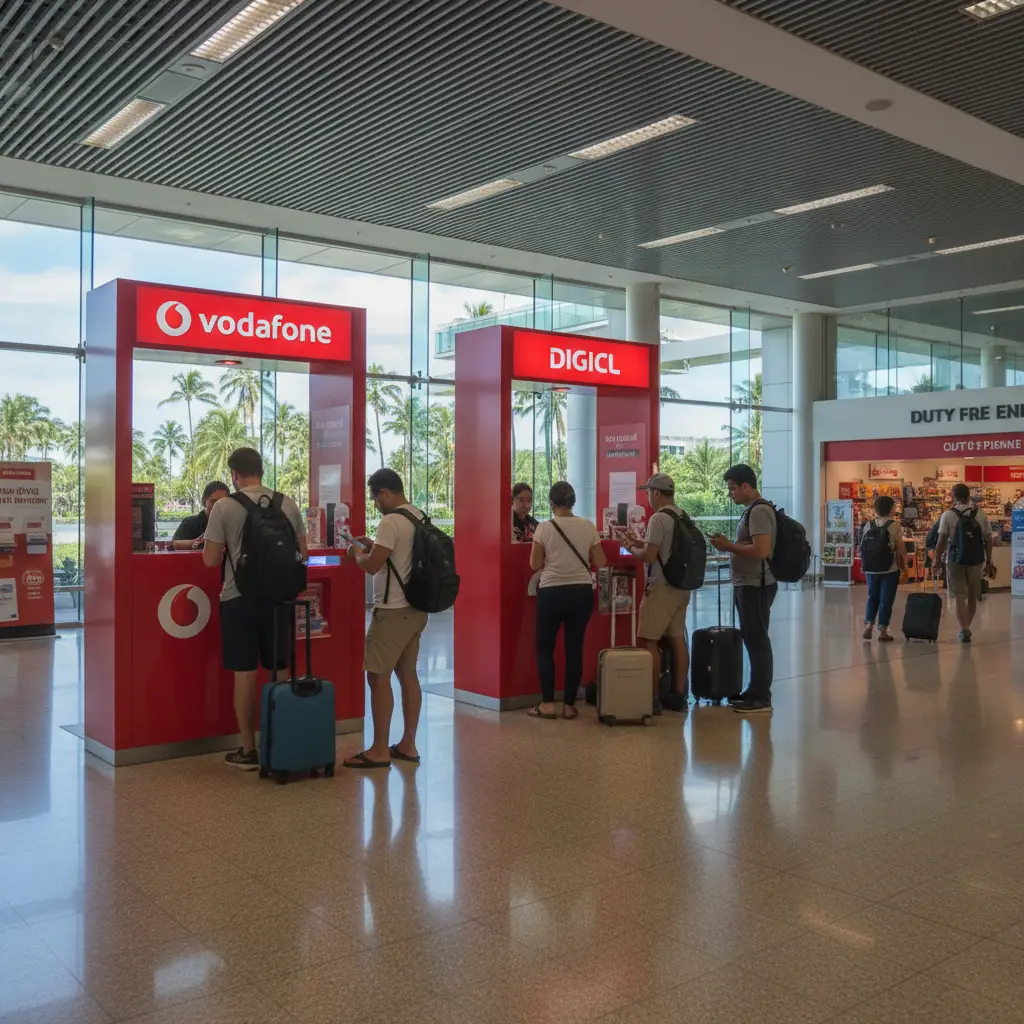
Buying a SIM at Nadi International Airport
The process of acquiring a SIM card in Fiji is incredibly streamlined for tourists. You do not need to hunt for a store in Nadi town; you can get connected before you even leave the airport terminal.
Where are the kiosks located?
Once you clear immigration, collect your bags, and pass through customs (where they scan your luggage), you will enter the Arrivals Hall. Immediately upon exiting the customs area into the public arrivals space, you will see the Vodafone and Digicel shops. They are impossible to miss, usually located right next to each other and the currency exchange booths.
Operating Hours
These kiosks are designed to service international flights. Whether your flight from Auckland lands at 2:00 PM or 2:00 AM, the kiosks are almost always staffed to meet arriving passengers.
What do you need to buy?
Fiji has strict SIM registration laws. To activate a SIM, you must present:
- Your Passport: The staff will scan or photocopy your ID page.
- Unlocked Phone: Ensure your NZ device is not network-locked (most modern NZ phones are already unlocked).
- Payment: They accept credit cards (Visa/Mastercard) and cash (FJD). It is often easier to exchange a small amount of cash at the nearby exchange booth or withdraw from the ANZ/Westpac ATMs in the arrivals hall to avoid international transaction fees on small purchases, though card is widely accepted.
Data Pack Costs & Inclusions
Both providers offer “Tourist Packs” specifically designed for short-term visitors. These packs are heavily data-centric, acknowledging that tourists use WhatsApp or Messenger for calls rather than traditional voice minutes.
Typical Vodafone Tourist Pass (Estimates)
- Starter Pack: Free SIM (often) with plan purchase.
- Cost: ~$35 – $50 FJD.
- Data: Usually massive amounts, ranging from 100GB to 150GB.
- Validity: 15 to 30 days.
- Bonus: Often includes local minutes and a small amount of international minutes to select countries (sometimes including NZ).
Typical Digicel Tourist SIM (Estimates)
- Cost: Often slightly cheaper, around $30 – $45 FJD.
- Data: Aggressive data offers, sometimes “Unlimited” data with speed caps after a certain threshold, or large buckets like 120GB.
- Validity: 14 to 30 days.
Note: Prices and promotional offers change seasonally. The staff at the kiosk will have a laminated sheet showing the current “Special Tourist Offer.” Don’t be afraid to ask “Which one has the best data for the Yasawas?” if that is where you are headed.
eSIMs: The Cardless Alternative
For tech-savvy travelers with newer iPhones (iPhone XR and later) or Samsung Galaxy S20+ devices, eSIMs are becoming a popular alternative. An eSIM allows you to download a digital SIM profile without physically swapping out your NZ SIM card.
Pros and Cons of eSIMs in Fiji
Pros:
- Convenience: Buy and install before you leave New Zealand. Have data the moment you land.
- Keep NZ Number: You can keep your NZ SIM active for receiving 2FA texts (banking codes) while using the eSIM for data.
Cons:
- Cost: Global eSIM providers (like Airalo or Holafly) are generally more expensive per GB than buying a local physical SIM at Nadi Airport.
- Network Priority: Some roaming eSIMs have higher latency as traffic is routed through international servers.
If you choose an eSIM, ensure the provider utilizes the Vodafone Fiji network for the best coverage.
Why You Can’t Rely on Resort WiFi
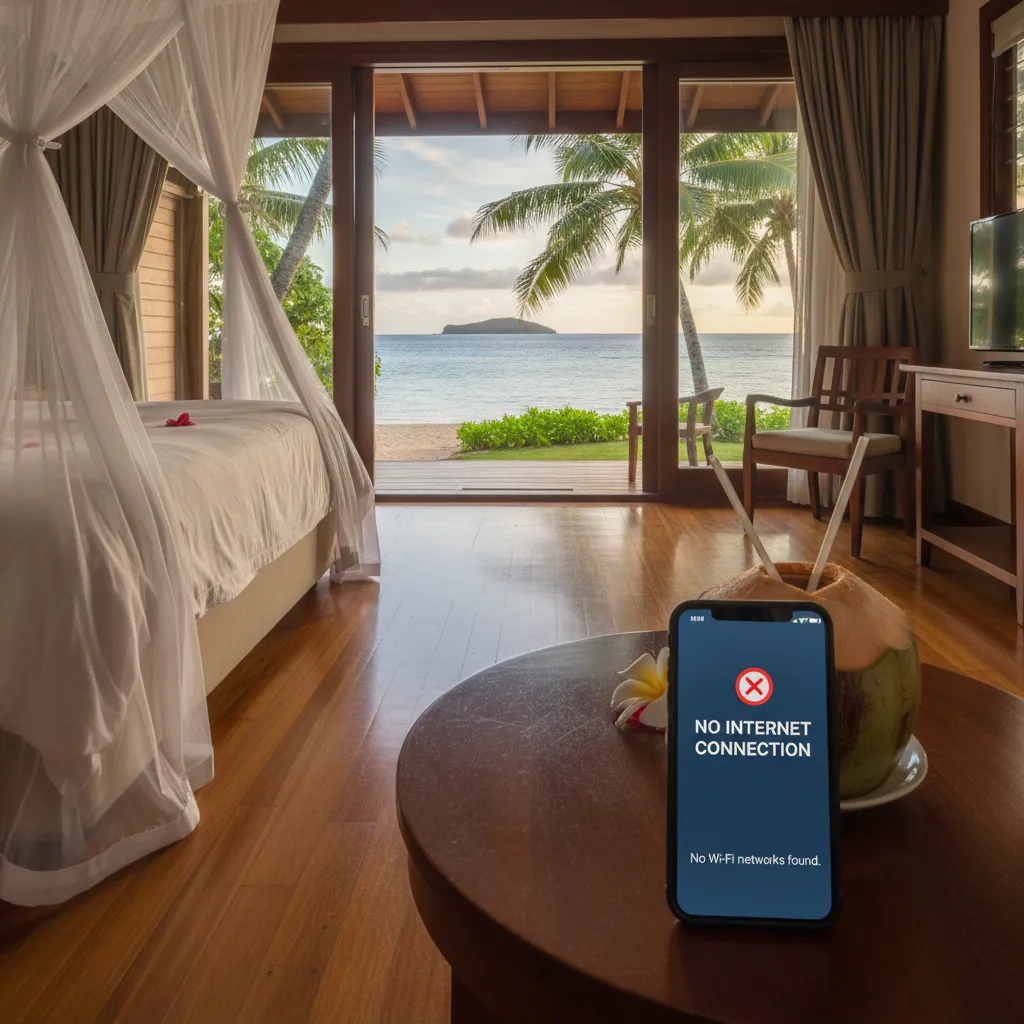
A common mistake travelers make is assuming, “I’ll just use the hotel WiFi.” In Fiji, this is a risky strategy.
While luxury resorts (like the InterContinental or Marriott Momi Bay) usually have robust WiFi, many mid-range and island resorts struggle with connectivity. Here is why you need a backup:
- Coverage Gaps: WiFi is often limited to the lobby, restaurant, and pool bar. It may not reach your bure (room).
- Speed: Bandwidth is often shared among hundreds of guests. In the evenings, when everyone is uploading photos, speeds can crawl to a halt.
- Cost: Surprisingly, some resorts still charge for premium WiFi access, which can cost as much as a SIM card for only 24 hours of access.
- Weather: Tropical storms can knock out fixed-line internet, whereas mobile towers often have backup generators and battery systems.
Activation & Troubleshooting
When you buy your SIM at the airport, do not leave the counter until it is working.
The Checklist
- Insert SIM: Hand your phone to the staff; they are experts at swapping SIMs quickly.
- Wait for SMS: You will receive a flurry of welcome texts.
- Test Data: Turn off your WiFi and try to load a webpage (e.g., nzherald.co.nz). If it loads, you are good to go.
- Check Balance: Ask the staff for the USSD code to check your data balance (usually *100# or similar).
APN Settings
If your data isn’t working, your phone might still be trying to use your NZ APN (Access Point Name) settings. You may need to change this manually in settings:
- Vodafone Fiji APN: live.vodafone.com.fj
- Digicel Fiji APN: web.digicelpacific.com
By securing a local SIM card, you ensure a stress-free holiday where you can access maps, translation apps, and transport schedules on the go. For the price of a few cocktails, it is the best travel insurance you can buy for your peace of mind.
Can I use my NZ phone in Fiji?
Yes, provided your phone is not network-locked. Most smartphones sold in New Zealand in recent years are unlocked. You can use your NZ SIM for roaming (expensive) or insert a local Fiji SIM (cheaper).
How much is a SIM card at Nadi Airport?
Tourist SIM packages typically range from $35 to $50 FJD (approx. $25-$37 NZD). These packs usually include the SIM card itself and a large data allowance (e.g., 100GB).
Which network is better in Fiji: Vodafone or Digicel?
Vodafone is generally considered better for tourists visiting outer islands (Yasawas, Mamanucas) and maritime areas. Digicel offers competitive pricing and excellent coverage on the main island (Viti Levu).
Is there 5G in Fiji?
Yes, Vodafone Fiji has launched 5G in select areas of Suva, Nadi, and Lautoka. However, most tourist areas and outer islands rely on widespread 4G+ connectivity.
Can I buy a SIM card in Denarau?
Yes, there are Vodafone and Digicel outlets at the Port Denarau Marina shopping complex. However, it is highly recommended to buy it at the airport upon arrival for immediate connectivity.
Do I need my passport to buy a SIM in Fiji?
Yes, Fiji law requires all SIM cards to be registered. You must present a valid passport at the point of purchase to have the SIM activated.