
Fiji is best for travelers seeking large-scale luxury resorts, diverse island-hopping adventures, and world-class family amenities like kids’ clubs. Conversely, Rarotonga offers an intimate, laid-back atmosphere using New Zealand currency, making it ideal for couples and independent travelers who prefer self-catering villas, renting scooters, and a relaxed pace without the crowds.
For New Zealanders escaping the winter chill, the Pacific Island dilemma is a classic debate: Fiji vs Rarotonga for a holiday. Both destinations offer turquoise waters, swaying palms, and warm hospitality, yet they deliver vastly different experiences. As a Kiwi traveler, your choice depends heavily on whether you crave the polished infrastructure of a major resort hub or the rustic, barefoot charm of a smaller island community.
The Quick Comparison: Fiji vs Cook Islands
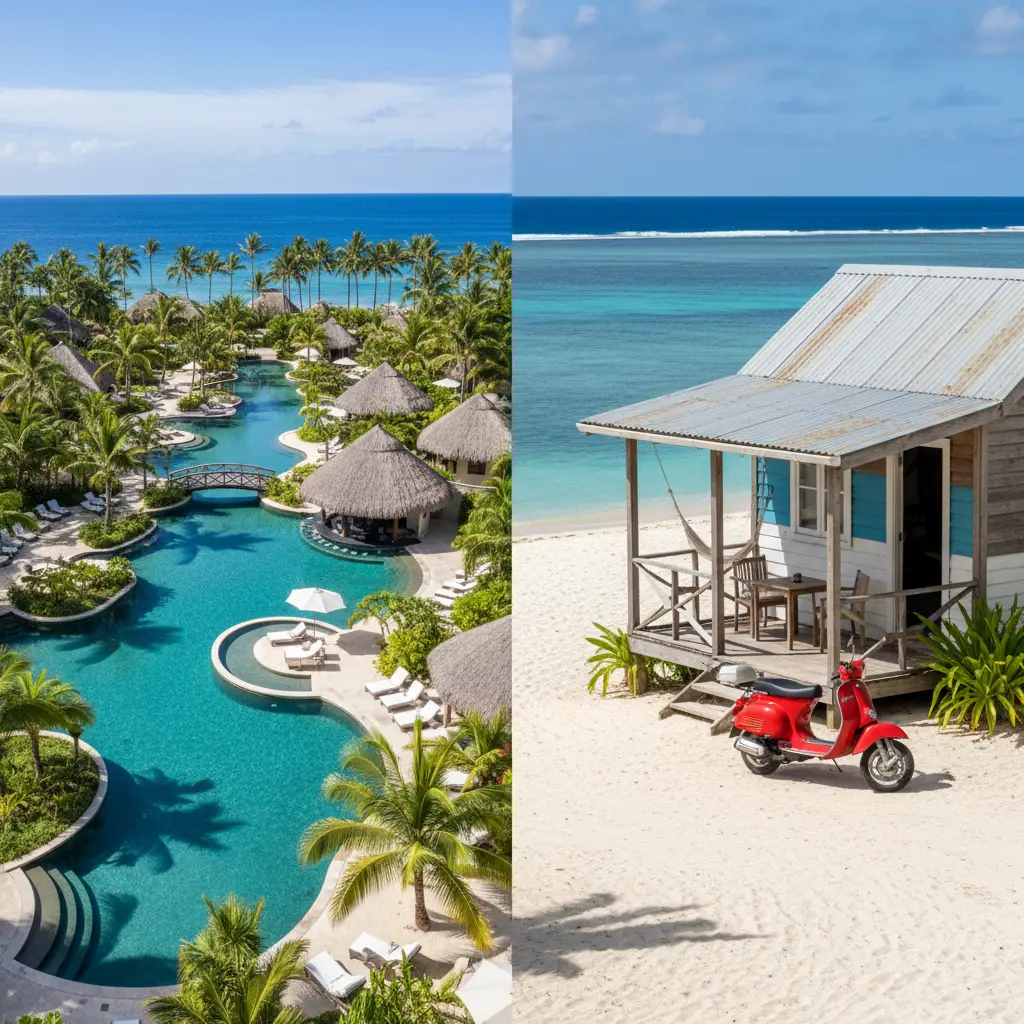
Before diving deep into the logistics, it helps to visualize the fundamental differences between these two Pacific giants. Fiji is an archipelago of over 300 islands, offering a sense of vastness and variety. Rarotonga is the main island of the Cook Islands, small enough to drive around in 45 minutes.
If you are looking for a holiday where you check into a resort and never need to leave the gates because everything—from five restaurants to a water park—is on-site, Fiji is the winner. If you prefer a holiday where the “resort” is the island itself, and you explore different cafes and beaches daily, Rarotonga wins.
Getting There: Flight Ease from New Zealand
For Kiwis, accessibility is a major selling point for both destinations. However, the flight dynamics differ slightly depending on your departure city.
Flights to Fiji (Nadi)
Fiji is generally more accessible from New Zealand’s main centers. Air New Zealand and Fiji Airways operate frequent services.
- From Auckland: Approximately 3 hours. Multiple daily flights make it incredibly convenient.
- From Christchurch & Wellington: Direct flights are available seasonally or several times a week, reducing the need for an Auckland transfer.
- Arrival Experience: You land at Nadi International Airport. From here, it is a 20-minute drive to Denarau Island (the main resort hub) or a boat/helicopter ride to the Mamanuca and Yasawa islands.
Flights to Rarotonga
Rarotonga feels slightly more remote, though still easily reachable.
- From Auckland: Approximately 3 hours and 45 minutes to 4 hours. It is slightly further than Fiji.
- From Christchurch/Wellington: You will almost always need to connect through Auckland, adding travel time.
- Jetstar vs. Air NZ: Both carriers fly this route, keeping prices competitive, but frequency is lower than the Nadi route.
- Arrival Experience: The airport is 10 minutes from everywhere. You can land, grab your bag, and be swimming in Muri Lagoon within 40 minutes.
The Wallet Factor: Currency and Costs
When comparing Fiji vs Rarotonga for a holiday, the financial logistics play a massive role for New Zealanders.
Rarotonga: The NZD Advantage
The Cook Islands use the New Zealand Dollar (NZD). This is a massive psychological and practical benefit for Kiwis.
- No Exchange Fees: You don’t lose money on banking fees or poor exchange rates.
- Price Clarity: When a menu says a burger is $25, you know exactly what that means for your budget.
- Cost of Living: generally, supermarket prices in Rarotonga are similar to a remote NZ town (slightly higher due to freight), but manageable for self-catering.
Fiji: The Fijian Dollar (FJD)
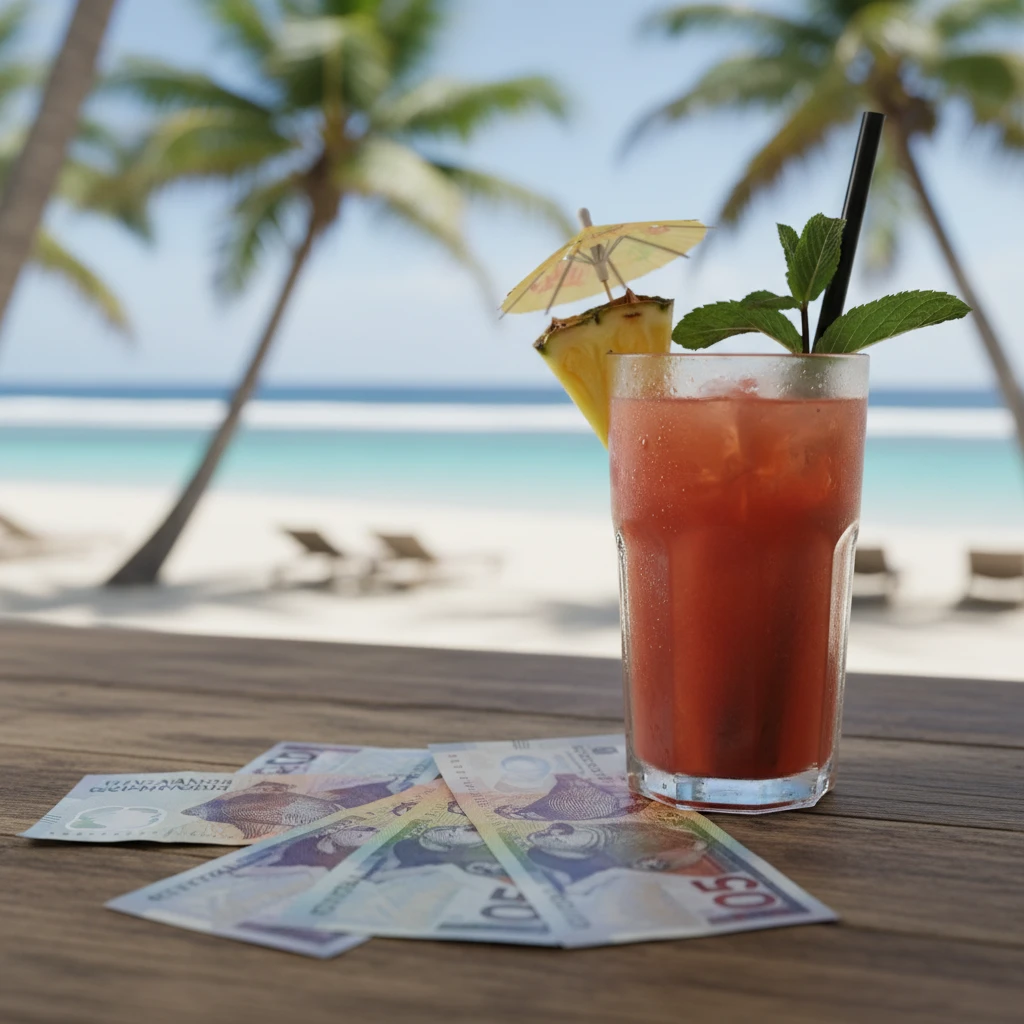
Fiji operates on its own currency, the Fijian Dollar. Historically, the exchange rate has been favorable for Kiwis (e.g., $1 NZD buys roughly $1.30 – $1.40 FJD), but you must factor in the “tourist tax” effect.
- Resort Pricing: Prices inside 5-star resorts in Fiji are international standard. A cocktail might cost FJD $22-$25, and a buffet dinner can range from FJD $90-$120 per person.
- Hidden Costs: You will need to account for currency conversion fees.
- Tipping: While not mandatory, tipping is more common in Fijian resorts due to the service culture, whereas in Raro, it is less expected.
Accommodation: Mega-Resorts vs. Boutique Villas
This is arguably the biggest differentiator. The style of accommodation dictates the “vibe” of your holiday.
Fiji: The Resort Kingdom
Fiji is world-famous for its integrated resorts. Areas like Denarau Island and the Coral Coast are lined with brands like Sheraton, Hilton, Radisson, and Sofitel.
- Scale: Huge lagoon-style pools, multiple restaurants, kids’ clubs, gyms, and spas all within the property.
- Service: The “Bula” spirit is legendary. Staff are incredibly attentive, and the hospitality is proactive.
- All-Inclusive Options: Many island resorts (like Castaway or Malolo) offer meal plans, meaning you pay upfront and don’t worry about the bill.
Rarotonga: The Boutique Bach Experience
Rarotonga has very few “chain” hotels. Instead, the accommodation landscape is dominated by motels, boutique villas, and holiday homes (baches).
- Self-Catering: Most accommodations come with a kitchenette. It is normal to buy breakfast supplies at the local “superette” and eat lunch at a cafe.
- Intimacy: A “large” resort in Raro might have 50 rooms, compared to 300 in Fiji.
- Privacy: If you rent a beachfront villa in Titikaveka, you might have a stretch of beach almost entirely to yourself.
Beaches, Lagoons, and Snorkeling
If your primary goal is white sand and clear water, you need to know exactly where to go in both destinations, as they are not all created equal.
Fiji: Mainland vs. Islands
A common mistake travelers make is staying on Denarau Island and expecting white sand. Denarau is reclaimed mangrove; the sand is dark and the water is murky (though safe).
- For the Best Beaches: You must leave the mainland. The Mamanuca and Yasawa Island groups offer the postcard-perfect white sand and electric blue water you see in brochures.
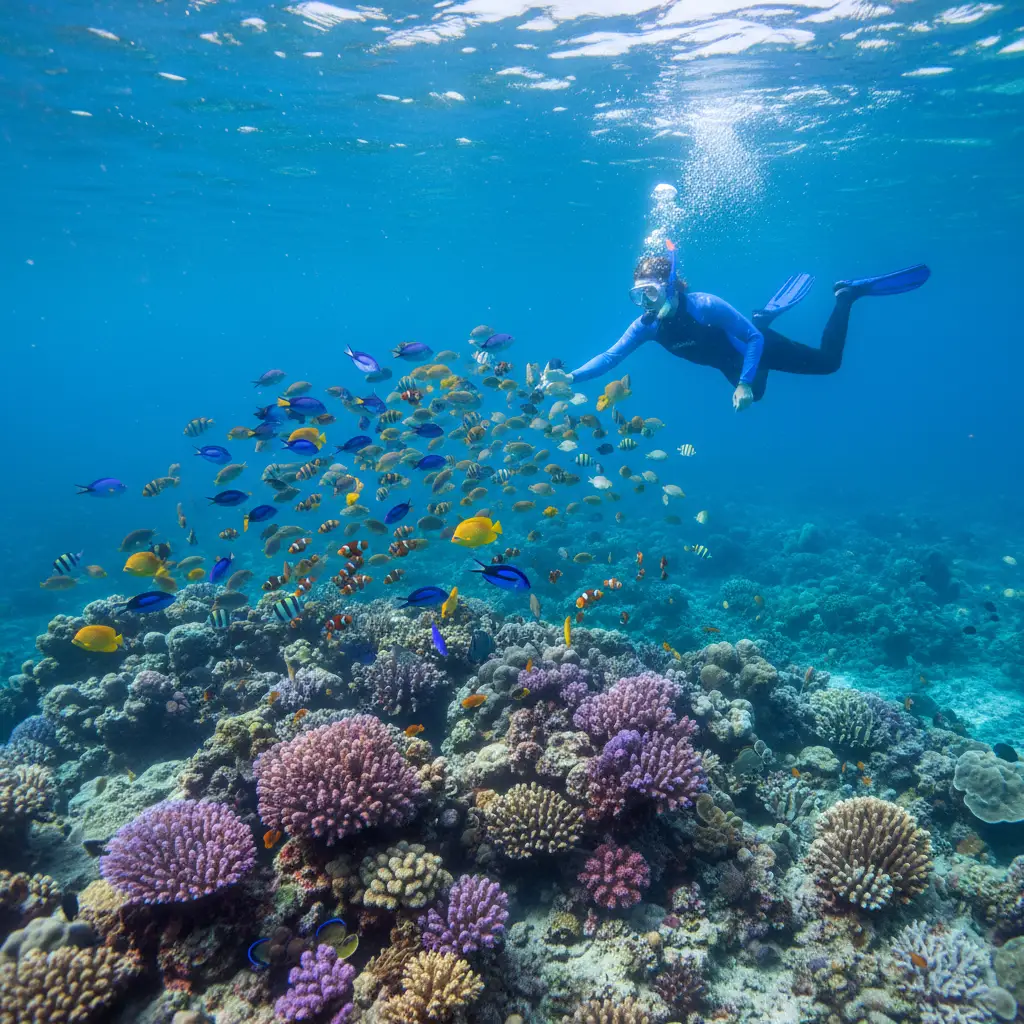
- Snorkeling: The outer islands offer world-class snorkeling on vibrant coral reefs. The Coral Coast on the mainland also offers good snorkeling, but it is tidal (you can’t swim at low tide).
Rarotonga: The Accessible Lagoon
Rarotonga is encircled by a reef, creating a calm lagoon around the entire island.
- Muri Lagoon: The most famous spot. It is shallow, calm, and dotted with small islets (motus). Perfect for kayaking and paddleboarding, though the water quality has fluctuated in recent years.
- The South Coast (Titikaveka): This is arguably the best snorkeling spot. The water is gin-clear, deep enough to swim at all tides, and full of fish.
- accessibility: In Raro, the good snorkeling is accessible from the shore. In Fiji, you often need a boat trip to reach the outer reef.
Getting Around: Bula Buses vs. Scooters
How you explore the destination adds to the adventure.
Fiji: Shuttle Dependent
On the mainland (Viti Levu), distances are large. Nadi to the Coral Coast is a 90-minute drive.
- Transport: You will likely rely on resort shuttles, private drivers, or the “Bula Bus” (an open-air bus that loops around Denarau).
- Isolation: If you are on an island resort, you are there for the duration unless you pay for a boat transfer.
Rarotonga: Freedom on Two Wheels
Rarotonga has one main road that circles the island (32km round trip). There is an “Inner Road” and an “Outer Road.”
- Scooters: Renting a scooter is the quintessential Raro experience. It gives you total freedom to find a secluded beach or a new cafe. Note: You need a license.
- The Bus: There are two buses: “Clockwise” and “Anti-Clockwise.” They are cheap, fun, and impossible to get lost on.
Weather and Best Time to Visit
Both destinations share a similar tropical climate, but Rarotonga is further south, making it slightly cooler.
Fiji Weather
Fiji is warmer year-round. Even in the middle of winter (July/August), daytime highs are around 26°C – 28°C.
- Wet Season: November to April. High humidity and risk of cyclones.
- Dry Season: May to October. Perfect for Kiwis escaping winter.
Rarotonga Weather
Because it is further from the equator, Raro can feel a bit “fresh” in the evenings during the NZ winter months.
- Winter (July/August): Daytime highs around 24°C – 25°C. You might need a light jersey at night or when riding a scooter. The water can also feel a bit brisk compared to Fiji.
- Shoulder Season: September to November is often considered the sweet spot for heat without humidity.
The Verdict: Which Should You Choose?
The decision of Fiji vs Rarotonga for a holiday ultimately comes down to your travel style.
Choose Fiji If:
- You have young kids: The Kids’ Clubs in Fiji are arguably the best in the world. You will get a genuine break while the kids are entertained from morning to night.
- You want luxury: If you want 5-star service, fine dining, and infinity pools, Fiji does it better.
- You are active: Fiji offers surfing (Cloudbreak), zip-lining, river safaris, and extensive island hopping.
Choose Rarotonga If:
- You are a couple: The vibe is romantic, quiet, and adult-centric.
- You are budget-conscious regarding food: Being able to buy NZ products and cook your own breakfast saves a fortune.
- You hate “resort bubbles”: If you want to mingle with locals, visit markets, and explore independently, Raro is the place.
- You want ease: No currency conversion, simple driving, and a relaxed “island time” that feels like a step back in time.
Frequently Asked Questions
Is Rarotonga cheaper than Fiji for a holiday?
It depends on how you travel. Rarotonga can be cheaper for daily expenses because you use NZD and can self-cater (buy groceries). However, Fiji often has cheaper flight deals and “all-inclusive” package deals that can offer better value for families. Luxury accommodation is generally more expensive in Fiji, but budget options exist in both.
Which island has better beaches, Fiji or Rarotonga?
If you stay on the main island of Fiji (Viti Levu), Rarotonga has better beaches readily accessible from the road (like Muri and Titikaveka). However, if you travel to Fiji’s outer islands (Mamanucas or Yasawas), the beaches there are superior to Rarotonga’s, featuring powder-white sand and pristine coral reefs.
Do I need a visa for Fiji or Rarotonga from New Zealand?
New Zealand passport holders do not need a visa for short tourist stays in either destination. For the Cook Islands (Rarotonga), because it is in free association with NZ, entry is extremely seamless. For Fiji, a visitor permit is granted on arrival, provided you have a return ticket and at least 6 months validity on your passport.
Is the food better in Fiji or Rarotonga?
Rarotonga is known for its high-quality cafe culture and fresh seafood (especially Ika Mata) which is easily accessible. Fiji offers a wider variety of high-end international cuisine within its resorts, and excellent Indian cuisine (curries) due to its Indo-Fijian population. For casual dining, Raro wins; for fine dining, Fiji wins.
Which destination is warmer in July (NZ School Holidays)?
Fiji is generally warmer in July. Expect daytime highs of 26-28°C in Fiji compared to 23-25°C in Rarotonga. The water temperature in Fiji will also be slightly warmer, making it a safer bet for swimming if you feel the cold easily.
Is Fiji or Rarotonga better for a honeymoon?
Both are excellent, but they offer different romantic vibes. Fiji specializes in private island luxury, overwater bungalows (at a high price), and pampering. Rarotonga offers a more low-key, intimate romance where you can rent a private beachfront villa and feel like you are the only two people on the island.