
Deciding between a Fiji vs Samoa holiday depends entirely on your travel style. Fiji is the superior choice for travelers seeking polished infrastructure, all-inclusive luxury resorts, and extensive kids’ clubs, making it ideal for stress-free family vacations. In contrast, Samoa offers a raw, authentic cultural immersion with untouched landscapes and traditional beachfront fales, perfect for adventurers and couples seeking a budget-friendly, uncommercialized escape.
Overview: The Pacific Paradox
For New Zealanders, the Pacific Islands are the ultimate backyard playground. With short flight times from Auckland—roughly 3 hours to Fiji and 3 hours 45 minutes to Samoa—both destinations are incredibly accessible. However, despite their geographical proximity, the experience on the ground is vastly different.
When planning a Fiji vs Samoa holiday, you are essentially choosing between a highly developed tourism machine and a laid-back, traditional island nation. Fiji has spent decades refining its tourism product. It caters to every demographic, from backpackers in the Yasawas to billionaires on private islands like Laucala. It is seamless, convenient, and often feels like a “home away from home” for Kiwis, complete with familiar brands and service standards.
Samoa, on the other hand, feels like the Pacific of yesteryear. It is less about high-thread-count sheets and more about the connection to the land and the people. The tourism infrastructure is smaller, the pace is slower (even by island standards), and the environment feels wilder and less manicured. For many, this lack of commercial polish is exactly the appeal.
Resort Variety & Accommodation Options
The most significant difference you will notice when booking your trip is the style and scale of accommodation available.
What accommodation styles does Fiji offer?
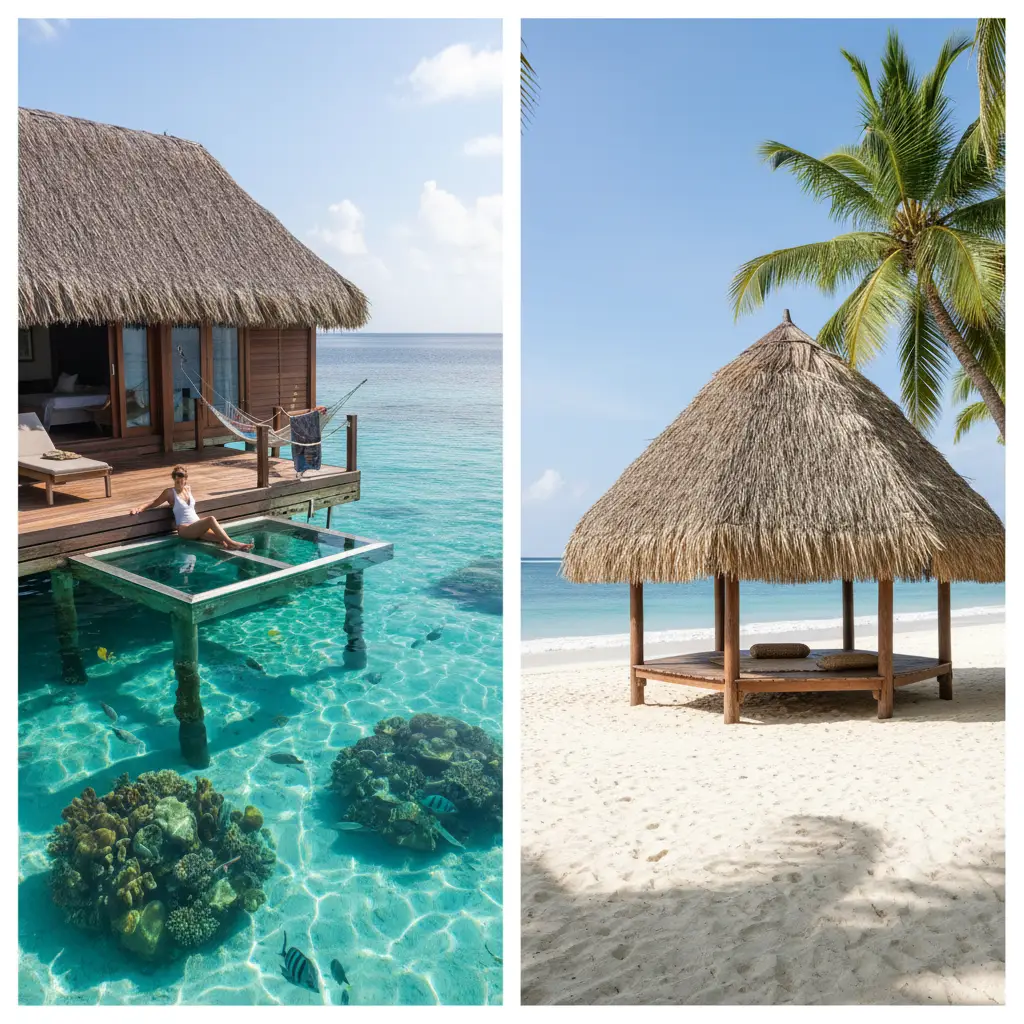
Fiji is the heavyweight champion of resorts in the South Pacific. The main island, Viti Levu, boasts the famous Denarau Island—a gated community of 5-star heavy hitters like the Sheraton, Hilton, and Sofitel. These resorts are massive, featuring multiple lagoon pools, international dining precincts, and world-class spas.
For families, Fiji is unbeatable. The “Bula Clubs” (kids’ clubs) are legendary. Kiwi parents can drop their children off for a day of supervised cultural activities and pool games, allowing for genuine relaxation. Additionally, Fiji offers exclusive island resorts in the Mamanucas and Yasawas, providing that quintessential castaway experience with 5-star amenities.
How does Samoa compare for accommodation?
Samoa’s accommodation landscape is far more boutique. While there are a few larger resorts like the Sheraton Samoa Beach Resort near the airport and Taumeasina Island Resort in Apia, they are smaller and less “glitzy” than their Fijian counterparts.
The jewel in Samoa’s crown is the traditional beach fale. These are open-air, thatched-roof huts situated right on the sand. Travelers sleep on mattresses under mosquito nets, falling asleep to the sound of waves crashing just meters away. It is a rustic, communal, and incredibly affordable way to travel. While Fiji has some bures that mimic this, the authentic beachfront fale experience is uniquely Samoan and offers a connection to nature that air-conditioned hotel rooms cannot match.
Cultural Experiences: Bula Spirit vs. Fa’a Samoa
Both nations are renowned for their hospitality, but the delivery and depth of the cultural experience differ significantly.
Is Fiji or Samoa more culturally authentic?
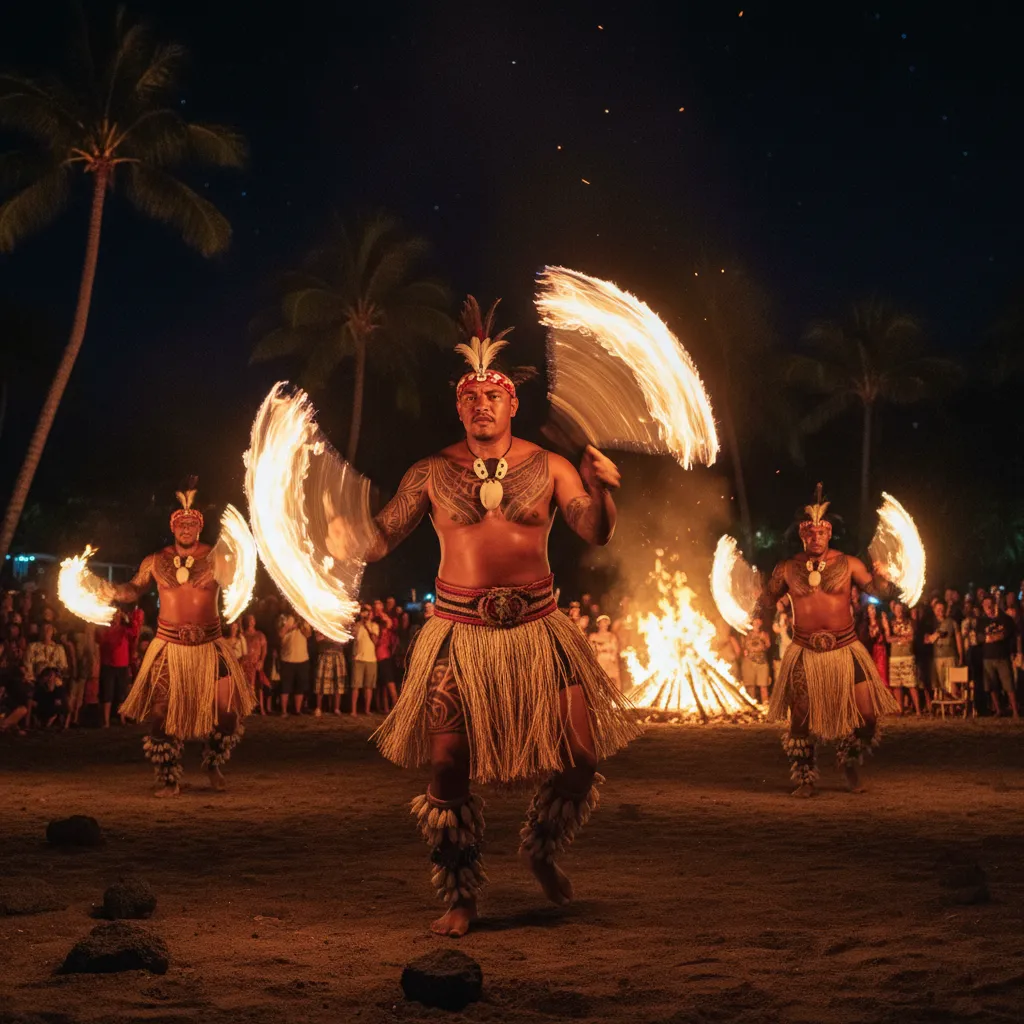
In Fiji, the “Bula Spirit” is infectious. You will be greeted with a loud “Bula!” everywhere you go. However, in the major resort hubs like Denarau, the culture can sometimes feel performative—scheduled meke dances at 7 PM and lovo feasts on Fridays. To get a genuine sense of Fijian culture, you often need to leave the resort bubble and visit a local village or head to the outer islands where the lifestyle remains largely unchanged.
Samoa is different. Fa’a Samoa (The Samoan Way) is a 3,000-year-old custom that dictates how Samoans live, and it is visible everywhere, not just in tourist areas. It is a deeply religious and communal society. Every evening, you will observe Sa, a quiet time for prayer where movement in villages is restricted. This isn’t a show for tourists; it is their way of life.
Because Samoa is less commercialized, interactions feel more organic. You aren’t just a customer; you are a guest in their land. If you want to see the Pacific as it was before mass tourism, Samoa is the clear winner.
Infrastructure, Roads, and Getting Around
For Kiwis who like to rent a car and explore, the condition of the roads and ease of navigation are critical factors.
Which island is easier to drive around?
Fiji is a much larger nation. Viti Levu is significant in size (about 146km from East to West). The main Queen’s Road connects Nadi (airport) to Suva (capital) along the Coral Coast and is generally sealed and in good condition. However, traffic can be intense, especially around Nadi and Suva. Driving involves dodging local buses, taxis, and arguably aggressive overtaking. If you plan to island-hop to the Mamanucas or Yasawas, you are reliant on the South Sea Cruises catamaran network, which is efficient but can be pricey.
Samoa is much more compact. The main island, Upolu, can be driven around in half a day. The roads are scenic, hugging the coastline and cutting through lush jungle interiors. However, the road quality varies. You will encounter more potholes, stray dogs, pigs, and chickens on the road in Samoa. The speed limit is generally lower (often 40km/h in villages), forcing you to slow down and take in the scenery. Taking the car ferry to the bigger, wilder island of Savai’i is a straightforward and affordable adventure, making Samoa an excellent destination for a self-drive road trip.
Cost Comparison: Which is friendlier to the NZD?
Budget is often the deciding factor. While flight prices from Auckland are often comparable (look out for Air New Zealand and Fiji Airways sales), on-ground costs vary.
Is Fiji or Samoa cheaper for a holiday?
Fiji offers a wider price spectrum. You can spend $5,000 NZD a night at a private island resort, or $50 a night at a backpacker hostel. However, the “middle ground” in Fiji has become expensive. Food and drink prices inside the major resorts (especially Denarau) are comparable to, or sometimes higher than, Auckland prices. A cocktail might set you back $25 FJD ($18 NZD), and resort meals add up quickly for a family of four.
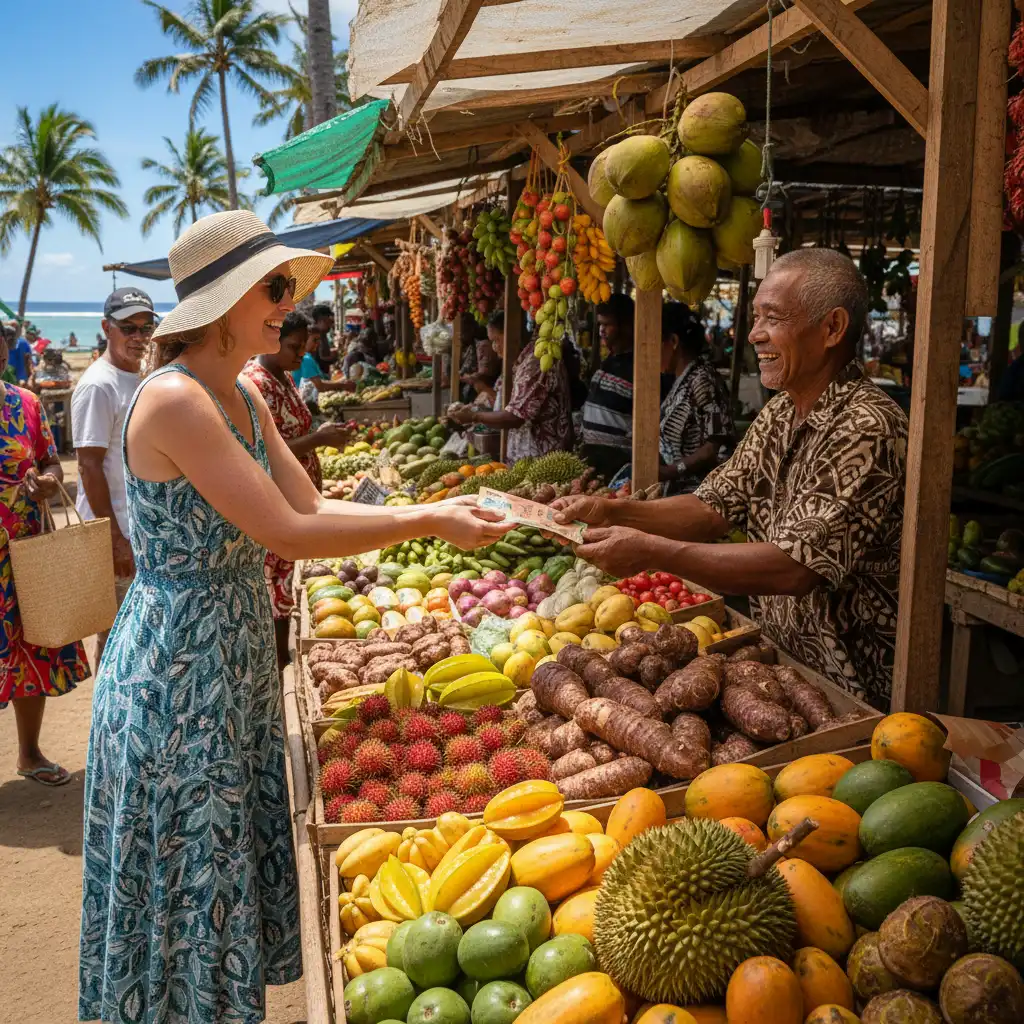
Samoa is generally better value for money for the mid-range traveler. Local food is incredibly cheap and fresh. You can buy a substantial meal at a market or local eatery for $15–$20 WST ($9–$12 NZD). Accommodation, particularly the fales, offers incredible value. Even the higher-end resorts in Samoa tend to be priced lower than the 5-star properties in Fiji. If you are looking to stretch your New Zealand Dollar further, especially on food and activities, Samoa usually comes out on top.
Beaches, Nature, and Activities
Both destinations offer stunning tropical environments, but the landscape differs.
Fiji: The Marine Wonderland
Fiji is world-famous for its soft coral diving. The underwater world here is vibrant and teeming with life. For beach lovers, it is important to note that the beaches on the main island (Viti Levu) are often darker sand and tidal. To get the white sand, turquoise water experience you see on postcards, you must go to the outer islands (Mamanucas or Yasawas). Fiji excels in organized activities: jet boating, zip-lining, river safaris, and the famous Cloud 9 floating bar.
Samoa: The Volcanic Beauty
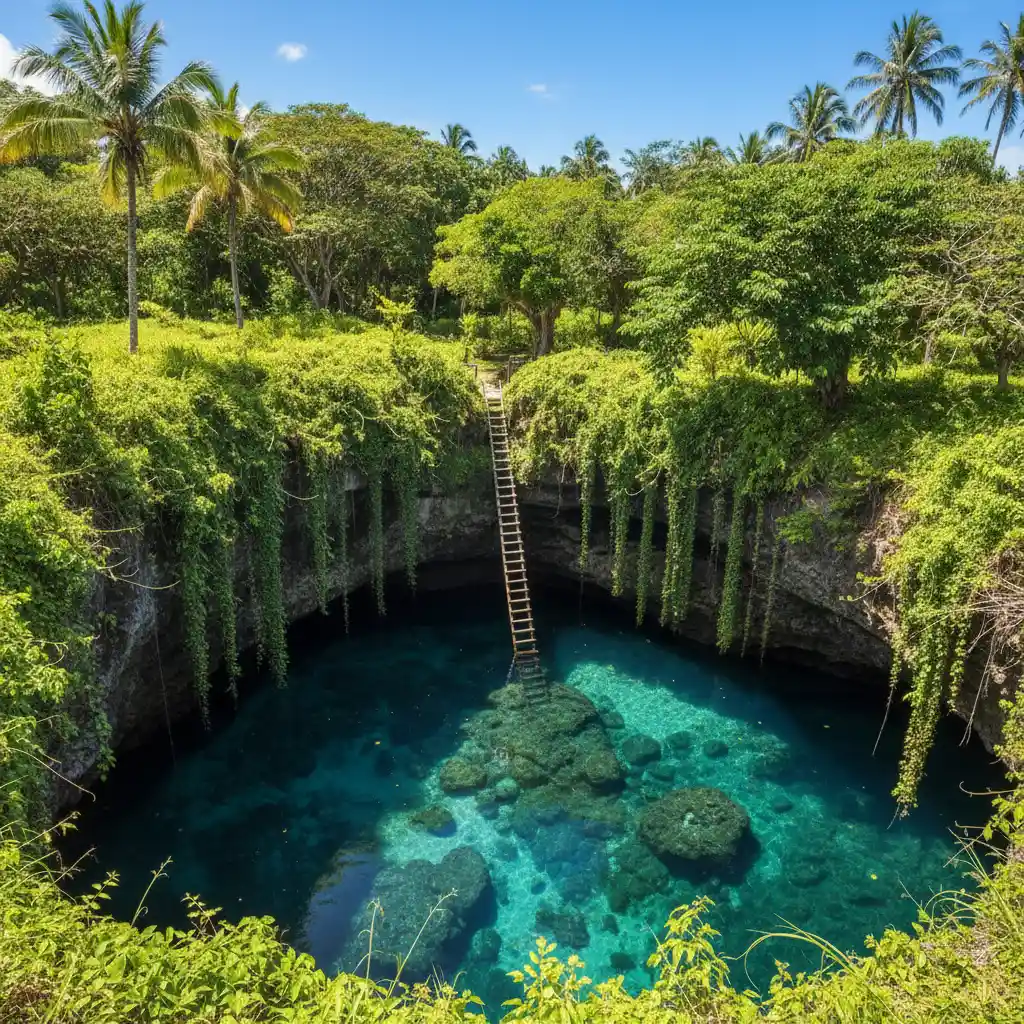
Samoa is volcanic and lush. The beaches on the main island of Upolu, particularly Lalomanu Beach, are spectacular and accessible by car—no boat transfer needed. Samoa is famous for its swimming holes, most notably the To Sua Ocean Trench, a giant swimming hole connected to the ocean by a lava tube. The waterfalls in Samoa (like Togitogiga) are easily accessible and often free to visit. The landscape feels more dramatic, with black lava fields contrasting against bright green foliage and blue ocean.
The Final Verdict
So, who wins the fiji vs samoa holiday battle?
- Choose Fiji if: You are traveling with young children and need a kids’ club, you want a luxury all-inclusive resort experience, you love diving and snorkeling, or you want a seamless, high-service vacation where you don’t have to lift a finger.
- Choose Samoa if: You are a couple or solo traveler, you want to avoid crowds and commercialism, you are on a budget but still want beachfront access, you enjoy road trips and exploring waterfalls, or you want a deep cultural immersion.
For the New Zealand market, Fiji remains the safe, polished favorite, but Samoa is the rising star for those willing to trade a little luxury for a lot of soul.
Frequently Asked Questions
Which is better for families, Fiji or Samoa?
Fiji is generally considered better for families due to its world-class infrastructure. Most resorts offer dedicated “Bula Clubs” (kids’ clubs) with nanny services, allowing parents to relax. Samoa is family-friendly but lacks the extensive, organized childcare facilities found in Fiji.
Is the flight from New Zealand shorter to Fiji or Samoa?
The flight to Fiji is shorter. A direct flight from Auckland to Nadi (Fiji) takes approximately 3 hours. A direct flight from Auckland to Apia (Samoa) takes approximately 3 hours and 45 minutes to 4 hours.
Do I need a visa for Fiji or Samoa as a New Zealander?
New Zealand passport holders do not need a visa for tourist stays in either Fiji or Samoa (usually up to 60 days for Samoa and 4 months for Fiji), provided you have a return ticket and at least 6 months of validity on your passport.
Which destination has better beaches?
It depends on location. Samoa has stunning white sand beaches like Lalomanu accessible by car on the main island. Fiji’s main island beaches are often tidal and darker sand; you usually need to take a boat to the outer islands (Mamanucas) to find the pristine white sand beaches.
Is the food better in Fiji or Samoa?
Fiji offers more variety with high-end international cuisine and strong Indian influence (curries are a must-try). Samoa offers fresher, simpler organic food, with an emphasis on seafood, coconut cream (palusami), and root vegetables, often at a much lower price point.
When is the best time to visit Fiji or Samoa?
Both destinations have similar tropical climates. The best time to visit is during the dry season, from May to October. This coincides with the New Zealand winter, making them perfect escapes from the cold. The wet season runs from November to April.