
Cheap Fiji holiday tips rely on strategic timing, such as booking during shoulder seasons (May or October) to avoid New Zealand school holiday price spikes. Travelers can save significantly by utilizing the Yasawa Flyer for island hopping, eating local cuisine like Kokoda outside of resorts, and mixing budget accommodation with targeted luxury day trips.
Budget vs. Luxury: The Ultimate Fiji Travel Guide for Kiwis
For New Zealanders, Fiji is the quintessential tropical escape. A short three to four-hour flight from Auckland, Wellington, or Christchurch transports you from temperate climates to an archipelago of 333 islands defined by crystal-clear waters and the world-famous Bula spirit. However, there is a pervasive myth that Fiji is exclusively a destination for high-end honeymooners or those with unlimited budgets. The reality is far more nuanced.
Fiji offers a unique spectrum of travel experiences. You can spend $3,000 NZD a night on a private island or $50 NZD a night in a beachfront dorm. The smartest travelers, however, know how to blend these worlds. By understanding where to pinch pennies and where to open the wallet, you can curate a luxury experience on a mid-range budget. This guide breaks down the economics of paradise, specifically tailored for the Kiwi market.
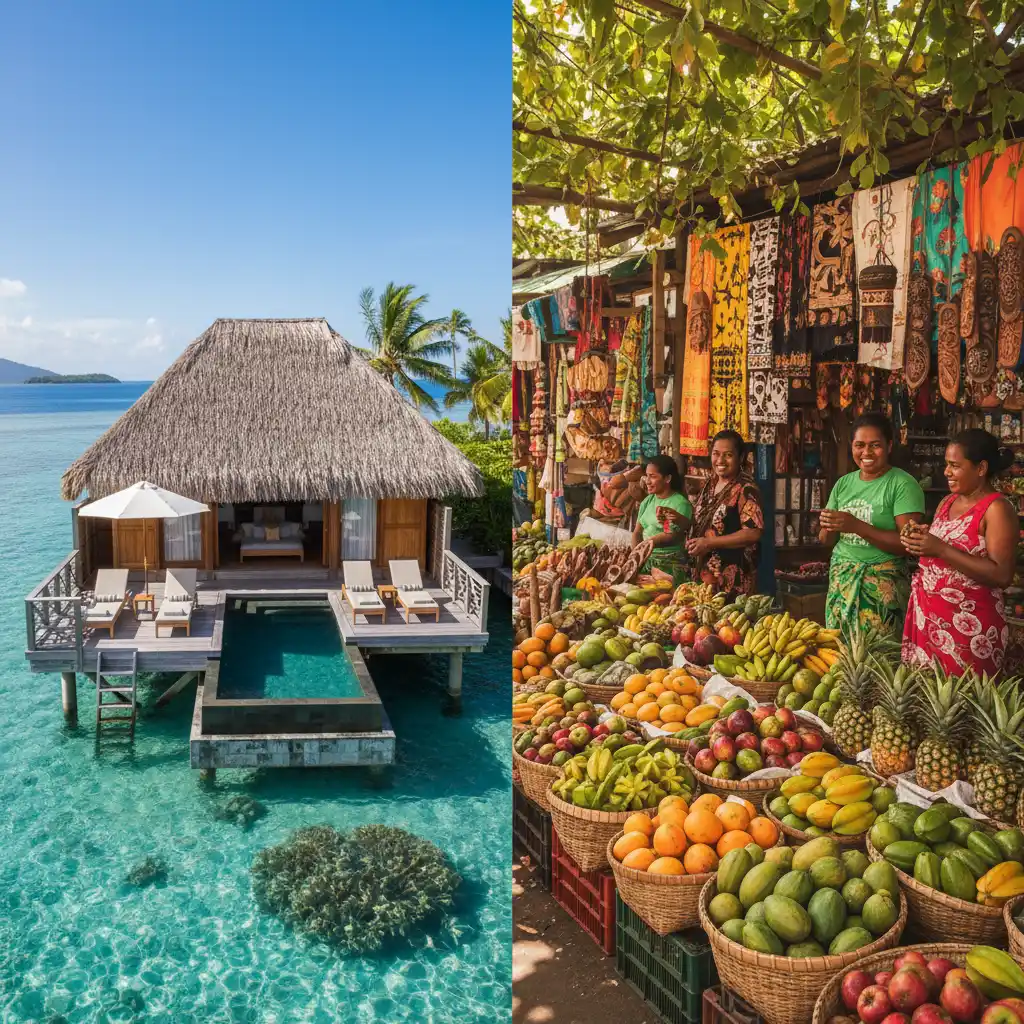
Where to Save: Food, Transfers, and Timing
To maximize your budget, you must identify the “tourist traps” versus the local realities. The biggest expenses in Fiji are typically accommodation, inter-island transfers, and resort dining.
How can I save money on food and drink in Fiji?
Resort meal plans can be convenient, but they are often the most expensive way to eat. If you are staying on the main island (Viti Levu) or near a village, you have cheaper, more authentic options.
- Eat Local: Look for local eateries selling “Kai Viti” (Fijian food). Dishes like Kokoda (raw fish marinated in lemon juice and coconut cream), Rourou (taro leaves), and cassava are not only delicious but incredibly cheap. A meal in a Nadi cafe might cost $10-$15 FJD, compared to $45+ FJD inside a resort.
- Supermarket Runs: If your accommodation has a kitchenette, visit a supermarket in Nadi or Suva before heading to your resort. Stock up on snacks, water, and breakfast items. Imported goods (like NZ cheese or chocolate) are expensive, so stick to local brands.
- Duty-Free: Alcohol is heavily taxed in Fiji. For Kiwis who enjoy a sundowner, max out your duty-free allowance at Auckland Airport before you fly. Buying spirits at a resort bar can quickly drain a budget, with cocktails often averaging $25-$35 FJD.
What are the cheapest transport options?
Getting from Nadi International Airport to the outer islands is where budgets often blow out. A private helicopter transfer is spectacular but costs hundreds per person. A private speedboat is faster but pricey.
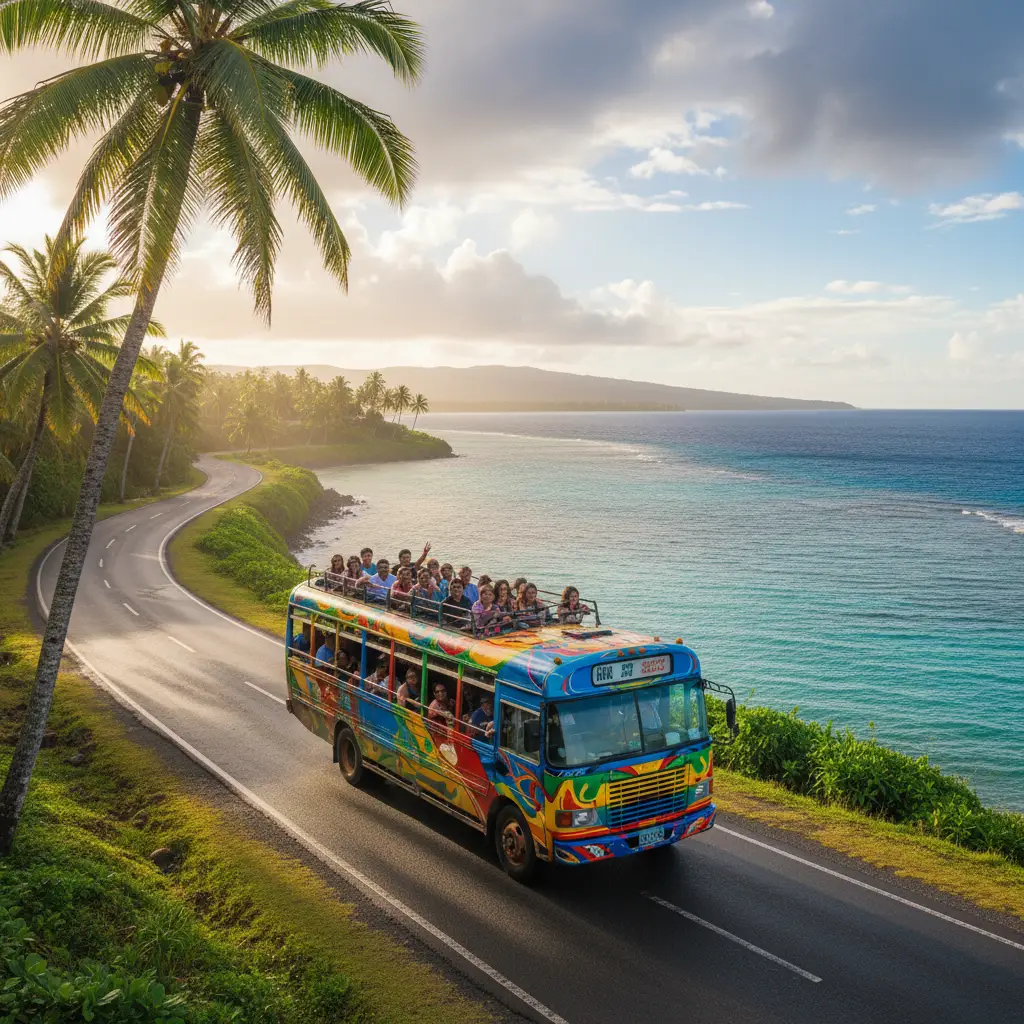
The Public Bus: On Viti Levu, the local open-air buses are an experience in themselves. They are incredibly cheap (often under $5 FJD for long distances) and allow you to see the countryside. For air-conditioned comfort, the “Coral Sun” or similar tourist coaches are reliable and affordable.
The Yasawa Flyer: If you are heading to the Mamanuca or Yasawa islands, the Yasawa Flyer catamaran is the standard. To save money, book a “Bula Pass” if you plan on island hopping. It works like a bus pass for the boat.
Where to Splurge: Experiences That Matter
Saving money on the basics allows you to invest in memories. There is no point in traveling to a tropical paradise if you don’t experience the environment. Here is where you should allocate your savings.
Which day trips are worth the money?
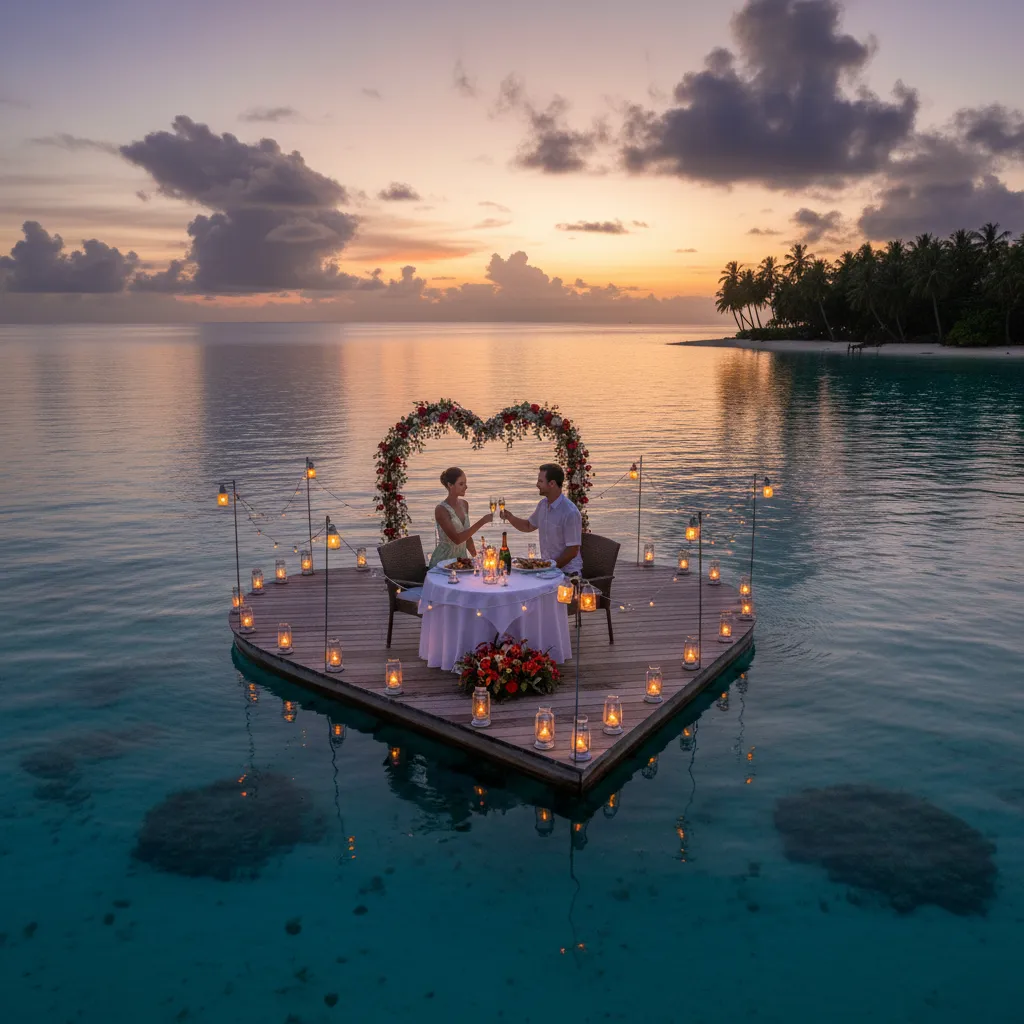
Cloud 9 or Seventh Heaven: These floating platforms in the middle of the ocean offer a unique party and relaxation vibe. While the entry fee and food/drink prices are premium, the experience of swimming off a floating bar in turquoise water is iconic.
Malamala Beach Club: The world’s first island beach club. It is a dedicated day-trip island. The splurge here is on a private cabana and the food and beverage tab. It offers a taste of the private island lifestyle without the $2,000/night accommodation fee.
Shark Diving in Beqa Lagoon: For the adventurous, this is a world-class experience. It is not cheap, but it is one of the few places on earth where you can dive cage-free with Bull Sharks and Tiger Sharks safely. This is a “lifetime memory” expense.
Are resort spas worth the cost?
Fijian massage techniques, particularly the “Bobo” massage, are deeply restorative. While resort spas are expensive, they often use high-quality local ingredients like cold-pressed coconut oil and dilo gel (great for sunburn). A 60-minute massage is a worthy splurge to shift your mindset into “Fiji Time.”
Backpacker Resorts for Families (Flashpacking)
For Kiwi families, the term “backpacker” often conjures images of rowdy 20-year-olds and bunk beds. However, Fiji has mastered the art of “Flashpacking” or “Upscale Budget.” These resorts offer dormitory accommodation for solo travelers but also feature high-quality private bures for families at a fraction of the cost of 5-star chains like the Sheraton or InterContinental.
Top “Flashpacker” Tips for Families
Many of these resorts are located in the Yasawa Islands. They offer the same beach, the same ocean, and often better snorkeling than the luxury resorts on the mainland (Denarau).
- Octopus Resort: Famous for its incredible reef right off the beach. They offer family villas alongside dorms. The vibe is communal and friendly, with sand floors in the restaurant.
- Blue Lagoon Beach Resort: Offers a mix of budget and luxury. The water here is legendary. By choosing a “Garden Villa” instead of a “Beachfront Villa,” you can save hundreds per night while enjoying the exact same facilities.
- Plantation Island Resort: While more of a traditional resort, it is the holy grail for budget-conscious Kiwi families. It is high volume, but the amenities for children are unmatched at the price point.
The Trade-off: In these resorts, you might not have a TV in your room, and the air conditioning might be a fan in the lower-tier rooms (though AC is becoming standard). However, you are paying for the location and the atmosphere, which is often far more authentic and relaxed.

Luxury for Less: Insider Tips
If you are determined to stay in 5-star luxury but want to pay 3-star prices, you need to be tactical. The New Zealand market is the primary feeder for Fiji tourism, meaning deals are competitive.
When is the cheapest time to visit Fiji?
Avoid the New Zealand school holidays (April, July, September/October, and December/January) at all costs. Prices skyrocket during these windows.
The Sweet Spot: February and March are the cheapest months, but they are also the height of the cyclone season and can be very humid. The best balance of price and weather is May (after the April holidays but before winter sets in) and November (before the Christmas rush). During these shoulder seasons, luxury resorts often drop prices by 30-40% or offer “Stay 5, Pay 4” deals.
Package Deals vs. DIY
For many destinations, booking flights and hotels separately is cheaper. For Fiji, packaged holidays from NZ travel agents often reign supreme. Wholesalers bulk-buy rooms at major resorts (like the Shangri-La or Naviti). These packages often include flights, transfers, breakfast, and sometimes resort credit. Always compare the total cost of a package against a DIY booking.
The “Denarau” Strategy
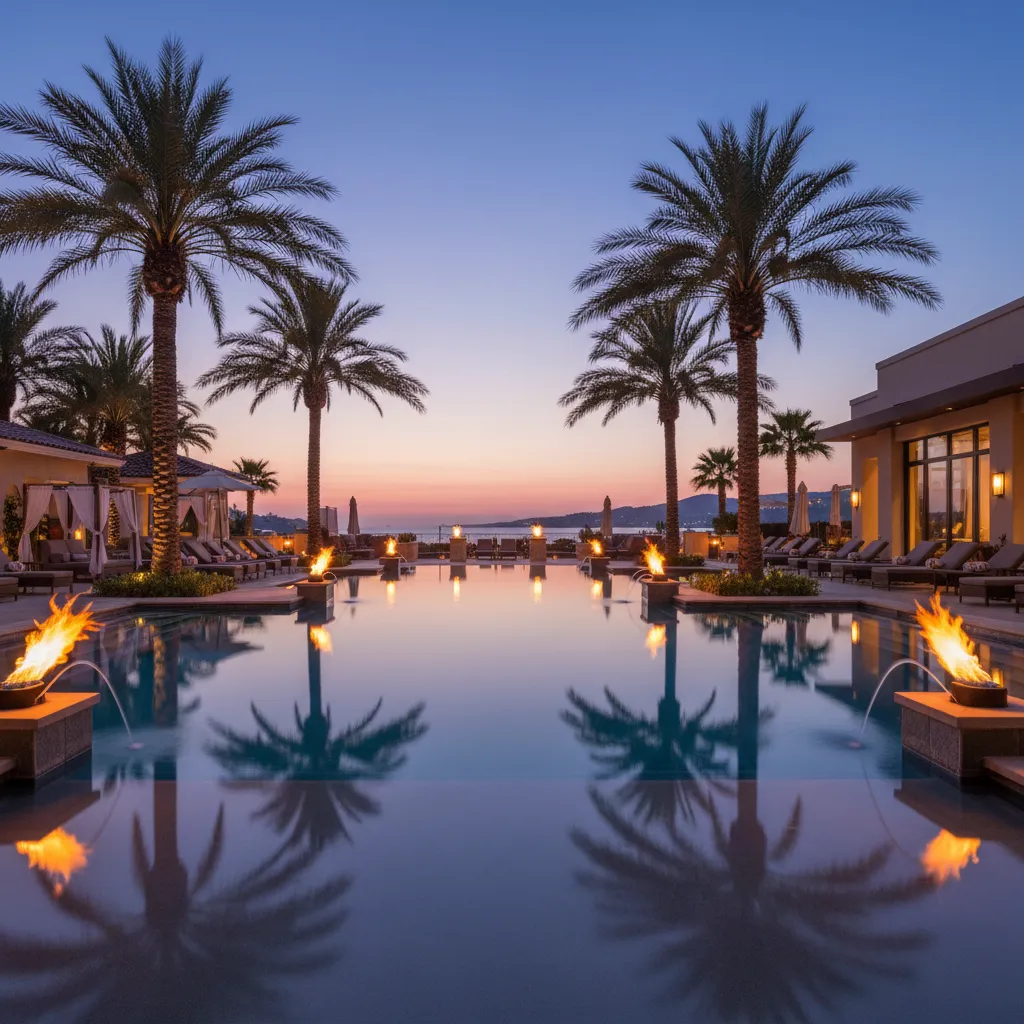
Denarau Island is a man-made enclave of 5-star resorts connected to the mainland. It does not have the white sand beaches of the outer islands (the sand is darker and volcanic). However, the competition between resorts here (Hilton, Sofitel, Radisson, Westin) is fierce. You can often find luxury rooms here cheaper than in the Mamanucas. The hack? Stay in luxury at Denarau for the pool and room quality, but take day trips to the islands for the beaches.
People Also Ask
Is Fiji expensive for NZ tourists?
Fiji can be expensive if you stick strictly to 5-star resorts and resort dining. However, compared to other tropical destinations like Hawaii or Tahiti, Fiji offers better value for money for New Zealanders, especially given the favorable exchange rate (typically $1 NZD buys around $1.30 – $1.40 FJD) and the abundance of package deals.
What is the cheapest month to go to Fiji?
February and March are generally the cheapest months due to the “wet season” and risk of cyclones. For a balance of good weather and lower prices, target May or November.
Can you eat cheaply in Fiji?
Yes, if you leave the resort. Local restaurants in Nadi, Lautoka, and Suva serve large portions of curry, fish, and Chinese-Fijian cuisine for under $15 FJD. Fresh fruit from roadside stalls is also incredibly cheap.
Is it better to use cash or card in Fiji?
Major resorts and tour operators accept cards, but they often charge a 2-3% surcharge. It is advisable to carry cash (Fijian Dollars) for markets, taxis, small villages, and tipping. ATMs are available in main towns but scarce on outer islands.
How much spending money do I need for a week in Fiji?
For a budget traveler, allow $50-$80 NZD per day for food and drinks (outside resorts). For a mid-range traveler eating some resort meals and doing one or two activities, allow $150-$200 NZD per day.
Are Fiji backpackers safe for families?
Yes, Fijian backpacker resorts are generally very safe and family-friendly. The culture is incredibly welcoming to children. Resorts like Octopus or Mantaray have specific family vibes that differ significantly from the “party” hostels found in Europe or Southeast Asia.